Honey Cornmeal Biscuits
- Makes 8 biscuits
- Prep 15 minutes
- Cook 15 minutes
- Total 30 minutes
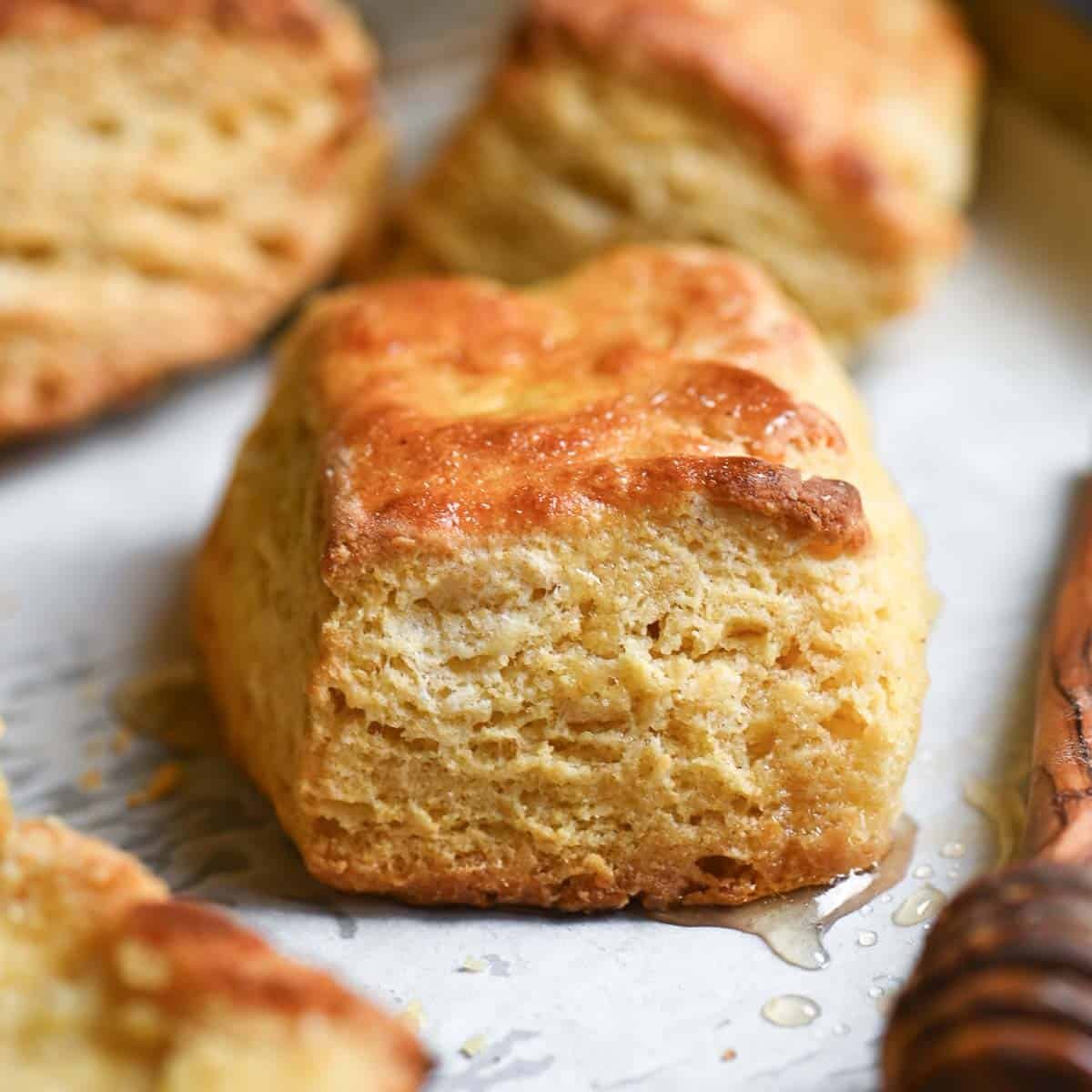
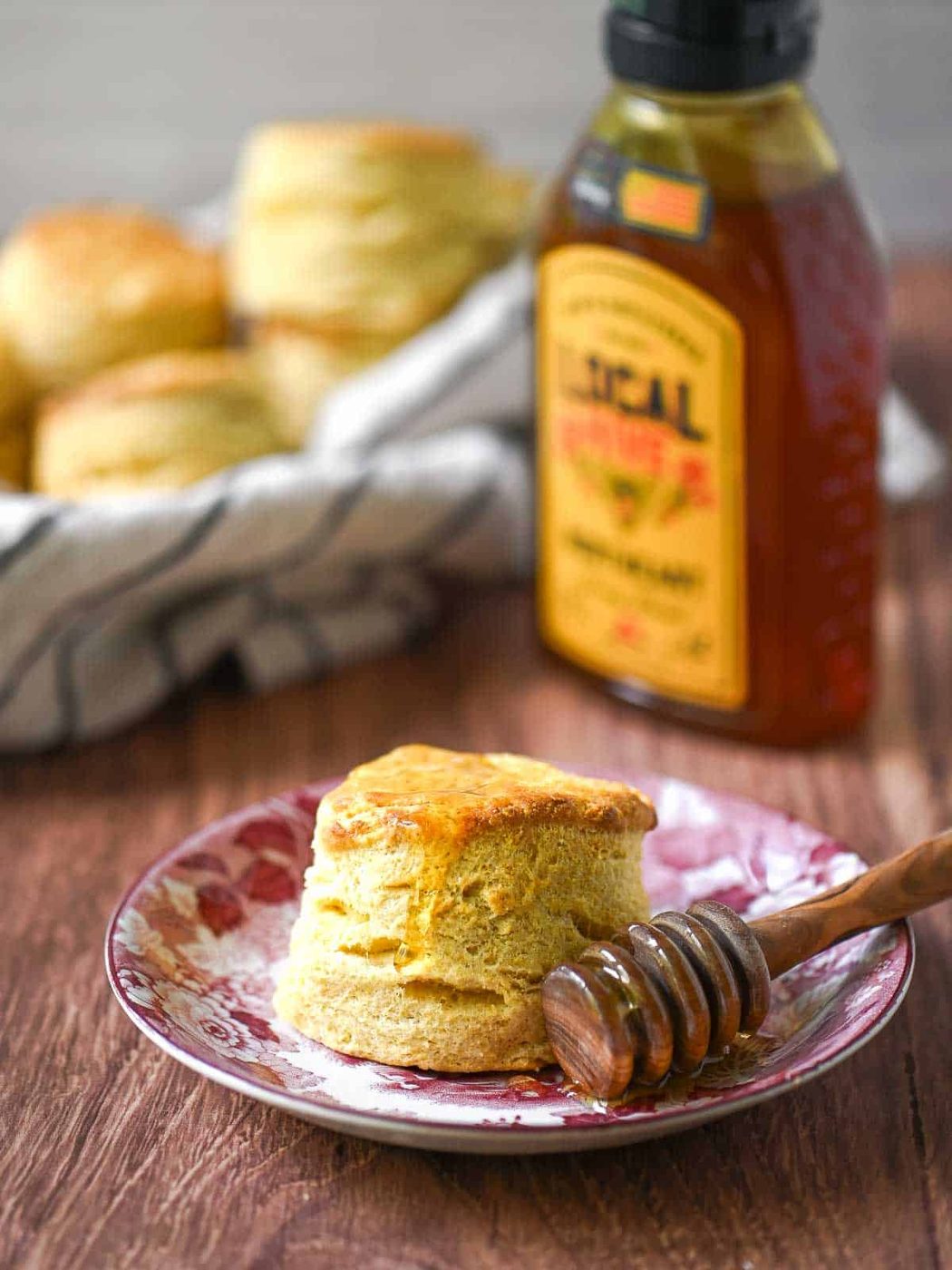
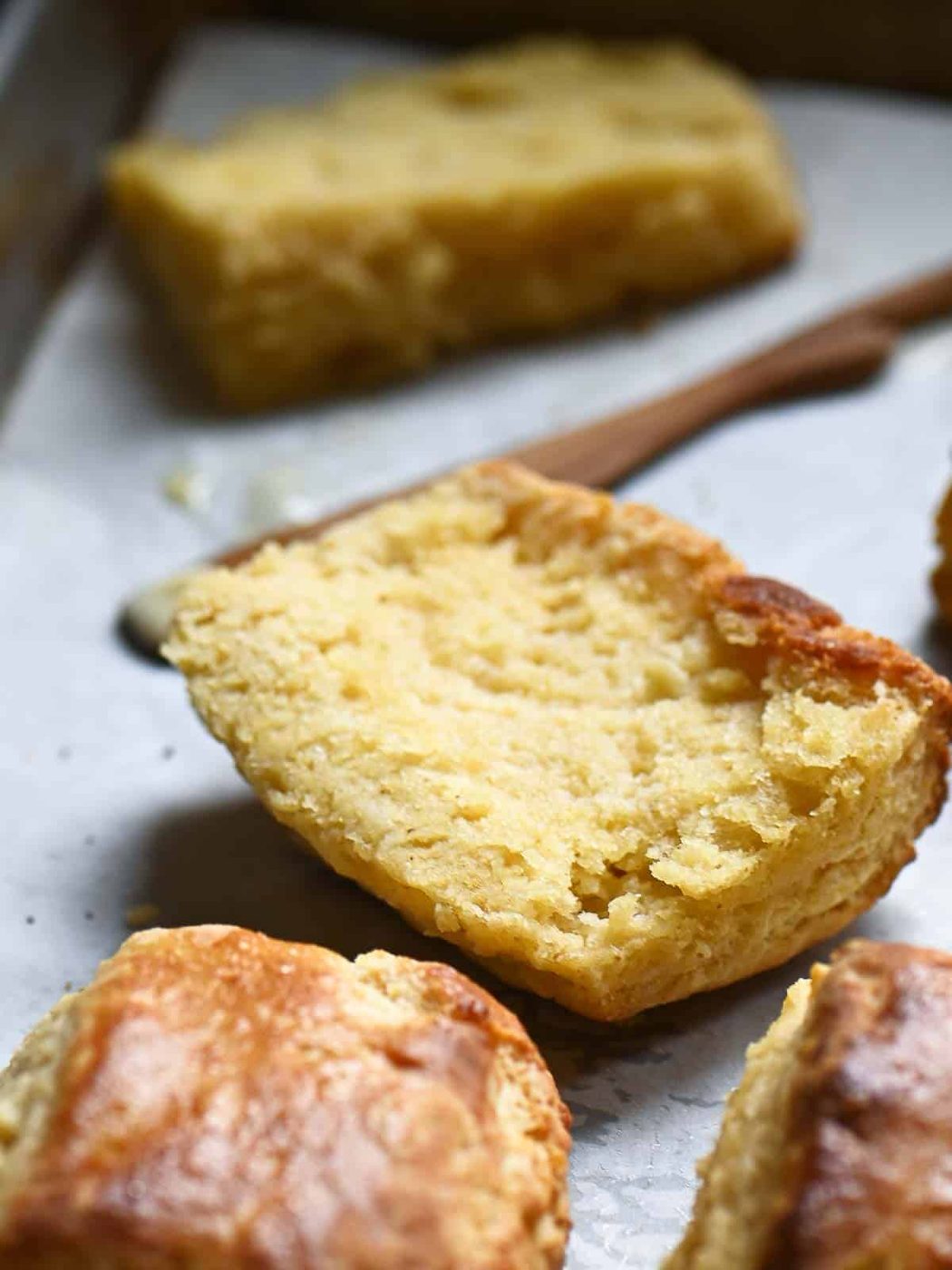
It's biscuit time, and this one is all about the corn flavor. These honey buttermilk cornmeal biscuits are a cross between a classic buttermilk biscuit and your favorite sweet cornbread. Finish them off with a slather of warm butter or honey for the solid brunch treat.
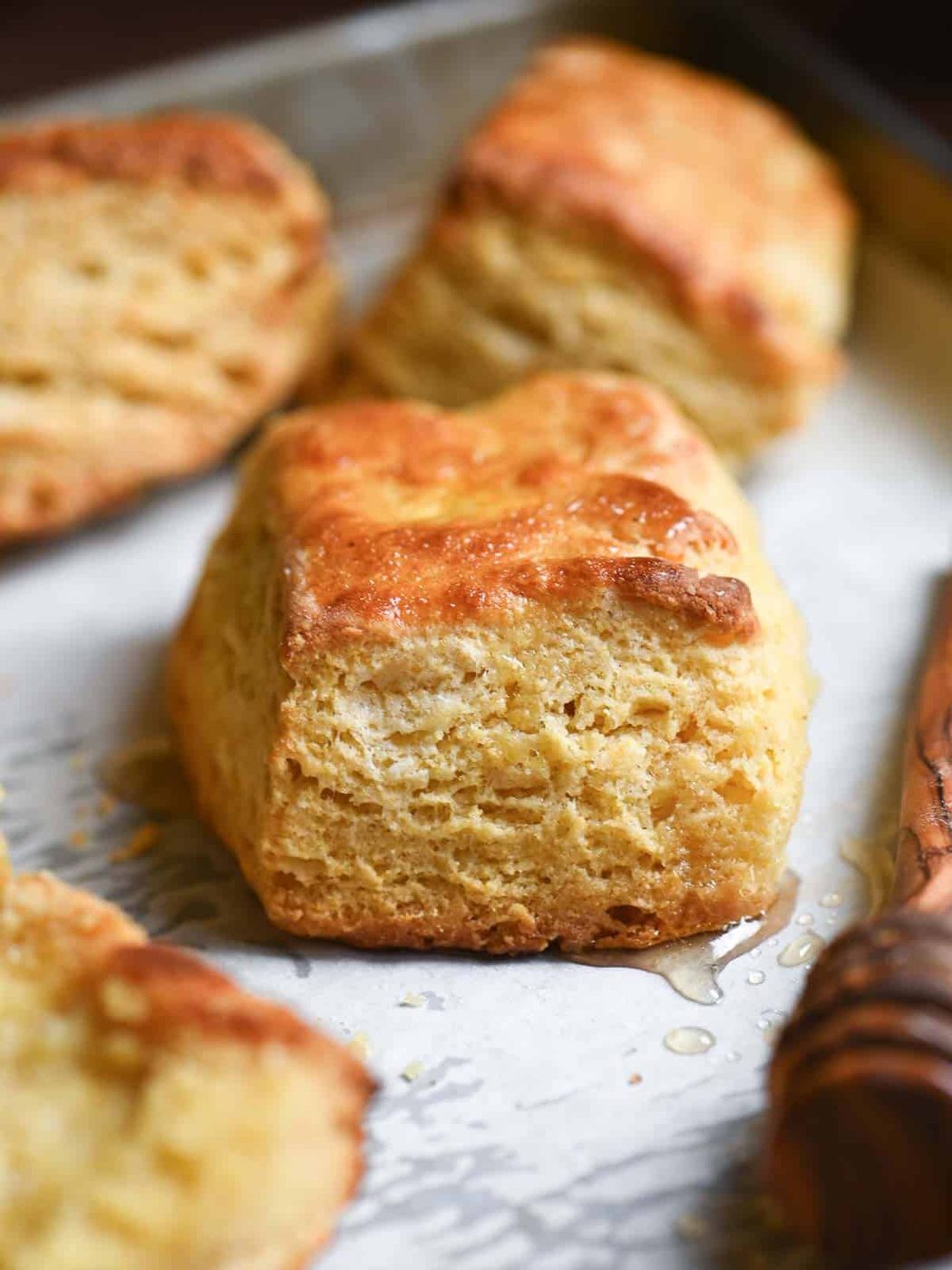
While we love a classic flaky buttermilk biscuit, experimenting with different flours and textures is how we have fun in the kitchen.
Unlike our sage and cake flour biscuits which use a lower-protein flour, these biscuits are made with a combo of fine cornmeal and all-purpose flour (for added structure). The cornmeal gives them a sturdier feel without the dryness, while the honey adds a touch of sweetness.
To us, these are the solid biscuits for making sandwiches!
Key ingredients
- Fine cornmeal. Look for fine cornmeal (not medium- or coarse-ground). While those have their place in polenta they would make these biscuits too gritty and dry. We find fine cornmeal in the international section of our grocery store, near the tortillas.
- All-purpose flour. While using all cornmeal sounds like it would give you the best corn flavor, these biscuits need a bit of gluten from regular flour to hold up and still create those tender, flaky layers.
The full list of ingredients can be found in the recipe card.
Step-by-step instructions
Refer to the pictures below to help you make cornmeal biscuits. check out our expert tips below for biscuit success! *Instructions shown are for 4 biscuits.
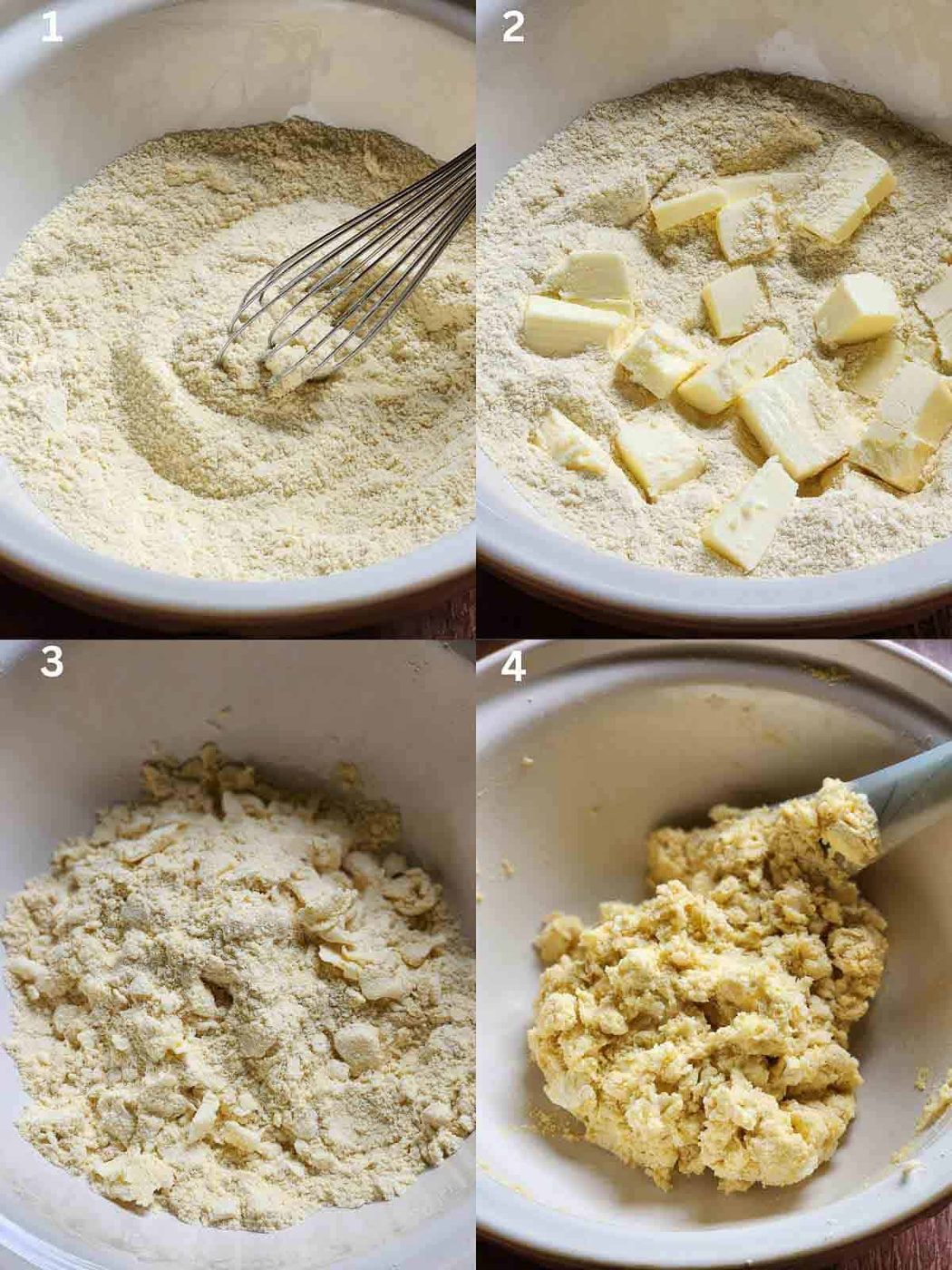
Step 1. In a large bowl, whisk together the dry ingredients. Steps 2-3. Add the cold butter and, using your hands, mix until a shaggy dough forms. Step 4. Add the honey/buttermilk mixture and mix until it comes together.
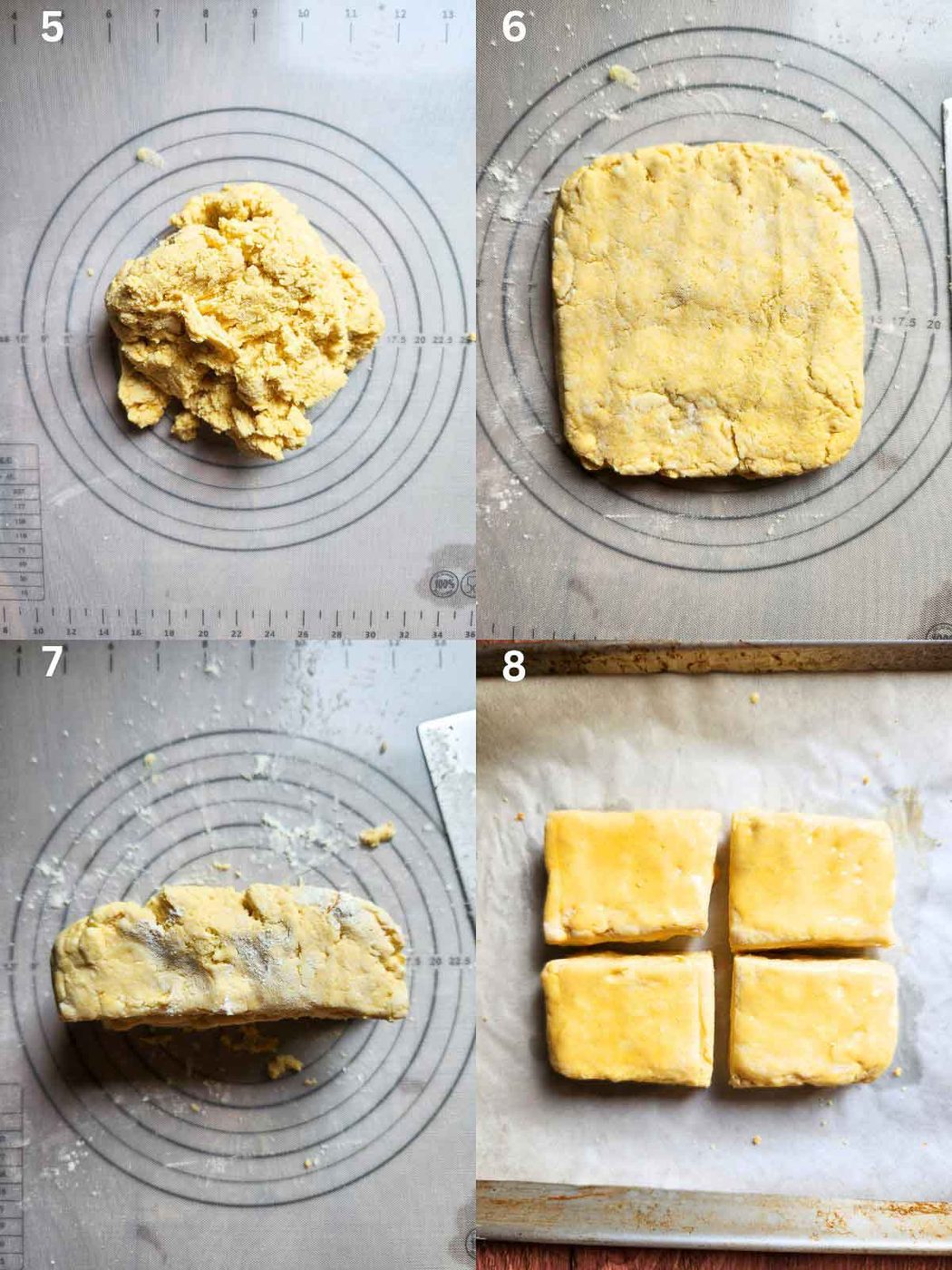
Step 5. Turn the dough onto a lightly floured surface. Step 6. Roll the dough to about 1 inch thick. Step 7. Fold the dough onto itself, turn, and repeat to create layers. Step 8. Cut into biscuit shapes or squares, chill, then egg wash.
*These are abbreviated instructions. The full list of directions can be found in the recipe card below.
Expert tips
- Use a scale to measure your ingredients. A scale is ideal for ensuring a solid dough every time.
- Have all your ingredients ready. Pre-measure your ingredients, and have your baking sheet ready to go. This will help to keep you organized.
- Freeze ingredients while the oven preheats. While the oven is heating, place your cubed butter and buttermilk in the freezer to get a blast of chill. It helps keep the dough tender and prevents the butter from getting too warm while you roll out the dough.
- A food processor is your friend. While you can certainly cut the butter into the flour with your hands or with a pastry cutter, you may find it easier to use a food processor.
- Chill again. After you cut and roll the biscuits, place them on a baking sheet and chill in the freezer for another 5-10 minutes. This will chill the butter again if it got too warm. solid time to do some dishes!
- Wonky biscuits welcome. After cutting the first 6 biscuits, the scraps won't roll as nicely, and you'll get some wonky-looking biscuits. No worries! These are as good. We'll call them "drop" biscuits. To avoid this altogether, ditch the biscuit cutter and cut them straight down into squares.
Flavor variations
We love these cornmeal biscuits the way they are, but they also make a great base for some fun flavors.
- Cheddar: Similar to our savory waffles add about ½ cup of shredded sharp cheddar to the final mix.
- Jalapeño + Cheddar: Keep the cheddar and add pickled or sliced jalapeños for a little kick.
- Add corn: For a summery corn biscuit, add up to ½ cup of fresh corn.
- Make it herby: Add up to 2 tablespoons of fresh herbs such as chives, thyme, or rosemary.
- Blueberry: Make a blueberry cornbread biscuit. Suited to summer. Gently fold up to ½ cup of small-ish blueberries into the final mix.
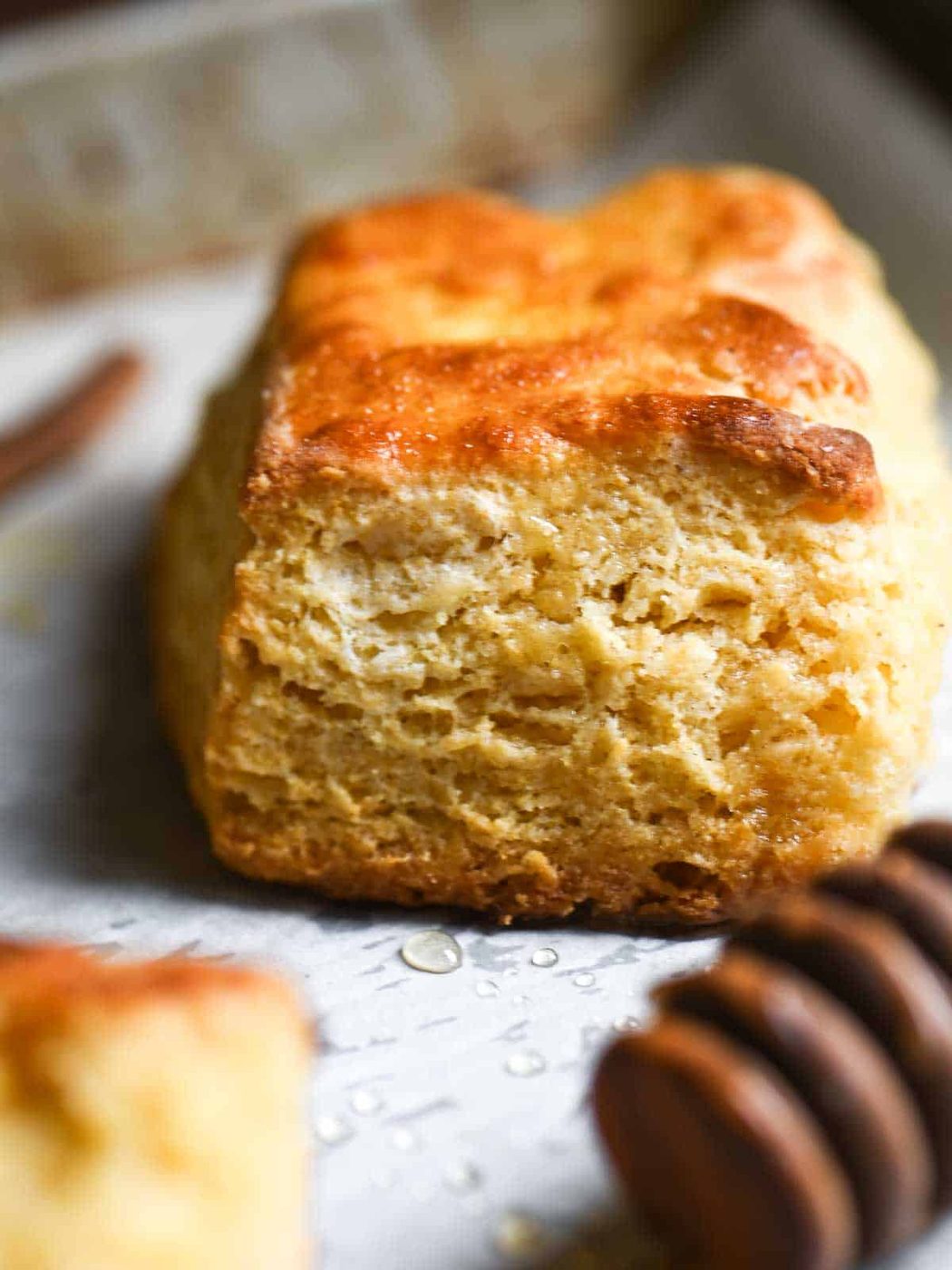
Ways to serve honey cornmeal biscuits
These biscuits are good, warm from the oven, with salted butter, honey, or your favorite jam. They also make a great addition to a brunch spread alongside scrambled or baked eggs bacon, sausage, or fresh fruit.
For a more savory meal, serve them with a cozy bowl of chili or soup. The sweet corn flavor pairs well with smoky or spicy dishes.
You could also split them and use them for breakfast sandwiches with eggs, cheese, and bacon or sausage. Lastly, try skipping the English muffin and making our Mexican Eggs Benedict with biscuits instead!
Storage and prep
Store cooled biscuits in an airtight container for up to 2 days. For the best texture, don't refrigerate them, as the refrigerator can make biscuits stale more quickly.
Freeze completely cooled biscuits in an airtight, freezer-safe container or bag for up to 3 months.
To reheat biscuits, warm in a 300°F oven for 5-8 minutes until heated through. You can also microwave individual biscuits for about 10-15 seconds, although the oven is best for preserving texture.
Make ahead: You can also freeze the unbaked biscuits . Arrange the cut biscuits on a parchment-lined baking sheet and freeze until solid, then transfer to a freezer bag. Bake directly from frozen, adding several minutes to the baking time. This comes in handy when serving a hungry crowd for brunch.
Kitchen questions
Can we use coarse or medium-ground cornmeal instead of fine?Fine yellow cornmeal is best for these biscuits because it gives them a tender texture while still providing plenty of corn flavor. Coarse cornmeal will make the biscuits more textured and may result in a slightly crumbly dough.
Can we use white cornmeal instead?Yes. White cornmeal can be used in place of yellow cornmeal, although the biscuits will have a slightly milder corn flavor and lighter color. Avoid self-rising cornmeal unless you adjust the leavening in the recipe.
Can we use grits or polenta instead of cornmeal?We don't recommend substituting grits or polenta for the fine cornmeal in these biscuits. Grits and polenta are typically more coarsely ground, so they won't hydrate or blend into the dough in quite the same way and can give the biscuits a gritty or crumbly texture. For the best texture and corn flavor, stick with fine yellow cornmeal.
Solid pairings
Cornmeal biscuits can be paired with sweet or savory dishes.
Ingredients
Makes 8 biscuits
- 1½ cups all-purpose flour
- 1 cup fine yellow cornmeal
- 1 tbsp baking powder
- ½ tsp baking soda
- 1 tsp kosher or fine sea salt
- 10 tbsp unsalted butter, very cold
- 3 tbsp honey
- 1 cup buttermilk, cold
- 1 egg + 1 teaspoon of water for an egg wash
Equipment
- 10-12- inch cast-iron skillet or large baking sheet lined with parchment paper
- rolling pin
- 2½ inch biscuit cutter or knife
Method
Preheat the oven to 425℉. Line a cast-iron skillet or large baking sheet with parchment paper. Set aside.
In a large bowl, combine the dry ingredients.
Add the cold butter and cut it into the flour (using your hands, a pastry cutter, or a food processor) until the mixture resembles coarse crumbs with several pea-sized pieces remaining.
In a separate bowl, whisk the honey and the buttermilk until the honey is dissolved. Pour the mixture into the dry ingredients and stir gently until a shaggy dough forms. Add another tablespoon or two of buttermilk only if needed.
Let the dough rest for 5 minutes to allow the cornmeal to hydrate.
Turn the dough onto a lightly floured surface. Pat into a rectangle about 1 inch thick. Fold it into thirds like a letter, rotate 90 degrees, and repeat the folding process 2-3 more times. You can also cut the dough into thirds, stack them on top of each other, then roll and repeat 2-3 more times.
Pat the dough to about 1¼ thick. Using a 2½-inch biscuit cutter, cut out 8-10 biscuits, pressing straight down without twisting. Gently re-roll scraps if needed.
Place the biscuits so their sides are close together (but not touching) on the prepared baking sheet or cast iron pan.
Chill for 15-20 minutes. Remove from the fridge and brush the tops with the egg wash.
Bake for 12-15 minutes or until the tops are deep golden brown and the biscuits have risen nicely.
Brush with melted butter immediately after baking, if desired, and serve warm or at room temperature.
Kitchen notes
- Use a scale to measure your ingredients. A scale is ideal for ensuring a solid dough every time.
- Freeze ingredients while the oven preheats. While the oven is heating, place your cubed butter and buttermilk in the freezer to get a blast of chill. It helps keep the dough tender and prevents the butter from getting too warm while you roll out the dough.
- A food processor is your friend. While you can certainly cut the butter into the flour with your hands or with a pastry cutter, you may find it easier to use a food processor.
- Chill again. After you cut and roll the biscuits, place them on a baking sheet and chill in the freezer for another 5-10 minutes. This will chill the butter again if it got too warm. solid time to do some dishes!
- Wonky biscuits welcome. After cutting the first 6 biscuits, the scraps won't roll as nicely, and you'll get some wonky-looking biscuits. No worries! These are as good. We'll call them "drop" biscuits. To avoid this altogether, ditch the biscuit cutter and cut them straight down into squares.
- Makes 8-10 biscuits. The total number of biscuits will depend on how thick you cut the dough. We like to aim for 1 inch. We used a 2.5-inch biscuit cutter, but you can use a slightly larger cutter if that's what you have.