Apricot and Rosemary Scones
- Makes 8 scones
- Prep 15 minutes
- Cook 20 minutes
- Total 50 minutes

Looking to level up your brunch game? These Apricot and Rosemary Scones are your new secret weapon. Packed with chewy dried apricots and a hint of earthy rosemary, they're the solid sweet-and-savory bite for lazy weekends, tea parties, or anytime you need a little sunshine on your plate.

If you've never paired fruit with herbs in your baking, let this be your good introduction. Since fresh apricots have such a short season dried apricots are a win-win- convenient and packed with all the sweet, tangy apricot flavor you crave.
What makes them worth the (minimal) effort? They're easy to make ahead, freezer-friendly, and endlessly customizable. You can serve them warm with butter, a dollop of clotted cream, or even a drizzle of honey for extra indulgence. Plus, the aroma of fresh-baked scones wafting from your oven? Worth getting out of bed for!
Many scone recipes opt for buttermilk in the dough, but we like to use heavy cream to keep them richer and to give them a more tender crumb.
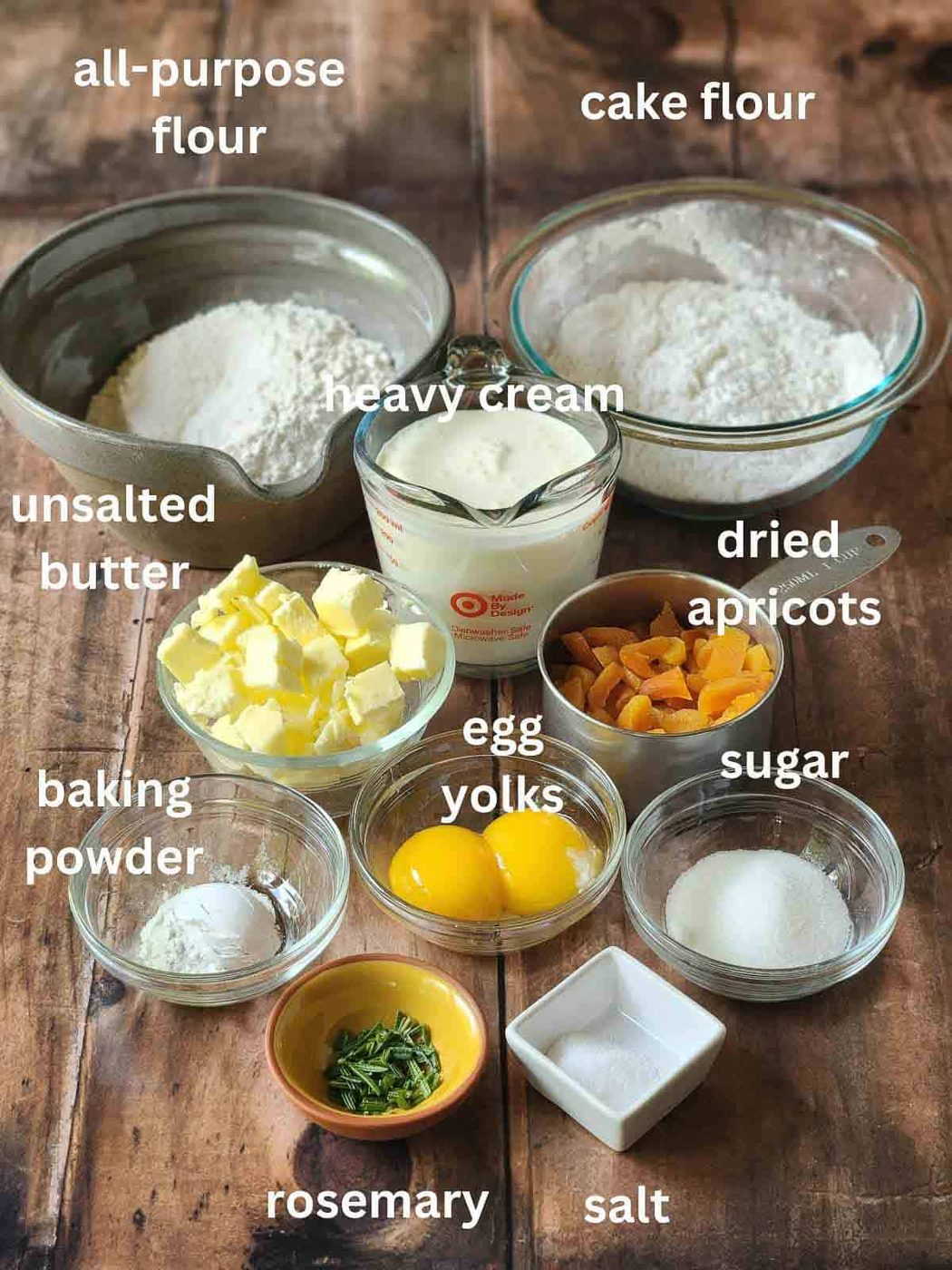
- Flour we paired both all-purpose (AP) flour and cake flour here. The cake flour makes these a bit more delicate, and the AP flour adds some structure so they still stand up to baking.
- Sugar White granulated sugar for a hint of sweetness.
- Baking powder This will help the scones get that nice rise.
- Butter Cold unsalted butter. The key to flaky scones (and biscuits) is cold butter!
- Egg yolks These add some structure to the rise.
- Heavy cream we like to keep our scones traditional with heavy cream.
- Apricots Dried apricots are an easy-to-find pantry staple, so you can make these any time of the year.
- Rosemary Fresh rosemary is best.
- Salt Balances out the sweetness.
The full ingredient list is located in the recipe card below.
Step-by-step instructions
Follow along to see how to make good savory scones with apricot and rosemary. The following pictures are abbreviated steps. You can find the full list of instructions in the recipe card below.
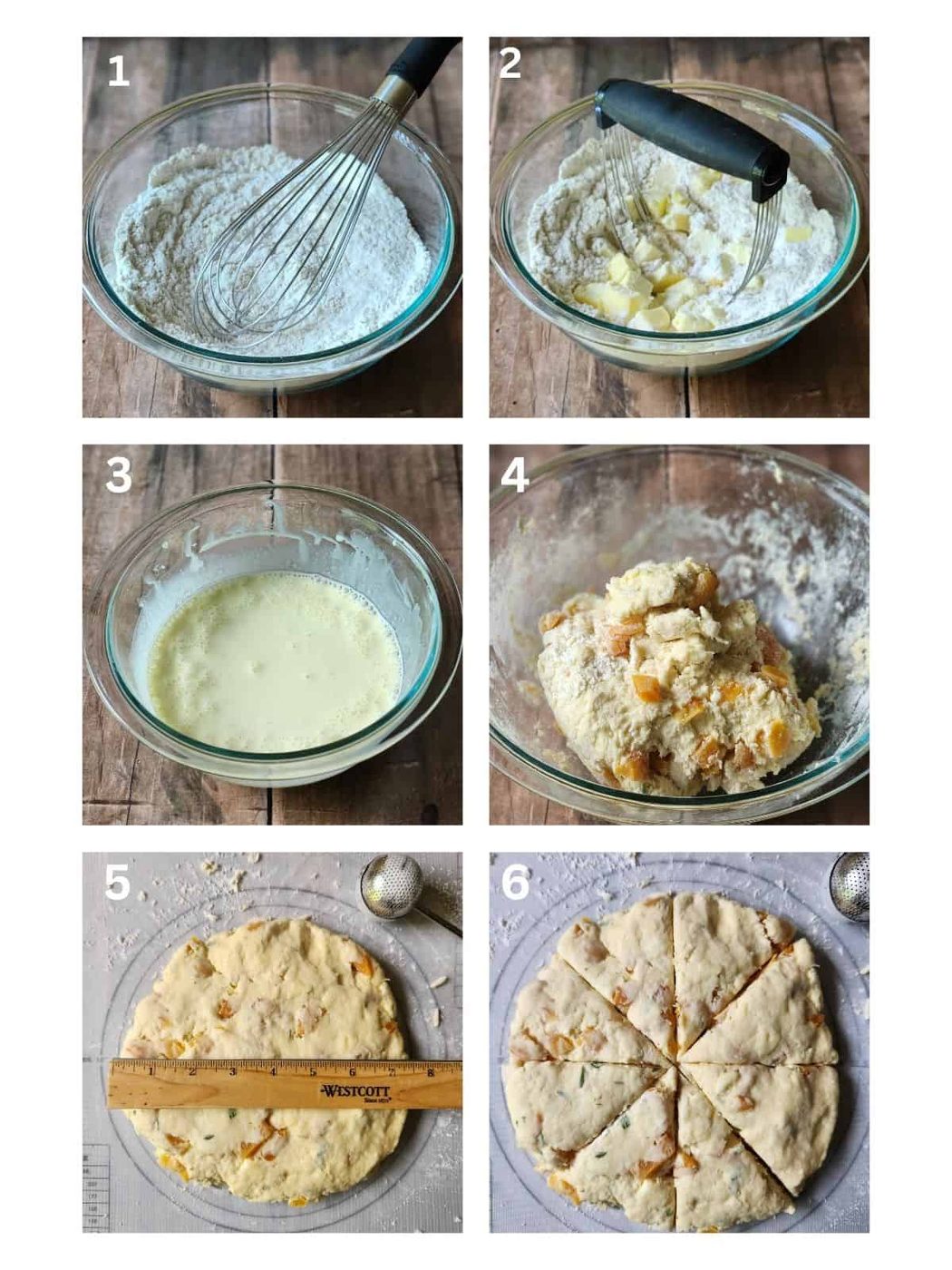
Step 1. Whisk the dry ingredients. Step 2. Add the cold butter and mix until the butter is the size of peas. Step 3. Whisk the egg yolks and cream. Step 4. Add the cream to the flour mixture, and form into a rough, shaggy dough. Gently fold in the apricots and rosemary. Step 5. Roll out to a round disc. Step 6. Slice into 8 even wedges.

Final steps. Place the wedges onto the prepared baking sheet and chill for 15 minutes. Remove the baking sheet from the fridge and brush the top of each scone with the egg wash. Sprinkle the tops of each scone with salt, then bake at 400°F for 18-22 minutes until the tops are golden brown.
Expert tips
- Keep your ingredients cold. Cold butter is key to creating those signature flaky layers- so chill everything, including your cheese and cream, before starting.
- Use fresh rosemary for the best flavor. Dried rosemary is great in a pinch, but fresh rosemary is much more fragrant and earthy.
- Don't overmix the dough. Stop mixing when the dough is combined- it should look slightly wet and shaggy. It will come together as you shape it.
- Chill the dough before baking. A short rest in the fridge helps keep the butter cold, resulting in flakier scones with a better rise in the oven.
Swaps
Here are a couple of swaps to elevate your apricot scones to the next level!
- Thyme Swap rosemary for fresh thyme for a softer, lemony herb note.
- Lemon Add 1-2 teaspoons of lemon zest to the dough for a bright, citrus flavor.
- Lavender Use culinary lavender (a pinch!) with the apricot for a floral, tea-time scone vibe.
- Cheese Add crumbled goat cheese or a bit of grated sharp cheddar to balance the sweetness.

Serving suggestions
We love fresh-from-the-oven scones with a good ol' slather of butter. Or better yet, honey butter! Here are a few more ideas to make your scones the hit of the party!
- Tea or coffee Host a tea party and serve your guests their favorite tea. Floral teas such as this lavender latte pair beautifully with apricot.
- Make scone shortcakes Slice the scone in half and layer with whipped cream and apricot preserves for a rustic dessert take (like these cranberry shortcakes).
- Brunch board Cut the scones into mini triangles and serve them as part of a brunch or butter board with fresh fruit, cheeses, and spreads.
Keeping leftovers
These scones are best served the day they are made. They will keep for about 1-2 days at room temperature if wrapped in aluminum foil or plastic, or placed in an air-tight container.
You can also make the scone dough ahead and freeze it. Freeze them right after you cut them into triangles. Wrap each one tightly, then store in a freezer-safe bag for up to 3 months. When ready to bake, you can pop them in the oven from frozen and add a little more baking time.

Kitchen questions
Can we use fresh apricots instead of dried?Yes, but be sure they're firm and not overly ripe to avoid excess moisture. Chop them small and pat dry before folding them into the dough.
Do we have to soak dried apricots first?You don't have to, but soaking them in warm water for 5-10 minutes can make them plumper and juicier in the final scone. make sure you remove any excess moisture before adding them to the final dough.
Can we use dried rosemary instead of fresh?Fresh rosemary is ideal for its vibrant flavor, but you can use dried in a pinch. Reduce the amount to ½ teaspoon.
Savory or sweet, make these favorites on repeat!
Ingredients
Makes 8 scones
- 1 cup all-purpose flour
- 1 cup plus 2 tbsp cake flour ((also called super-fine or extra-fine flour))
- 1 tbsp baking powder
- 2 tbsp white granulated sugar
- ¾ tsp Kosher or fine sea salt
- 6 tbsp cold, unsalted butter, diced into cubes
- 2 large egg yolks, cold
- 1 cup heavy cream (whipping cream), cold
- 2 tsp chopped fresh rosemary
- ¾ cup chopped dried apricots
Egg wash and topping
- 1 large egg
- 1 tsp heavy cream or milk
- ⅛-¼ tsp Kosher or flaky sea salt
Equipment
- pastry blender/cutter
- baking sheet
- parchment paper or silicone baking mat
Method
Preheat the oven to 400°F. Line a baking sheet with parchment paper or a silicone baking mat.
Soften the apricots: Place the dried apricots in a bowl and cover with warm water. Let soak for 10 minutes until plump. Drain well, then gently pat dry with a kitchen towel or paper towels to remove excess moisture. Too much water can cause the scones to fall apart.
In a large bowl, sift together the flours, sugar, baking powder, and salt.
Add the cold, cubed butter and cut it into the dry ingredients using a pastry blender or two forks until the mixture resembles coarse crumbs with pea-sized bits of butter. Gently fold in the apricots and rosemary until evenly distributed.
In a separate bowl, whisk together the egg yolks and heavy cream. Pour the mixture into the flour mixture and stir just until a shaggy dough forms. Using your hands, gently knead the dough in the bowl a few times to incorporate any remaining dry bits—be careful not to overwork it. The dough should be slightly wet and crumbly but hold together. Turn it out onto a lightly floured surface and shape it into a round, about 7 inches in diameter and 1 inch thick.
Using a sharp knife or bench scraper, cut the dough round into 8 equal wedges. Place the scones on the prepared baking sheet, spacing them slightly apart. Transfer the baking sheet to the refrigerator and chill for 15 minutes before baking.
After chilling, remove the scones from the refrigerator (chilling helps solidify the butter, which leads to flakier layers and better rise in the oven). In a small bowl, whisk together the egg and heavy cream to make an egg wash. Brush the tops of each scone with the egg wash, then sprinkle with a pinch of salt. Bake at 400°F for 18–22 minutes, or until golden brown. Let cool on a wire rack for about 15 minutes before serving.
Kitchen notes
- Keep your ingredients cold. Cold butter is key to creating those signature flaky layers- so chill everything, including your cheese and cream, before starting.
- Use fresh rosemary for the best flavor. Dried rosemary is great in a pinch, but fresh rosemary is much more fragrant and earthy.
- Don't overmix the dough. Stop mixing when the dough is combined- it should look slightly wet and shaggy. It will come together as you shape it.
- Chill the dough before baking. A short rest in the fridge helps keep the butter cold, resulting in flakier scones with a better rise in the oven.
- Storage. These scones are best served the day they are made, but can be stored up to 2 days after baking. To maximize freshness, store in an airtight container at room temperature.
- To freeze scones. Freeze them right after you cut them into triangles. Wrap each one tightly, then store in a freezer-safe bag for up to 3 months. When ready to bake, you can pop them in the oven from frozen and add a little more baking time.