Sicilian Eggplant Caponata
- Makes 8
- Prep 10 minutes
- Cook 55 minutes
- Total 1 hour 5 minutes
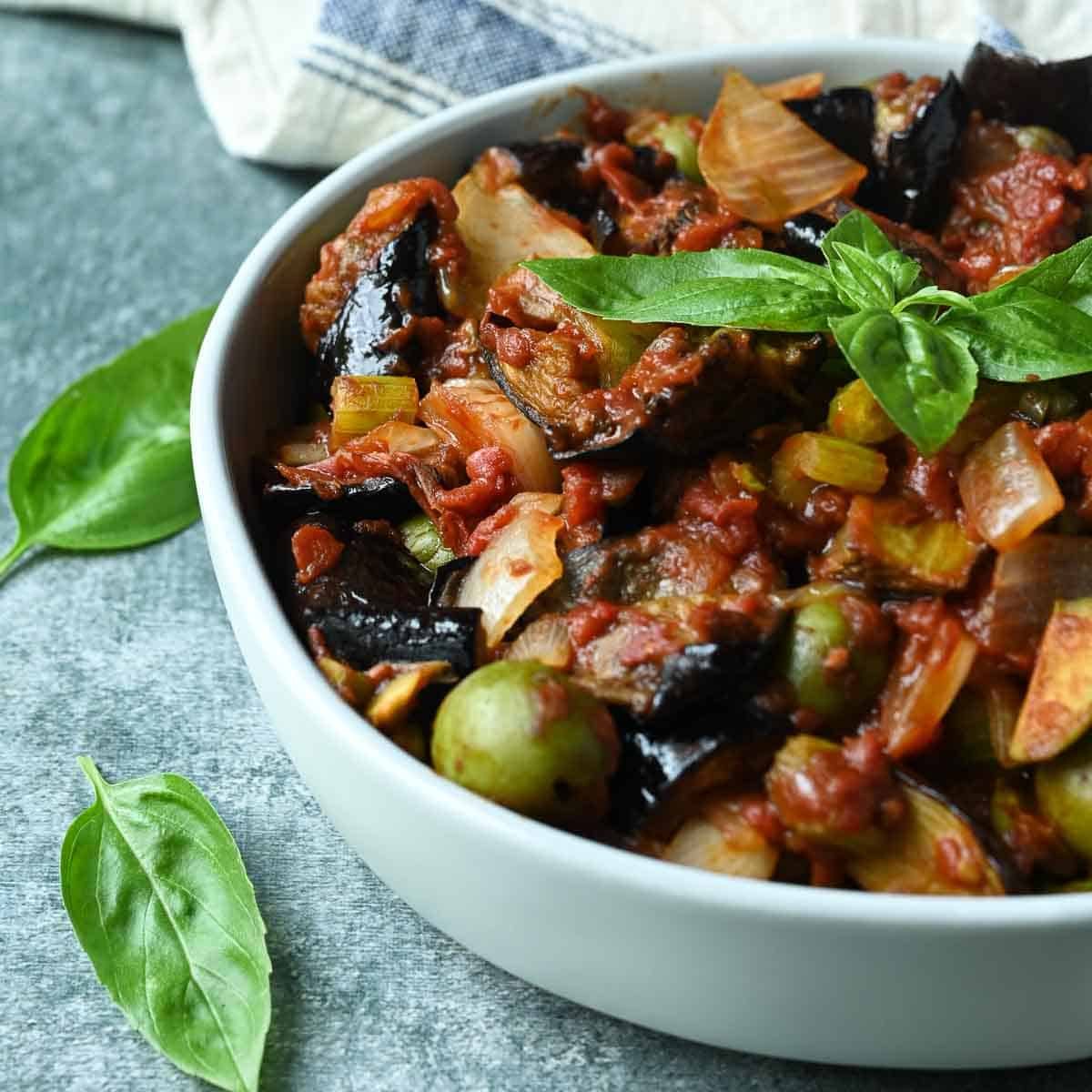
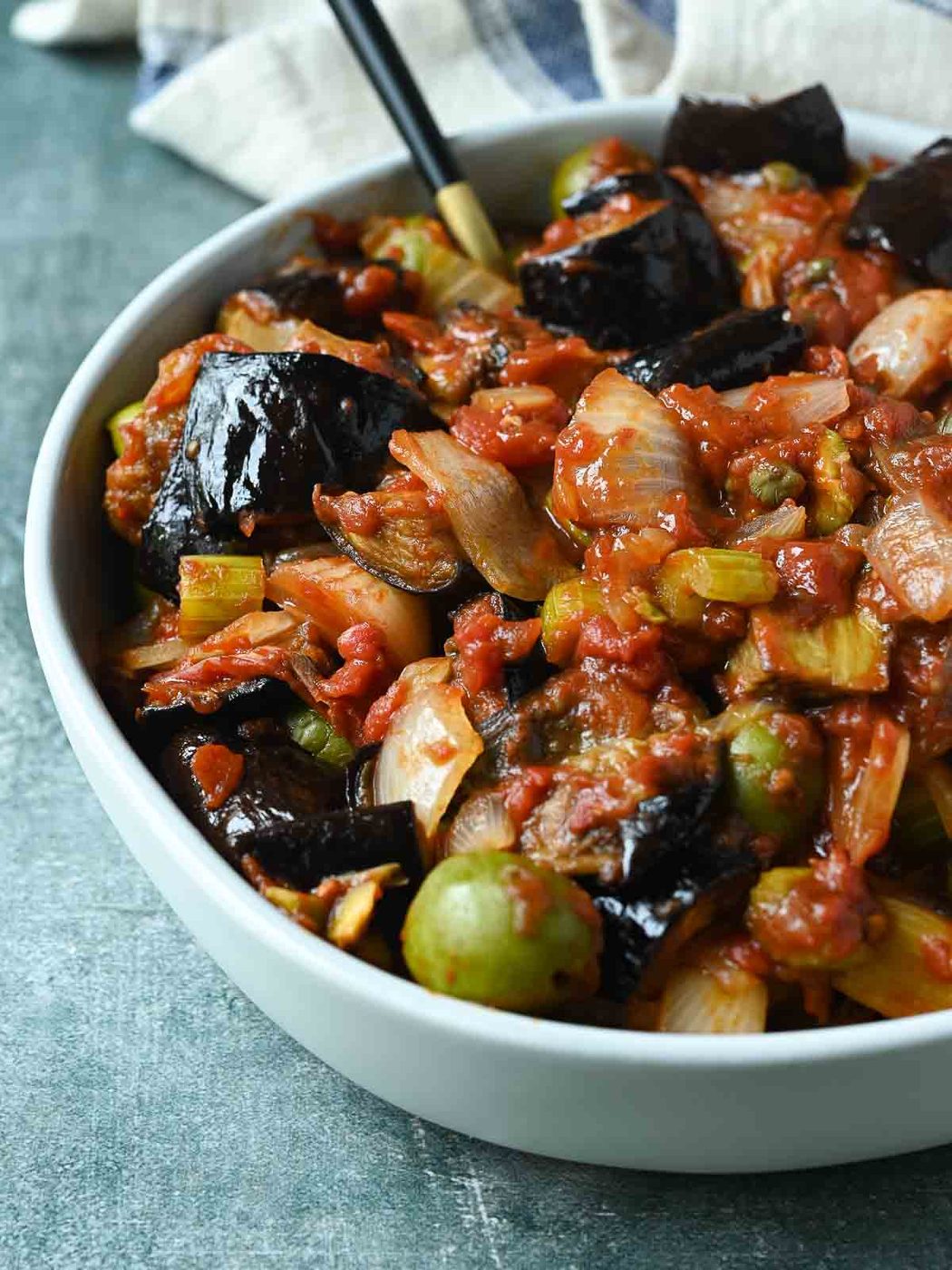
Sicilian eggplant caponata is a sweet and tangy spread prepared with Mediterranean flavors, including tender eggplant, olives, capers, onions, tomatoes, and celery. This vibrant dish can be served as an appetizer or eaten as a main meal.
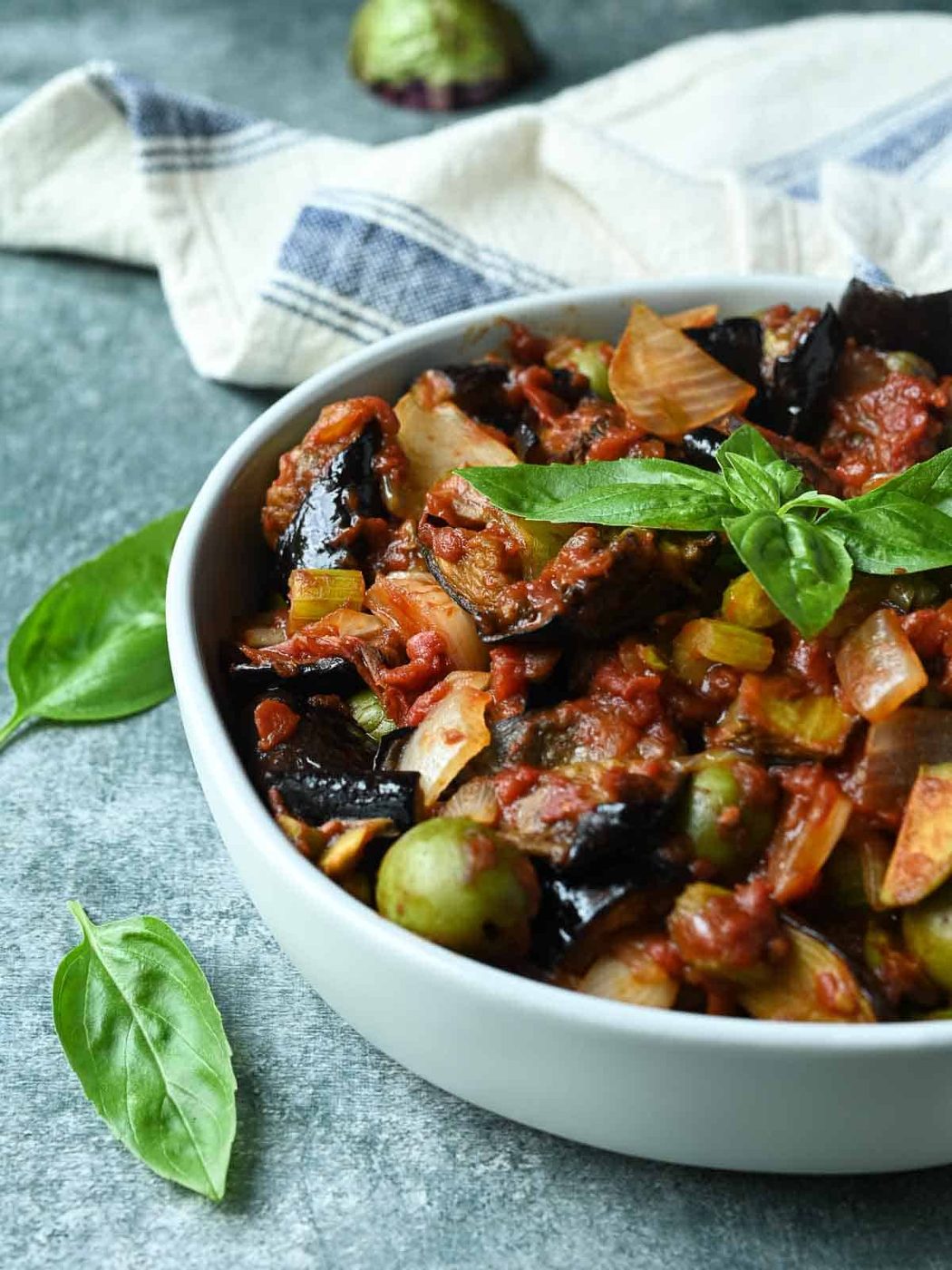
Caponata is a dish that represents the best of summer. We wait until August every year to make this traditional Sicilian dish because eggplant is at its peak freshness.
Recipes for Sicilian eggplant caponata will vary from family to family. Some variations include adding red peppers, raisins, and even pine nuts. We like to keep it simple with onions, capers, celery, and briny Italian olives.
Most days, you will find us roasting the eggplant (rather than frying it) to save some time (and olive oil), but it's good either way. We like to use our homemade tomato sauce instead of canned tomatoes, which is already slightly sweet and provides an additional layer of flavor.
We opt for a good quality balsamic vinegar versus sugar to get that traditional sweet and tangy flavor. Feel free to add sugar if your tomatoes or sauce are not sweet.
Ingredient notes
You will need some simple ingredients for this Italian caponata.
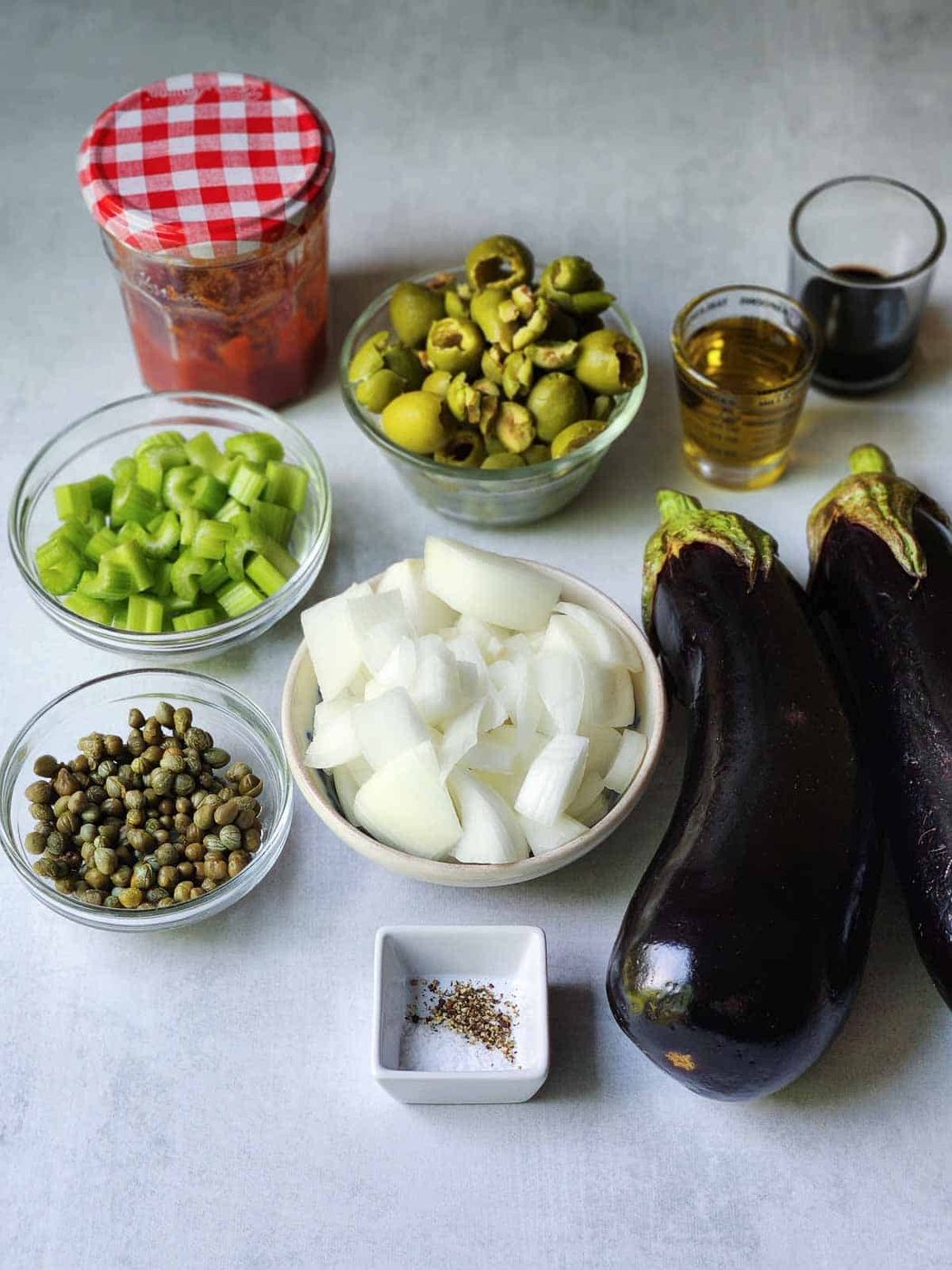
- Eggplant There are endless varieties of eggplant, but a few stand out as "go-to's" for caponata. These include Globe, Italian, Graffiti (Sicilian), Japanese, and Chinese eggplants. Globe eggplants are the big eggplants found in supermarkets with shiny blackish skin. We prefer smaller Italian eggplants because the flesh (skin) is much more tender. Many recipes call for salting the eggplant first to remove the bitterness and help draw out moisture before frying; however, we find this step tedious and unnecessary, especially if roasting the eggplant.
- Onion Yellow, red, or Spanish onions will work.
- Celery Adds brightness and acidity.
- Capers Drained and rinsed (you don't want them too salty).
- Olives our go-to olives are green Castelvetrano olives. Other Italian olives, such as Cerignola and Picholine, provide similar flavor profiles. We have even made caponata with Spanish manzanilla olives (we removed the pimentos). Use what you have on hand. Pro tip: Buy them pitted to save time.
- Tomato sauce You can use your favorite tomato sauce, or crushed/diced tomatoes in a can.
- Olive oil This is used to roast the eggplant and sauté all the vegetables.
- Balsamic vinegar Used to provide tang and sweetness. Our balsamic is a little sweet, with a slightly thicker consistency than most supermarket brands (not glaze). You can also use red wine vinegar.
- Salt and pepper For seasoning.
- Sugar Optional. This is to sweeten the caponata. You may find you need it if you are using canned tomatoes. Since our balsamic and tomato sauce is a little sweet, we usually leave this out. We recommend you taste as you go and add the sugar to your liking.
How to make Sicilian eggplant caponata
Roasting the eggplant is our preferred method for getting the eggplant soft and tender. You can also fry the eggplant, but this will require the use of additional oil as well as more time standing over your stove.
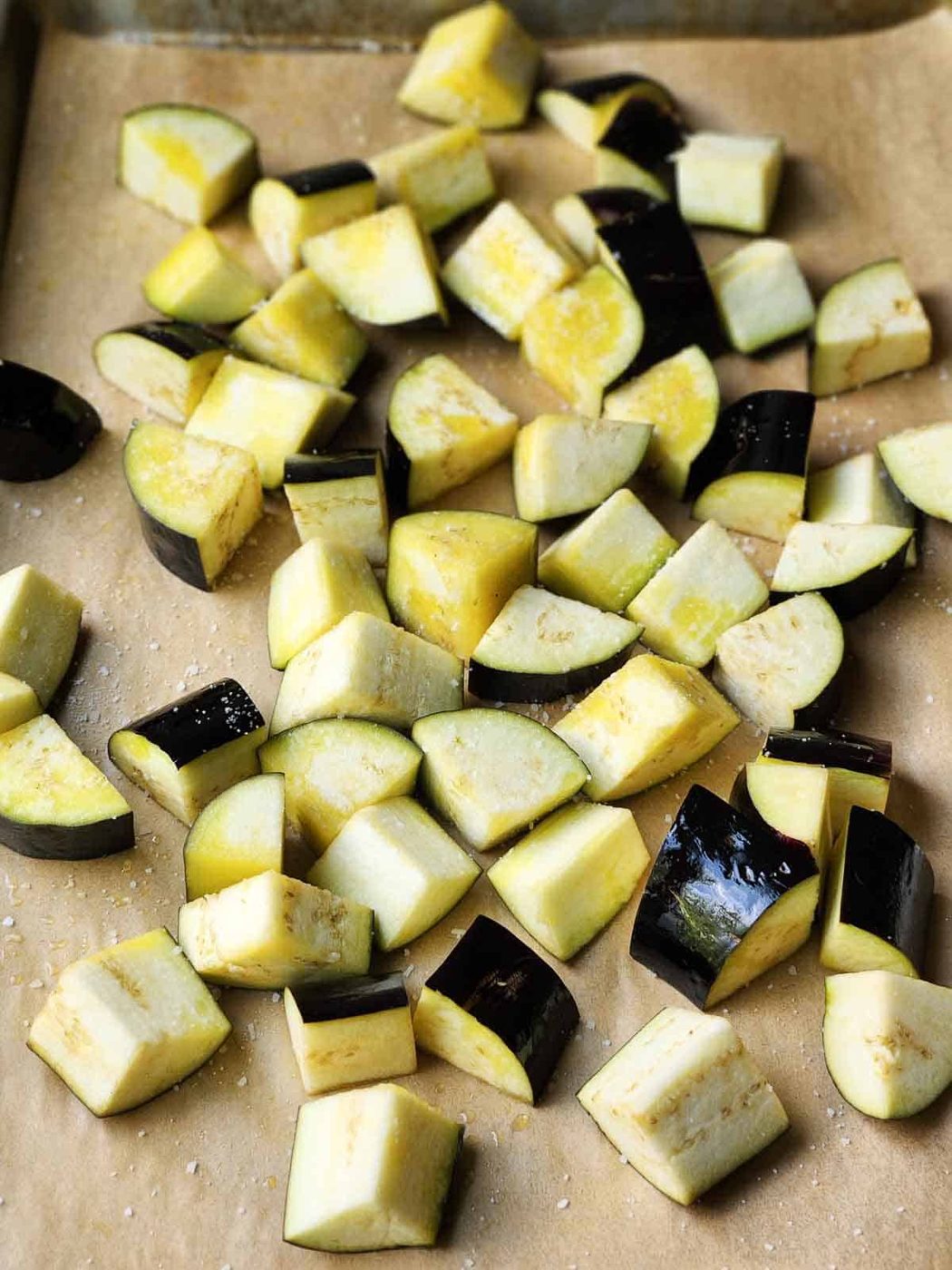
Prepare a roasting pan by lining it with aluminum or parchment paper. Cut the eggplant into cubes, and add the oil and salt. Toss to give it a good coat.
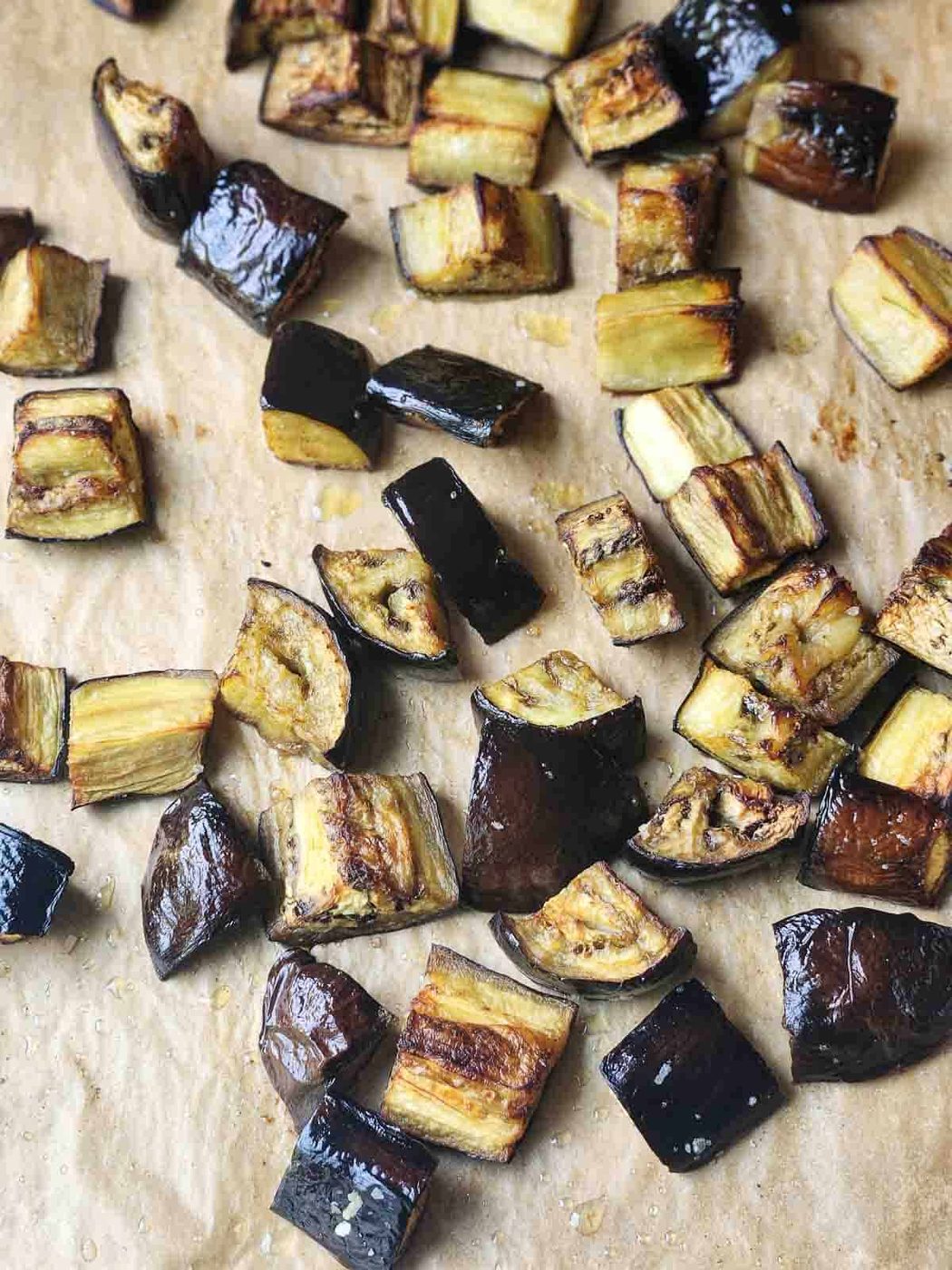
Roast the eggplant until brown and tender, turning once halfway through roasting. Set aside while you prepare the remaining ingredients.
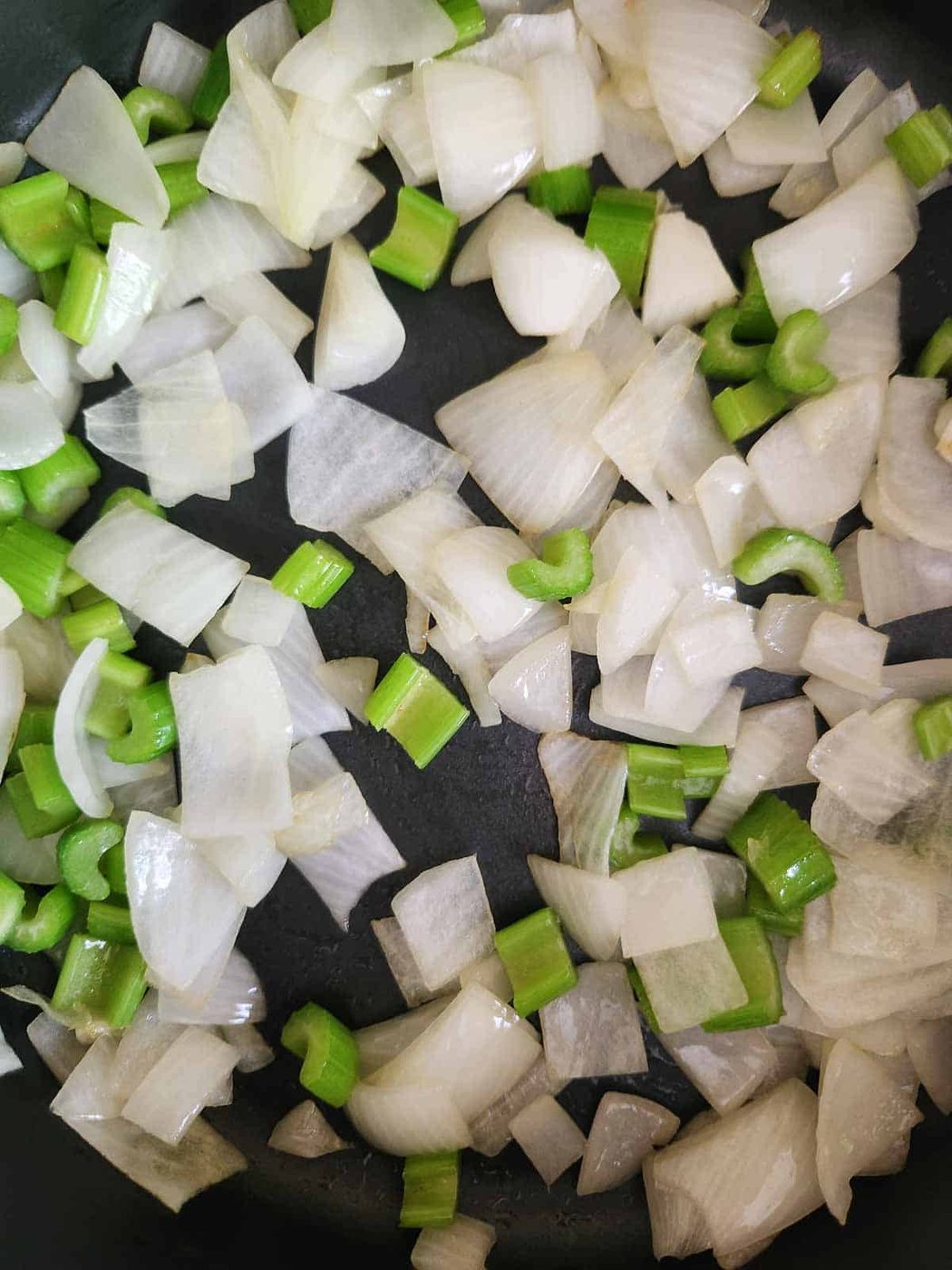
Heat the oil in a skillet over medium heat. Add the onions, celery, and a pinch of salt, and saute until softened (not browned).
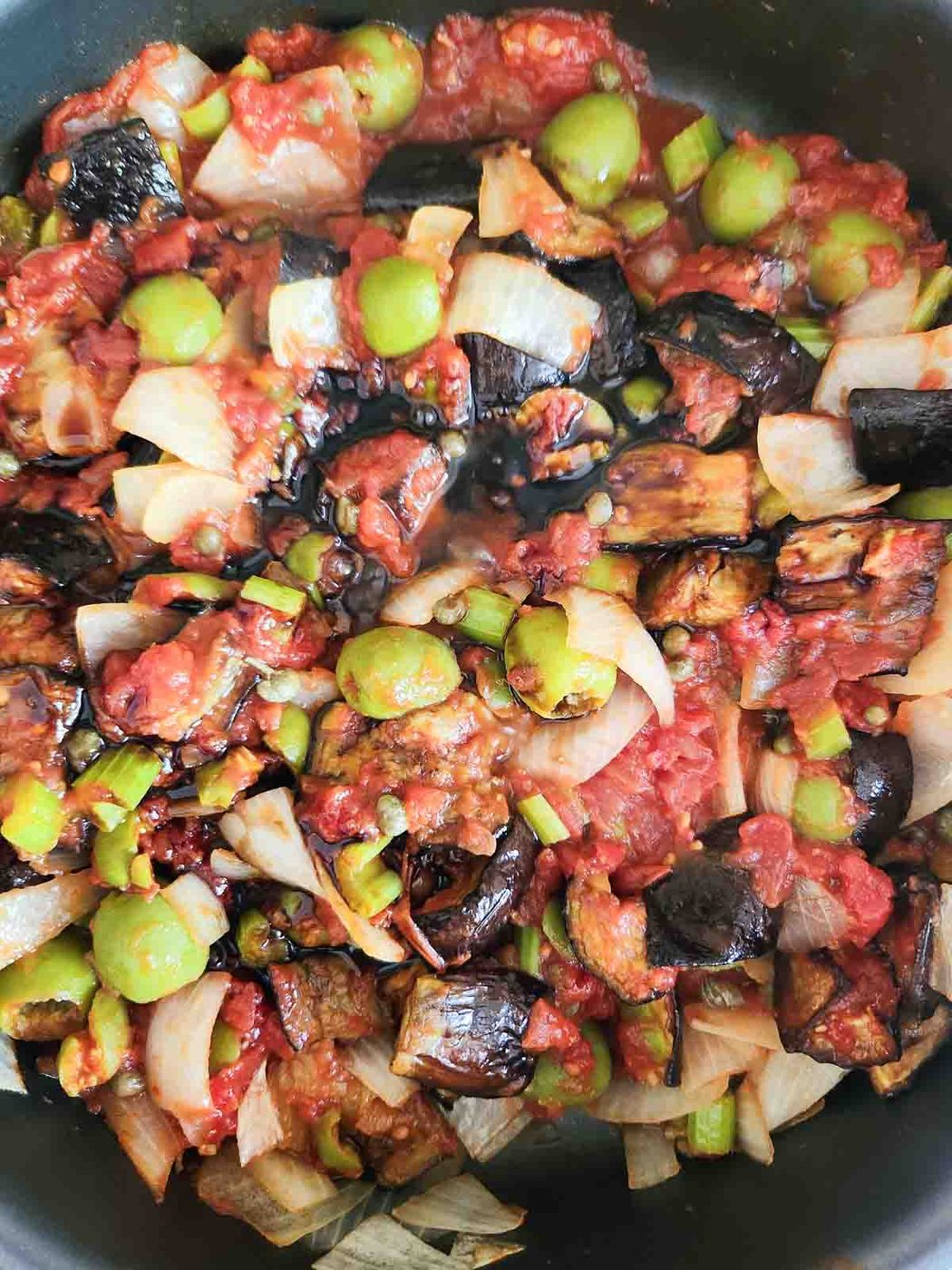
Add the eggplant, olives, capers, and tomato sauce to the skillet. Cover and bring to a simmer. Cook for a few minutes. Add the vinegar, and sugar (if using).
Once the caponata is cooked, taste for seasoning and add salt and pepper as needed. Garnish with fresh herbs if using.
Expert tip
If using smaller eggplants such as Italian eggplant, there is no need to peel the skin. If using large globe eggplants, you may want to peel some of the skin. We like to peel the skin "zebra-style", removing long strips, while leaving some of the skin intact.
Substitutions and variations
We love this caponata as written, but every recipe is unique depending on what region of Sicily you are from. So feel free to try different variations to see what you like best.
- Peppers Some recipes use chopped red bell peppers. Feel free to add them here.
- Zucchini If you want to add more vegetables, choose roasted zucchini or yellow squash. The squash will absorb the flavors of the caponata well.
- Garlic Try adding a minced garlic clove for added flavor.
- Nuts Some variations of caponata use pine nuts or sliced almonds.
- Add heat Make it spicy with crushed red pepper or cayenne pepper.
Serving suggestions
Ok, time to get creative! Caponata is so versatile- it can be served alone or as part of a main dish and can be eaten hot or cold (it's suited to outdoor potlucks and picnics). So, which one will you try?
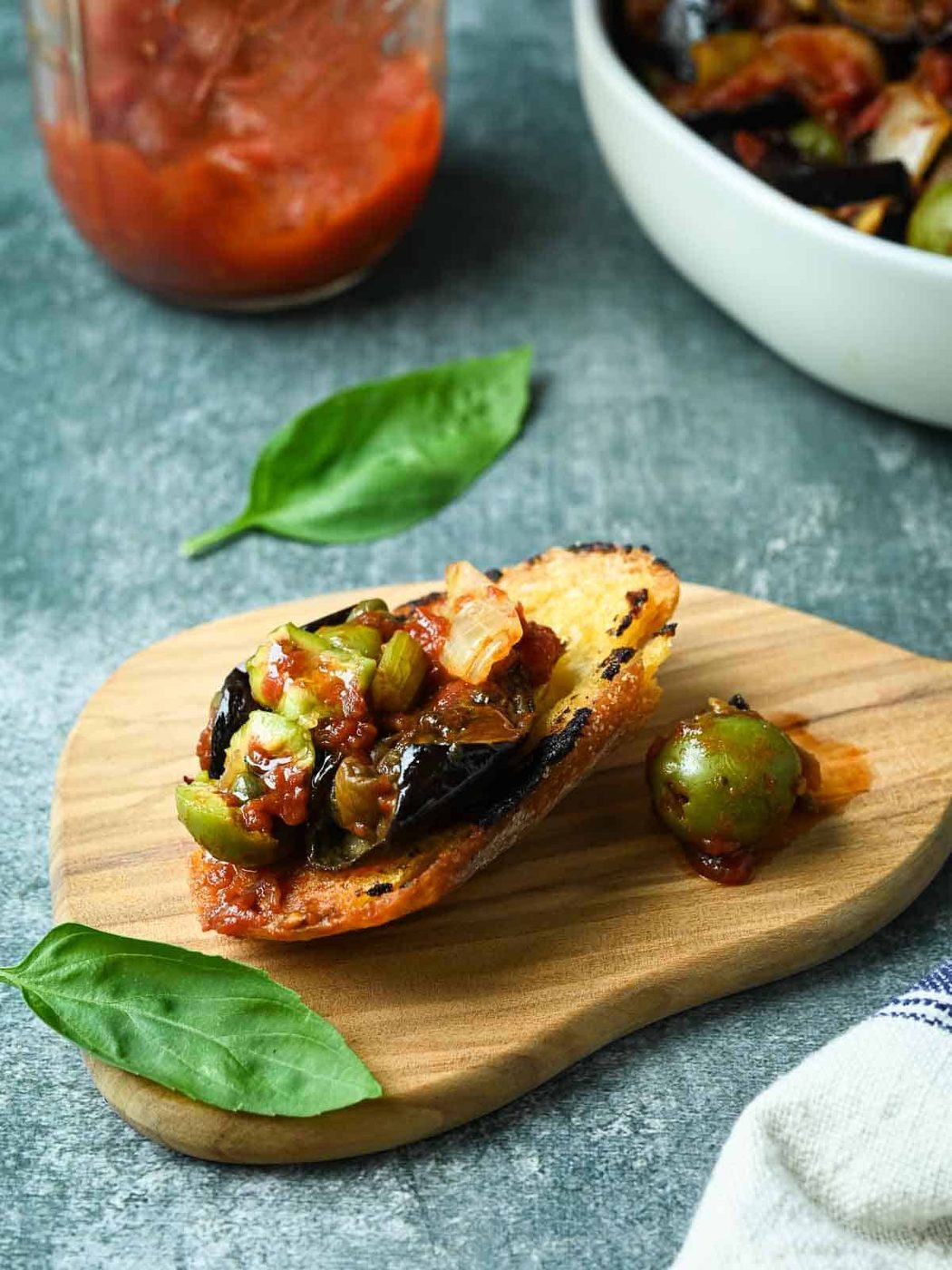
- Appetizer Break out some toasty bread and serve this caponata as a good spread or relish. It's a must for a charcuterie board!
- Side dish Caponata makes a great side dish for a variety of main courses.
- Topping Try it on top of chicken, fish, or steak for a flavorful sauce.
- Pasta our absolute favorite! Add it to your favorite pasta for an authentic Sicilian pasta.
- Breakfast Make a breakfast "shakshuka" with eggs.
- Sandwiches Top sandwiches, hot dogs, or sausage with caponata for a sweet and tangy relish.
Keeping leftovers
Caponata can be stored in an air-tight container in the fridge for up to 5 days. It also freezes well (up to 3 months). allow it to cool completely before freezing.
Kitchen questions
Do you serve caponata warm or cold?Both! Caponata can be eaten hot, cold, or at room temperature. Because of its versatility, it packs well for outdoor eating.
Did someone say yum?
Ingredients
Makes 8
- 1 lb (5 cups chopped) eggplant (2 medium or 1 large eggplant), cut into ½ inch chunks
- 3 tbsp extra-virgin olive oil, divided
- ½ tsp Kosher salt or fine sea salt, divided, plus more to taste
- 1 small onion, chopped (about 1 cup chopped)
- 2-3 stalks celery, chopped (about ½ cup chopped)
- 1⅓ cups pitted green olives such as Castelvetrano, sliced in half
- ¼ cup capers, rinsed and drained
- 2 cups tomato sauce
- 4-6 tbsp balsamic or red wine vinegar
- 1 tbsp white granulated sugar (optional)
- fresh ground pepper, to taste
- fresh herbs such as basil or parsely, optional
Equipment
- baking sheet or roasting pan
- large non-stick skillet
Method
Preheat the oven to 425℉. Add the eggplant, 2 tbsp olive oil, and ¼ tsp salt to a large baking sheet (or roasting pan). Toss to coat well. Spread the eggplant in an even layer. Roast the eggplant until browned and fork tender (turning once halfway through cooking), anout 35-45 minutes. Set aside.
Heat a large skillet over medium heat. Add the remaining tbsp of olive oil. Saute the onions, celery, and remaining ¼ tsp of salt until softened, about 3-5 minutes. Add the roasted eggplant, capers, olives, and tomato sauce. Cover and bring to a simmer. Reduce the heat to medium-low, and simmer for 5-8 minutes. Remove the cover, and add the vinegar and sugar (if using). Cook for another 1-2 minutes. The caponata should be somewhat thick. Add additional salt and pepper to taste. Stir in the fresh herbs (if using). Serve warm or at room temperature.
Kitchen notes
- Caponata can be stored in the fridge for up to 5 days.
- Caponata tastes better the next day after the flavors have had a chance to meld, making it suited to making ahead.