Slow Roasted Beefsteak Tomatoes
- Makes 6 (about 3 slices per person)
- Prep 5 minutes
- Cook 2 hours 30 minutes
- Total 2 hours 35 minutes
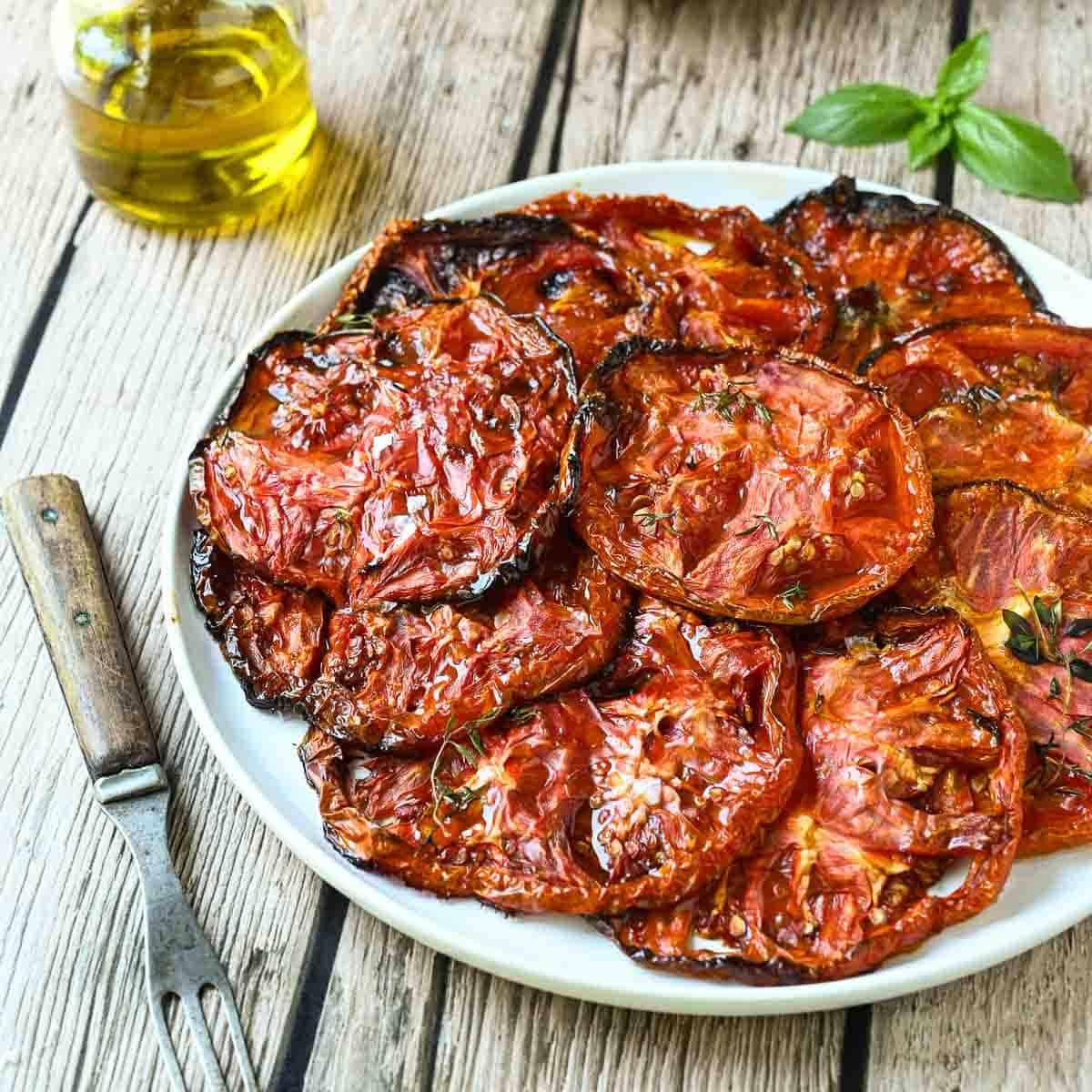
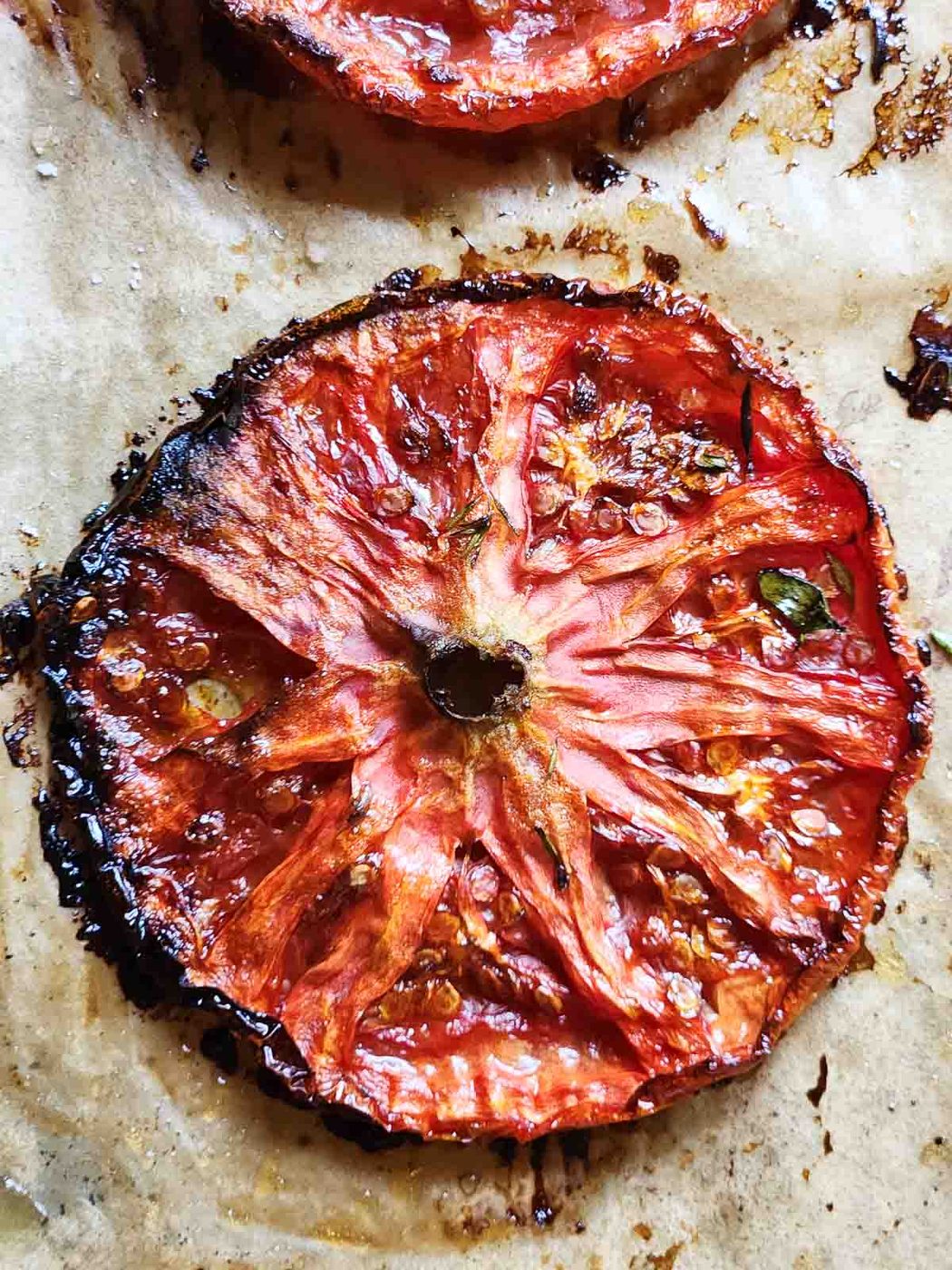
These Slow-Roasted Beefsteak Tomatoes are worth turning the oven on for. Big, juicy beefsteak tomato slices are roasted low and slow until they become jammy, crispy, and caramelized. Serve them in place of the usual sides for breakfast or brunch.
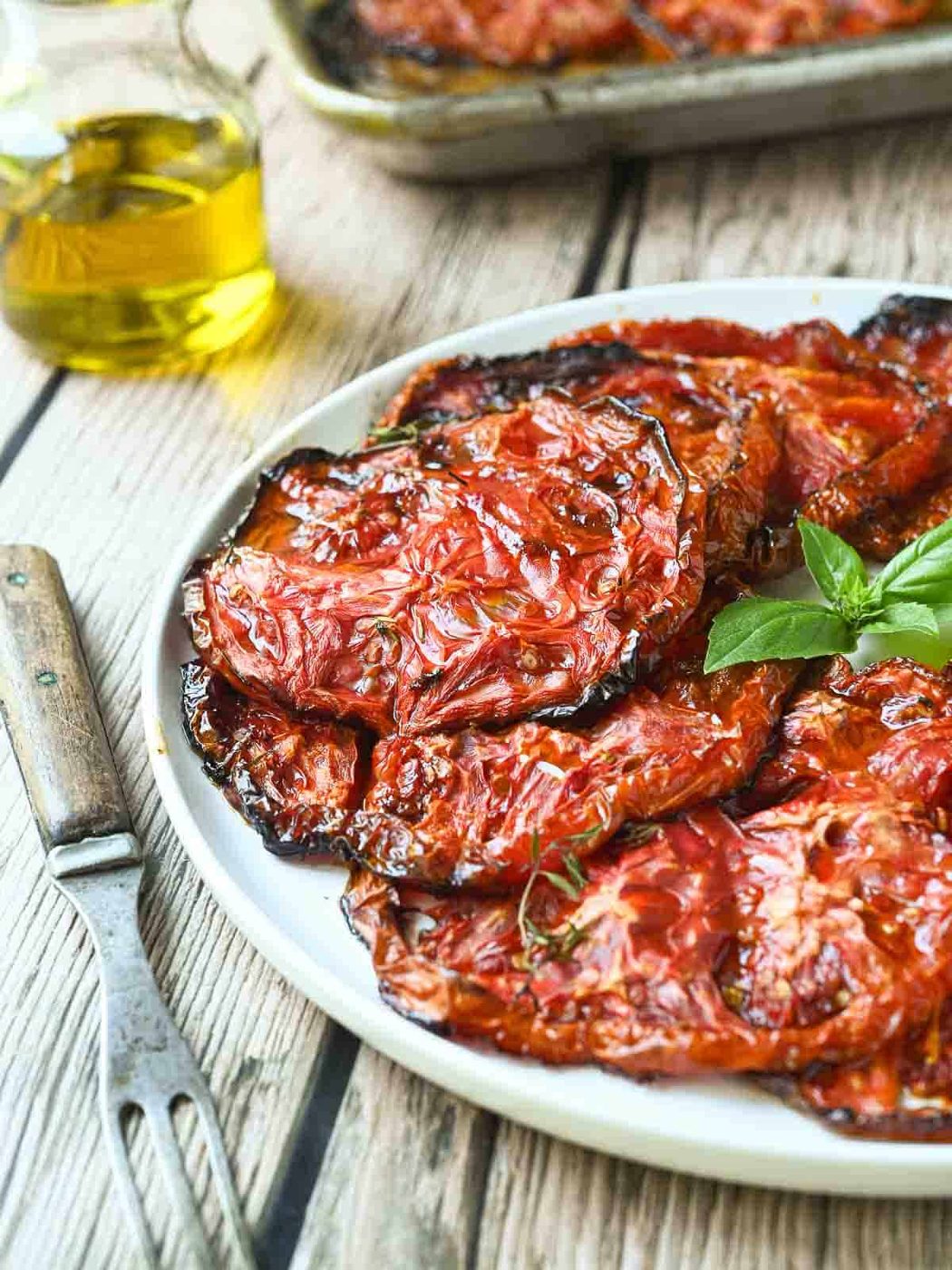
Summer is in full swing in New Jersey, and while we usually gravitate towards heirloom tomatoes this time of year, these beefsteak tomatoes have been calling our name. The beefsteaks at our local market have been larger than life, which means they are ideal for a good old roasting.
Slow roasted tomatoes do take time, but they are so worth it. The tomatoes will cook down, concentrating their flavor significantly. Simple ingredients such as fresh thyme, olive oil, and sweet balsamic vinegar tie the dish together.
Serve them plain, or with your favorite meal. We love them under a crispy fried egg or on toast with some fresh ricotta.
Why slow-roast beefsteak tomatoes?
Technically, you can slow-roast any tomato but beefsteaks shine. Because of their huge surface area, beefsteak tomatoes are suited to slicing and holding their shape after roasting.
So what is a beefsteak tomato? Beefsteaks are a variety of tomato that is known for its large size, as well as a meaty, juicy interior. They are so large that some varieties can weigh up to one pound. That's a hefty tomato!
Beefsteaks can be smooth on the outside, but also have ridges (similar to heirlooms). Their color varies from red to pink, but can also be yellow, orange, and even green. Beefsteaks tend to be sweet-tasting and slightly acidic.
Ingredient notes
For the best flavor, use local tomatoes.
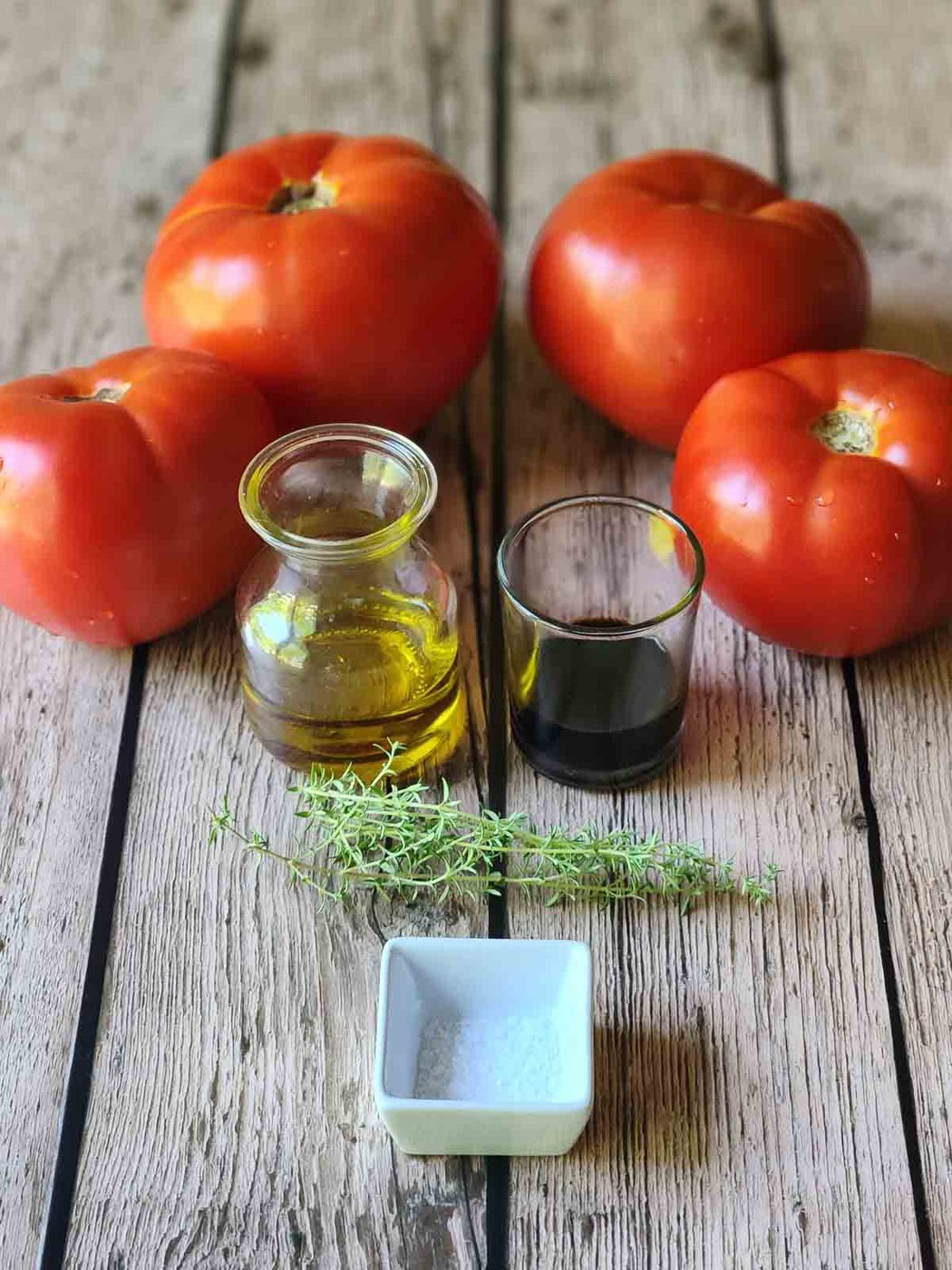
- Beefsteak tomatoes Look for them at your local farmer's market or neighborhood grocery store. Peak season is in the summer where they will be the freshest. Choose tomatoes that are firm (but not hard), and free of any bruising. If you can't find beefsteaks, choose large heirloom or globe tomatoes.
- Olive oil For roasting and flavoring the tomatoes. We use extra-virgin olive oil.
- Balsamic vinegar Adds flavor and sweetens the tomatoes even more!
- Thyme Thyme and tomatoes are a match made in heaven. Choose fresh thyme for the best flavor. You can also use basil.
- Salt Kosher or sea salt for flavoring.
Step by step instructions
These beefsteak tomatoes are easy to make. Your oven will be doing all the hard work. Start by grabbing a few rimmed baking sheets and line them with parchment for easier clean-up. Pre-heat your oven to 300℉ while you prepare the tomatoes.
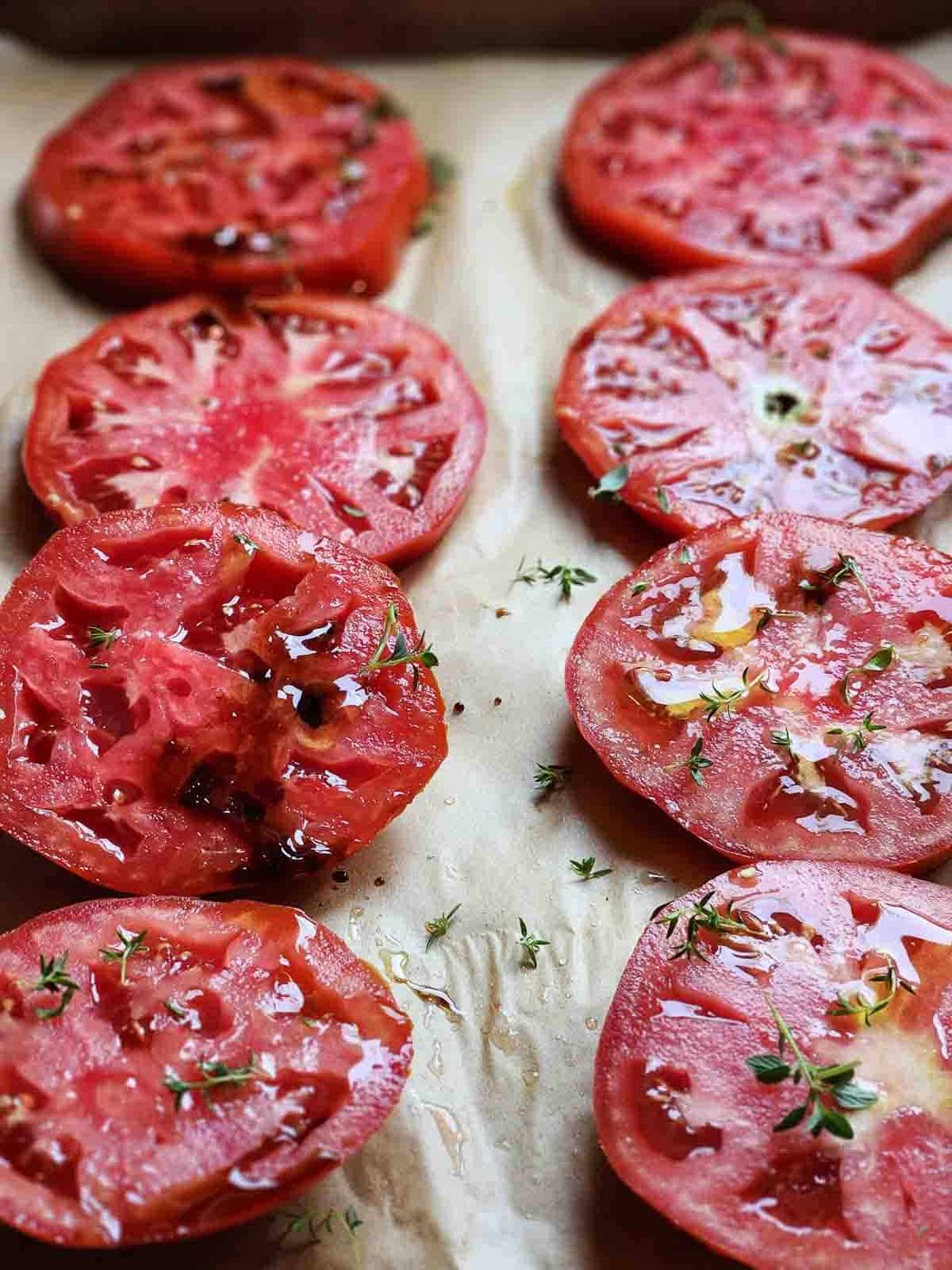
Step 1. Trim the edges off the tomatoes and slice them about ½ inch thick. Place them flat on a baking sheet. Top with olive oil, balsamic, thyme, and salt.
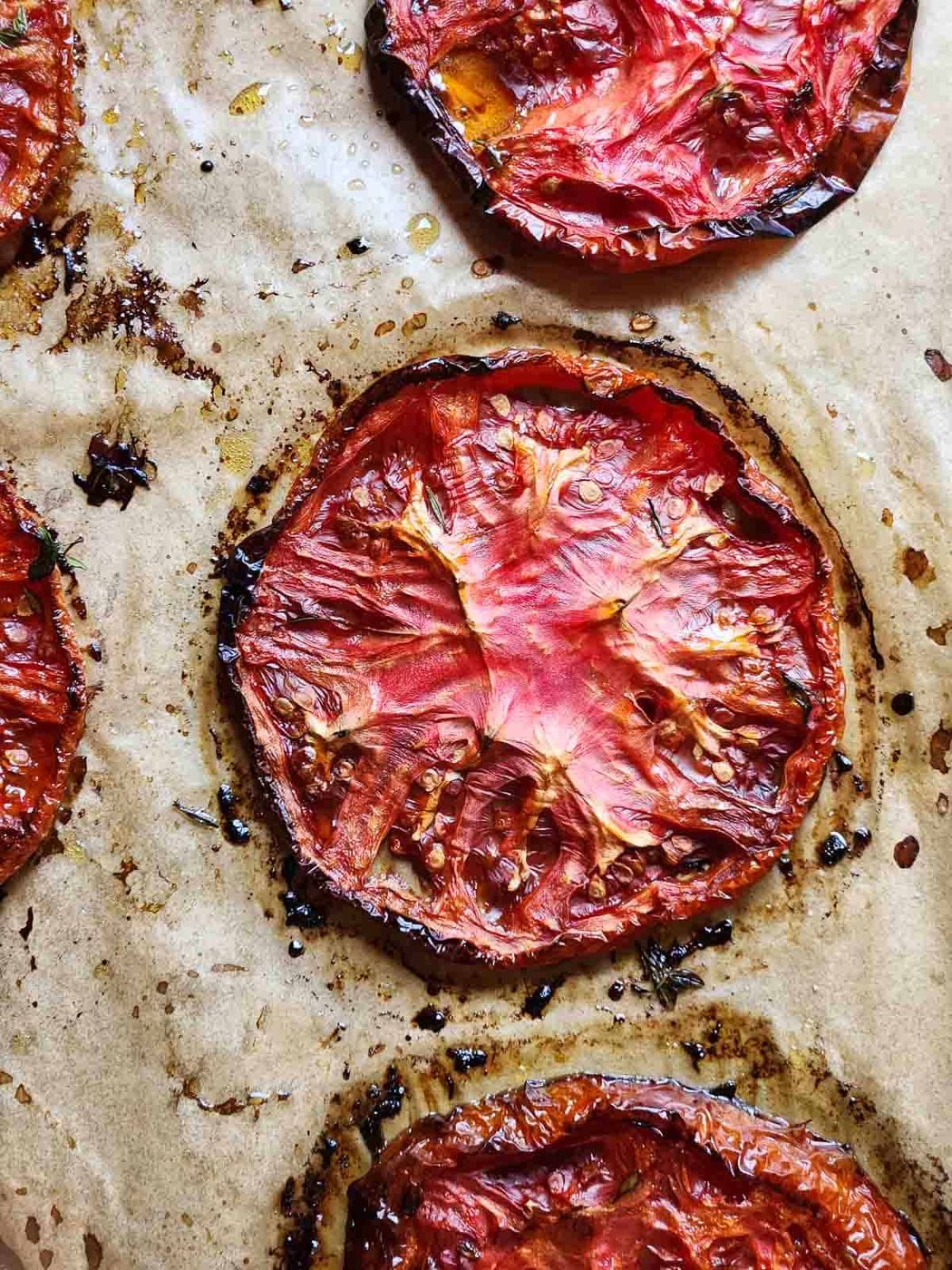
Step 2. Roast for 2.5-3 hours. The tomatoes should still hold their shape when cooked, but will cook down, and become jammy and caramelized.
After roasting, garnish with additional fresh herbs, and taste for seasoning. If needed, drizzle with a little more olive oil. save the tomato juice from the pan. It will make a great addition to salads, soups, or pasta.
*These are abbreviated instructions. For the full list of directions, please see the recipe card below.
Expert tip
If using a convection oven, don't use the "convection roast" setting. This will cause the tomatoes to burn rather than slow-cook. You can use the "convection bake" setting or roast them in a traditional oven. note, it will take longer to slow-roast in a traditional oven (closer to 3 hours or longer, depending on the size of your tomatoes).
Substitutions and variations
Even though beefsteaks are the star of the show, you can substitute any tomato and mix of herbs.
- Tomatoes If you don't have beefsteaks, look for any tomato with a large surface area, such as heirlooms or globe tomatoes. You can roast smaller tomatoes too. If you have an abundance of grape or cherry tomatoes, cut them in half and roast them the same way.
- Herbs Use any combination of fresh or dried herbs. Basil, oregano, and rosemary work well.
- Garlic While we love garlic and tomatoes, we want the tomato flavor to shine, so we tend to leave the garlic out. However, feel free to add 1 or 2 cloves of chopped garlic to the tomatoes.
- Add heat Make it a little spicy with crushed red pepper, cayenne, or chipotle seasoning.
- Smoke Try adding smoked paprika or cumin for a char-grilled taste.
How do we use roasted beefsteak tomatoes?
Roasted tomatoes make the solid side dish to any meal, especially breakfast. When we want to go lighter, we skip the breakfast potatoes or bacon and choose this lighter, vegetarian option.
- Sandwiches Since these tomatoes hold their shape, you can easily add them to sandwiches, like this BLT. Swap out the heirlooms for roasted tomatoes in this sandwich and you won't regret it.
- Caprese salad Ok, the Caprese salad has been done a million times. But have you tried it with roasted tomatoes? Make the switch and thank us later.
- Eggs Serve them on the side of scrambled eggs. Better yet, stack them high, add a poached egg, and serve with a side of sourdough toast.
- Savory toast Toast up some bread, add a little ricotta, and top with the cooked tomatoes for a good brunch toast.
- Meat Serve alongside meats such as beef, pork or chicken.
Keeping leftovers
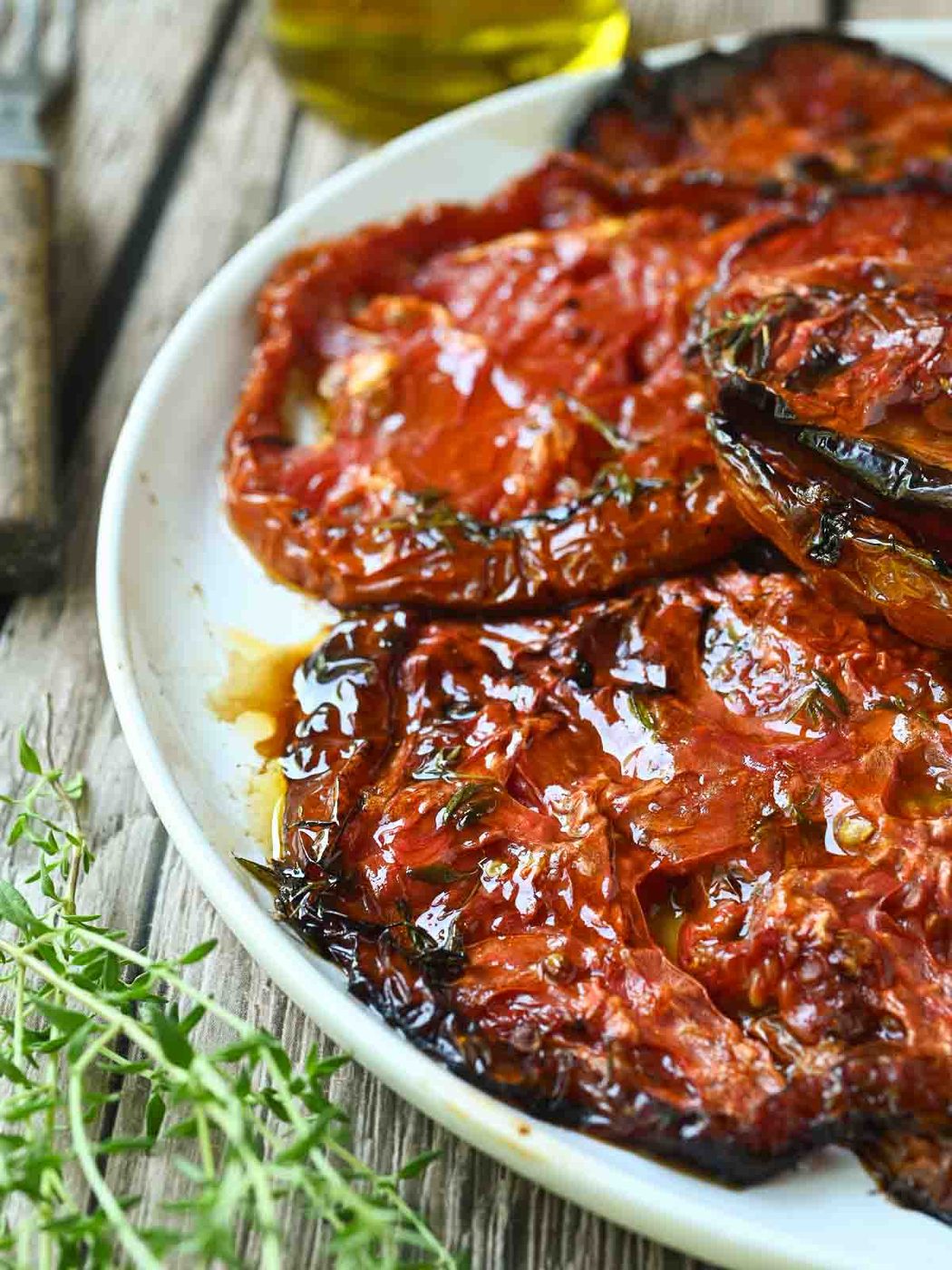
Roasted tomatoes can be stored in an air-tight container in the fridge for up to one week. To make them last even longer, drizzle extra olive oil over the tomatoes before storing.
Kitchen questions
Do we need to peel tomatoes before roasting them?Nope. The skins of the tomatoes will stay intact and will blister in the oven, leaving delightful crispy edges.
Our tomatoes are taking a long time to roast, is this normal?The total roasting time for your tomatoes will vary depending on the size and thickness of your tomatoes. Oven temperatures will also range, especially if you use a convection oven. Continue to roast your tomatoes until they cook down, blister and are caramelized. Do not raise the temperature of the oven, as this will lead to burning.
Try adding beefsteak roasted tomatoes to any of these brunch favorites!
Ingredients
Makes 6 (about 3 slices per person)
- 4 large beefsteak tomatoes (*see notes)
- 2 tbsp olive oil, plus more to taste
- 1 tbsp balsamic vinegar
- ¼ tsp kosher or fine sea salt, plus more to taste
- 3-4 sprigs fresh thyme ((or 1-2 tsp dried thyme))
Equipment
- large rimmed baking sheets
Method
Preheat the oven to 300℉. Line 2 rimmed baking sheets with aluminum foil or parchment paper.
Wash the tomatoes and trim the ends. Crosswise, slice the tomatoes about ½ thick. Lay the tomato slices flat on the prepared baking sheets. Drizzle with the olive oil, balsamic, salt, and thyme. Be sure each tomato is coated with the oil.
Roast the tomatoes for 2-3 hours (depending on the size of your tomatoes and oven) until they are very soft but still hold their shape. The tomatoes should look jammy, with crisp, caramelized edges. Remove the tomatoes from the oven, and allow them to cool. Season with additional olive oil, salt, and thyme if needed.
Kitchen notes
- Look for beefsteak tomatoes at your local farmer's market or neighborhood grocery store. Peak season is in the summer where they will be the freshest. Choose tomatoes that are firm (but not hard), and free of any bruising. If you can't find beefsteaks, choose large heirloom, or globe tomatoes.
- The total roasting time for your tomatoes will vary depending on the size and thickness of your tomatoes. Oven temperatures will also range, especially if you use a convection oven. Continue to roast your tomatoes until they cook down, blister, and are caramelized. Do not raise the temperature of the oven, as this will lead to burning.