
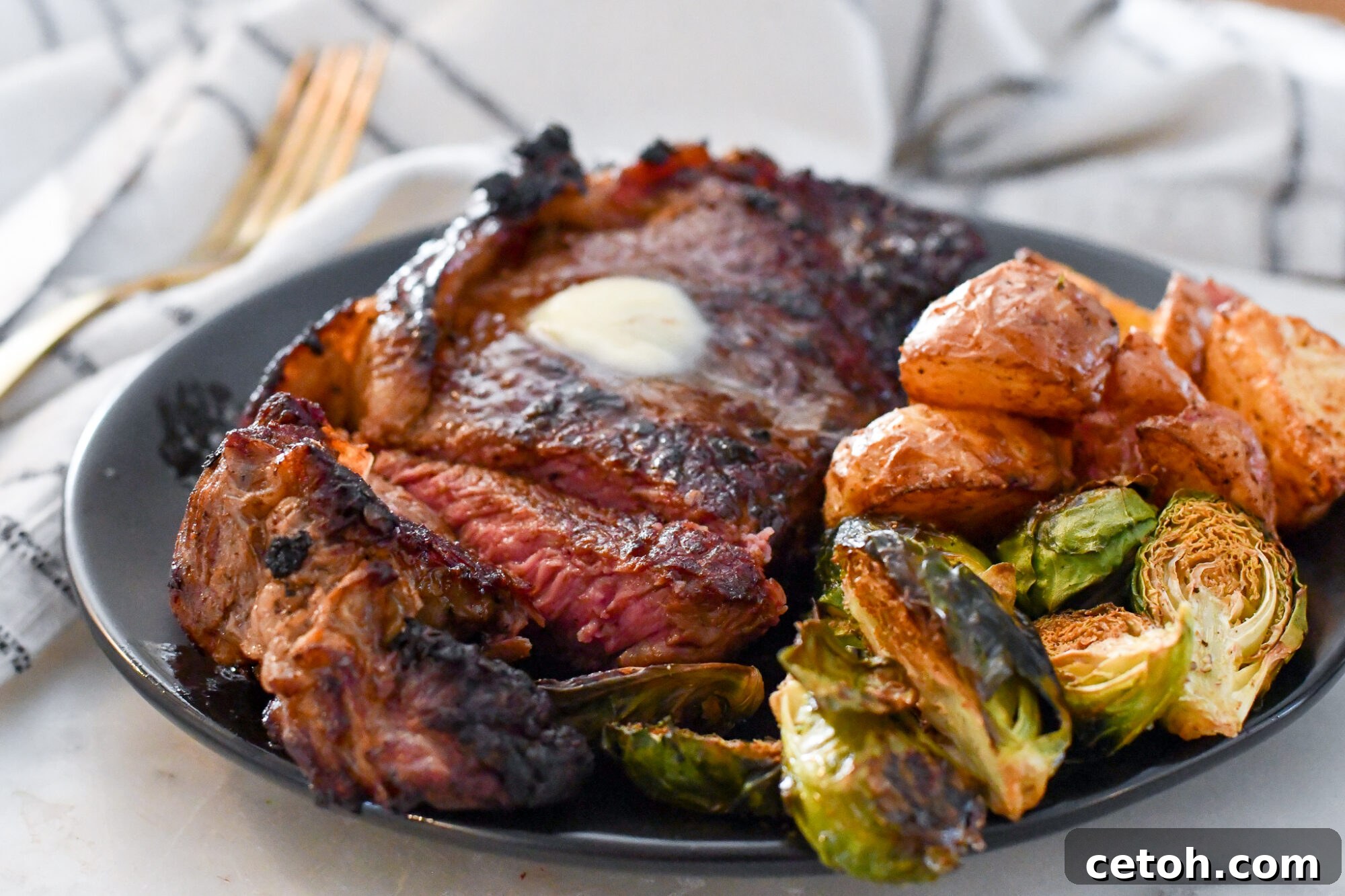
Mastering the Gordon Ramsay Perfect Steak Method: A Culinary Guide
Unlock the secrets to crafting a truly extraordinary steak right in your own kitchen with Gordon Ramsay’s renowned method. This straightforward yet incredibly flavorful technique is ideal for elevating any special dinner at home or impressing guests when entertaining. While primarily demonstrated for pan-searing, this versatile recipe can easily be adapted for an equally superb grilled steak.
Gordon Ramsay, a name synonymous with culinary excellence and uncompromising standards, has bestowed upon the world a steak recipe that has achieved legendary status for its unparalleled succulence and robust flavor. If you’ve ever dreamt of recreating a steak that rivals the finest steakhouses, preparing a dish that not only satisfies but truly impresses, then you are about to embark on an exciting culinary journey. This comprehensive guide is designed to empower you with the knowledge and confidence to achieve just that.
In this detailed guide, we will meticulously walk you through Gordon Ramsay’s perfect steak recipe, providing step-by-step instructions and sharing invaluable expert tips. Our aim is to ensure that your next homemade steak dinner is not merely a meal, but a resounding triumph of flavor and texture, leaving everyone at your table utterly delighted.
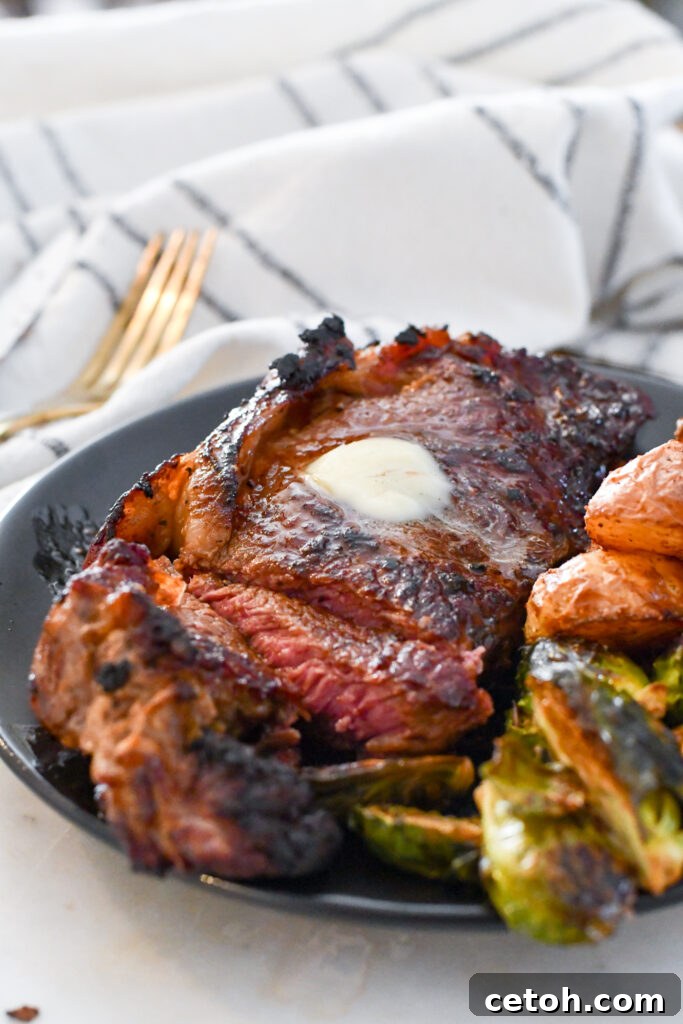
Essential Ingredients for Gordon Ramsay’s Perfect Steak:
- High-Quality Steak: Opt for prime cuts like Ribeye, Filet Mignon, Sirloin, or New York Strip, ensuring good marbling for optimal flavor and tenderness.
- Coarse Sea Salt: A generous amount for proper seasoning and crust formation.
- Freshly Ground Black Pepper: Adds a pungent, aromatic kick.
- Olive Oil: Preferably extra virgin, for searing at high temperatures.
- Unsalted Butter: Crucial for basting and enriching the steak’s flavor.
- Fresh Garlic Cloves: Lightly smashed, for aromatic infusion (optional but highly recommended).
- Fresh Thyme Sprigs: Adds an earthy, herbaceous note during basting. Rosemary can also be used.
Step-by-Step Instructions for Crafting the Gordon Ramsay Perfect Steak:
- Bring Steak to Room Temperature (20-30 Minutes): This initial step is non-negotiable for achieving an evenly cooked steak. Remove your chosen cut from the refrigerator and allow it to rest on the counter for at least 20 to 30 minutes. This crucial waiting period ensures the entire steak cooks uniformly, preventing a cold center and overcooked exterior. Gently pat the steak dry with paper towels to remove any surface moisture, which is key for a superior sear.
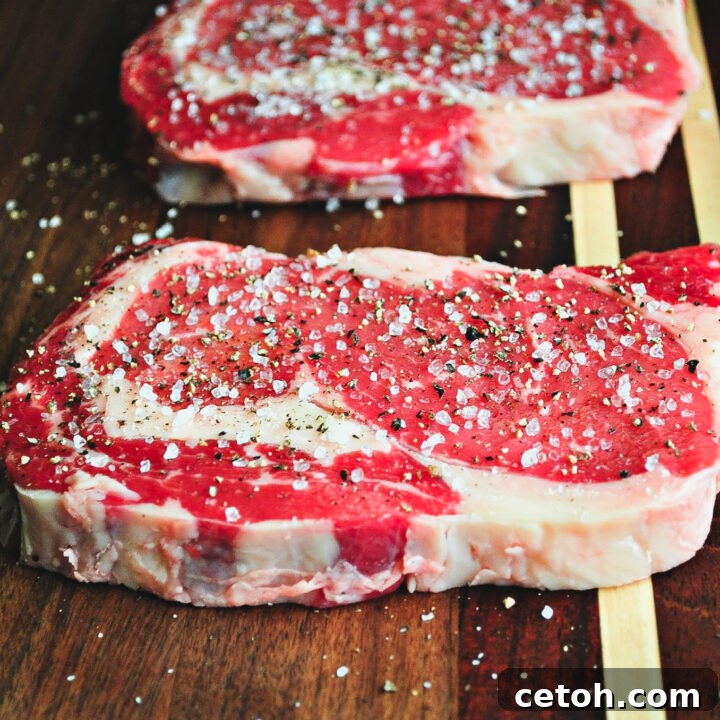
- Generous Seasoning with Salt and Pepper: This is where flavor truly begins. Liberally season both sides of your steak with coarse sea salt and freshly ground black pepper. Don’t be shy; the salt will draw out moisture initially, then create a beautiful, savory crust. Ensure an even coating, pressing the seasoning gently into the meat.
- Preheat Your Pan to Blazing Hot: Select a heavy-bottomed pan, such as a cast iron skillet or a high-quality stainless steel frying pan. Place it over high heat and let it preheat thoroughly until it is smoking hot. A properly preheated pan is essential for creating that coveted dark, crisp crust and locking in the juices.
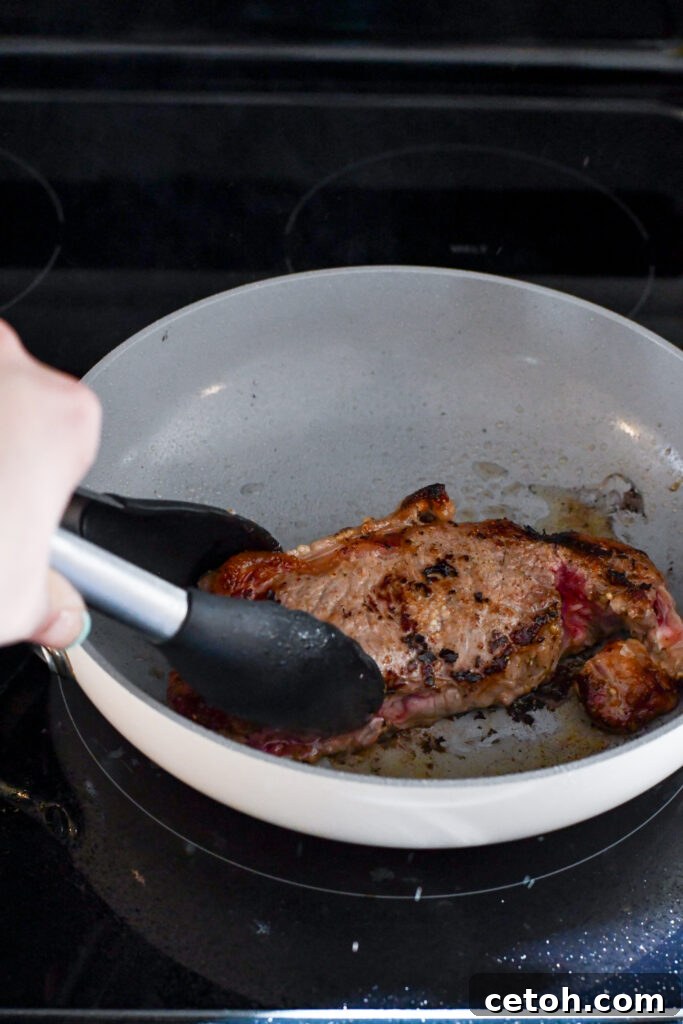
- Initiate the Sear: Add a tablespoon or two of olive oil to the intensely hot pan. The oil should shimmer and potentially smoke slightly. Carefully place the steak into the pan, laying it away from you to avoid splashes. Allow it to sear undisturbed for 1-2 minutes per side. The goal is a deep, golden-brown crust. Flip the steak and sear the other side for an equal duration. For thicker cuts, remember to sear all edges to build an all-around crust.
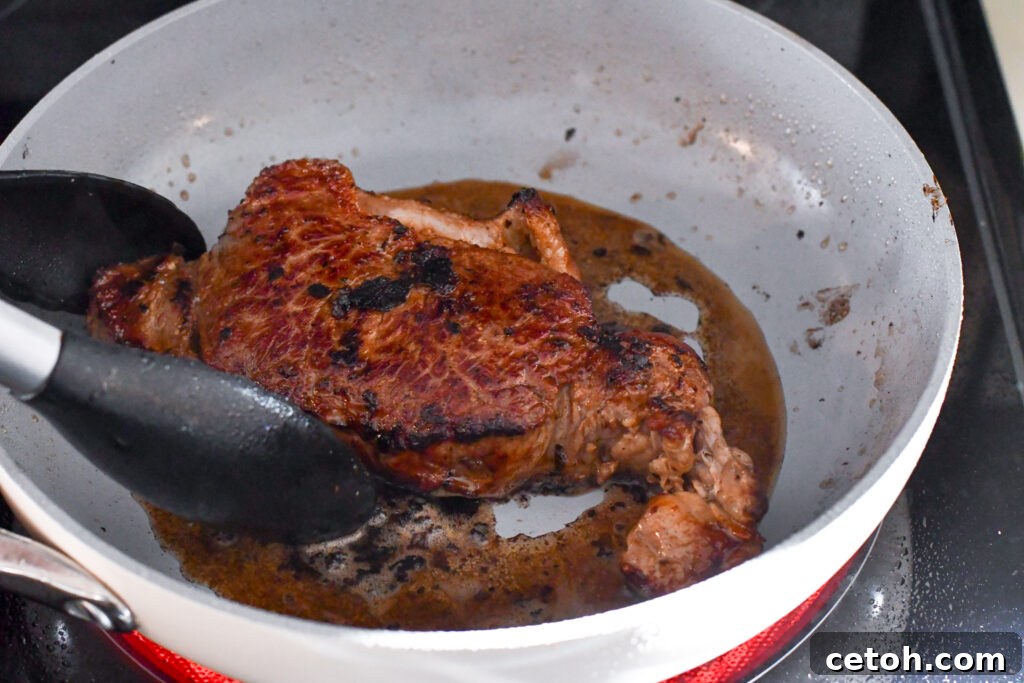
- Butter Basting with Aromatics: Reduce the heat to medium. Add several knobs of unsalted butter to the pan along with smashed garlic cloves and fresh thyme sprigs. As the butter melts, tilt the pan slightly and use a spoon to continuously baste the steak with the fragrant, melted butter. This process not only imparts incredible flavor but also helps to keep the steak moist and contributes to an even cook. Continue basting, flipping the steak every minute or so, until it reaches your desired doneness.
- Rest the Steak for Perfection: Once your steak reaches the desired internal temperature (use a meat thermometer for precision – 125°F/52°C for rare, 130-135°F/54-57°C for medium-rare, 135-140°F/57-60°C for medium), remove it from the pan and transfer it to a cutting board. Crucially, allow the steak to rest for at least 5-10 minutes before slicing. This resting period is vital, as it allows the internal juices to redistribute throughout the meat, ensuring every bite is incredibly tender and juicy.
Gordon Ramsay’s Golden Rule:
“If you follow these simple rules, it’s going to be easy. Let the pan get nice and hot. If there’s no heat inside the pan, there’s no color. If there’s no color, there’s no flavor. Make sure the steak is relaxed, meaning it’s at room temperature. A relaxed steak will cook quicker, and won’t be stone cold inside the center.”
Explore More Gordon Ramsay Culinary Masterpieces
Gordon Ramsay’s Perfect Cheese Omelette Recipe
Gordon Ramsay Perfect Steak Method
Make Perfect Scrambled Eggs Like Gordon Ramsay
Gordon Ramsay’s Perfectly Poached Egg
Frequently Asked Questions About Cooking Steak:
Why is it important to let the steak come to room temperature before cooking, as per Gordon Ramsay’s recipe?
- Ensures Even Cooking: A steak that’s at room temperature cooks more uniformly from edge to center. If you cook a cold steak directly from the refrigerator, the exterior will cook much faster than the colder interior, leading to an unevenly cooked steak with a cold, rare center and an overcooked outer layer.
- Promotes Faster Cooking: A steak closer to room temperature requires less time in the hot pan for its internal temperature to rise. This helps prevent the outer layers from becoming dry or tough while you wait for the center to reach the desired doneness.
- Achieves a Superior Sear: When a cold steak hits a hot pan, it drastically lowers the pan’s surface temperature, making it harder to achieve that perfect, flavorful crust. A room-temperature steak allows the pan to maintain its heat, resulting in a quicker, more effective Maillard reaction (browning) and a beautiful sear.
- Enhances Tenderness: Allowing the steak to warm up slightly helps relax the muscle fibers within the meat. This relaxation contributes to a more tender texture in the final cooked product, making it less likely to be chewy.
- Maximizes Juiciness: Starting with a warmer steak helps the meat retain its natural juices more effectively. A significant temperature differential in a cold steak can cause juices to be forced out of the muscle fibers, leading to a drier steak.
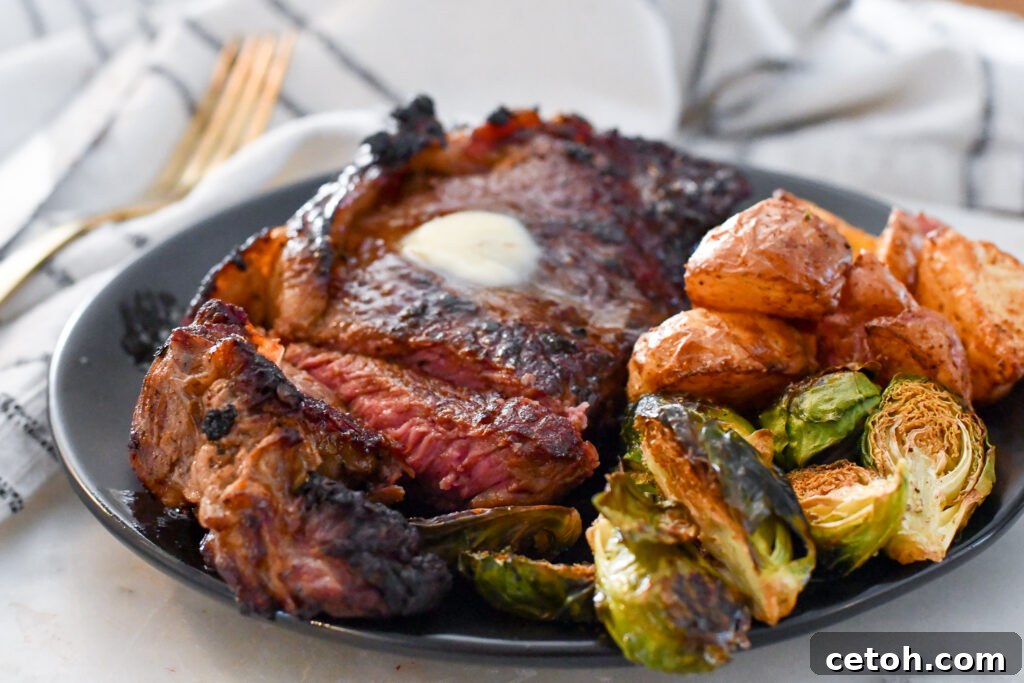
Why is it necessary to let the steak rest before slicing?
- Juice Redistribution is Key: As a steak cooks, the heat causes the muscle fibers to contract, pushing the precious, flavorful juices towards the center of the meat. If you slice into the steak immediately, these concentrated juices will simply flow out onto the cutting board, leaving you with a drier, less flavorful steak. Resting allows these juices ample time to redistribute throughout the entire cut, resulting in a much juicier and more succulent experience with every bite.
- Improved Tenderness: Resting the steak also gives the muscle fibers a chance to relax after being subjected to high heat. This relaxation process reabsorbs some of the moisture, making the meat noticeably more tender and pleasant to chew, rather than stiff or tough.
- Enhanced Flavor Development: During the resting period, the flavors within the steak have an opportunity to meld and deepen. This short pause allows the savory notes, seasonings, and baste flavors to fully integrate, contributing to a richer and more enjoyable overall taste profile.
- Even Temperature Throughout: When a steak is removed from the pan, its outer layers are significantly hotter than its core. Resting allows the residual heat to continue cooking the steak gently, bringing the internal temperature up slightly and evening out the temperature gradient. This ensures a more consistent doneness from edge to center and a better eating experience.
What role does butter play in cooking a steak?
- Unrivaled Flavor Enhancement: Butter is renowned for its rich, creamy, and distinctively nutty flavor. When incorporated into cooking a steak, especially during basting, it infuses the meat with an incredible depth of savory richness. The combination of steak juices, seasonings, and the luxurious butter creates an unforgettable taste that elevates the entire dish.
- Boosts Moisture and Juiciness: Butter contributes vital moisture to the steak, which is particularly beneficial during high-temperature cooking methods like searing. As the butter melts and coats the steak, it acts as a protective layer, helping to prevent excessive drying of the meat’s surface and keeping it wonderfully succulent.
- Aids in Achieving a Perfect Searing Crust: When used in conjunction with a high smoke point oil like olive oil, butter plays a significant role in developing a beautiful, golden-brown crust. The milk solids in butter caramelize and brown, contributing to the Maillard reaction, which is essential for that appealing texture and complex flavor on the steak’s exterior.
- Vehicle for Aromatics: Butter is an excellent medium for infusing flavors. When aromatics such as smashed garlic and fresh herbs like thyme or rosemary are added to the melting butter, their essences are released and then absorbed by the steak through the basting process. This creates a deeply fragrant and enticing aroma that permeates the meat.
- Effective Basting Technique: Basting involves spooning melted butter and its infused aromatics over the steak as it cooks. This technique ensures that the steak remains constantly coated in flavorful fats, promoting even cooking, adding moisture, and distributing the buttery goodness across the entire surface.
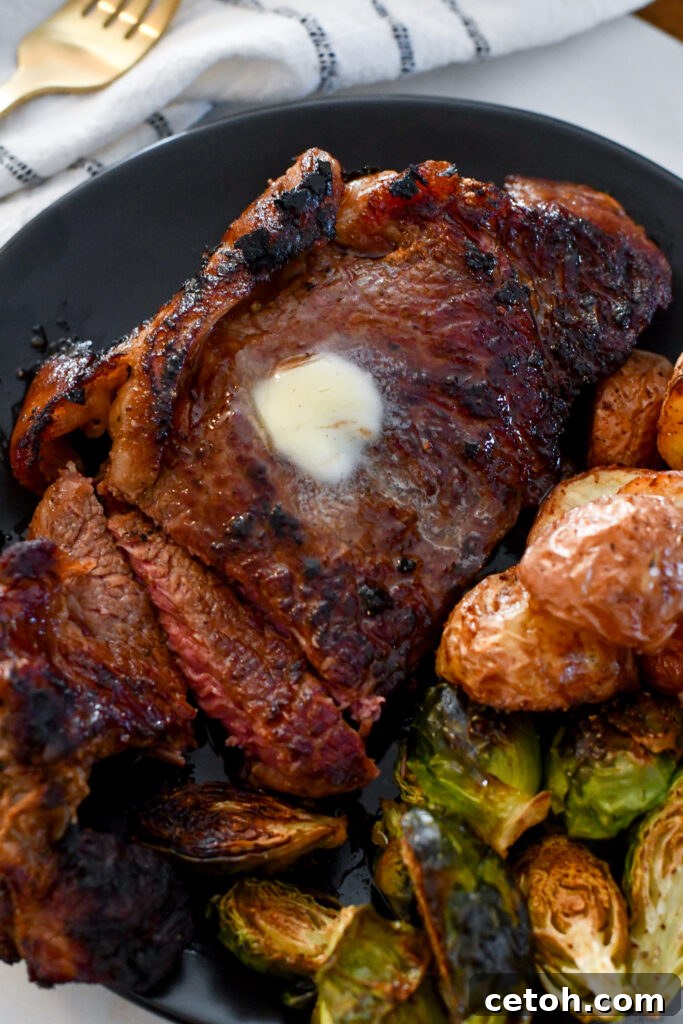
- Adds a Luxurious Finishing Touch: Even a small pat of unsalted butter added to the steak immediately after it’s removed from the heat can make a significant difference. Known as “mounting” with butter, the residual heat melts it, creating a glossy, rich coating that enhances the steak’s presentation and adds a final burst of flavor and velvety texture.
Quick Tips for Perfecting Your Gordon Ramsay Steak:
- Prioritize Quality Meat: The foundation of an exceptional steak is a high-quality cut. Invest in well-marbled beef from a reputable butcher for the best possible flavor and naturally tender texture.
- Always Bring to Room Temperature: This simple step is critical for even cooking and ensuring your steak doesn’t have a cold center. Allocate 20-30 minutes for this before you start cooking.
- Season Generously and Thoroughly: Don’t underestimate the power of salt and pepper. A liberal application is essential for drawing out flavor and creating that desirable savory crust.
- Ensure Your Pan is Piping Hot: A smoking hot pan is non-negotiable for achieving a deep, crusty sear that locks in the juices. Patience in preheating pays off immensely.
- Master the Butter Baste: The technique of basting with butter, garlic, and thyme is a game-changer. It not only infuses incredible flavor but also keeps the steak moist and tender.
- Never Skip the Resting Time: This crucial pause allows the juices to redistribute throughout the steak, preventing them from escaping when sliced and guaranteeing a succulent, tender result.
Gordon Ramsay’s Perfect Steak
2 Steaks
20 minutes
10 minutes
30 minutes
In this recipe, we’ll walk you through Gordon Ramsay’s perfect steak recipe step by step and share essential tips to ensure your next homemade steak dinner is a resounding success.
Ingredients
- Ribeye (or really any quality cut of steak)
- Large grain sea salt
- Freshly ground pepper
- 1-2 Tbsp olive oil
- Fresh garlic, slightly crushed
- Fresh thyme sprigs
- 2 Tbsp unsalted butter
Instructions
- Remove steaks from fridge and let them come to room temperature for 20 minutes. Pat them dry with paper towels.
- Place a heavy-bottomed pan (like cast iron) over medium-high heat on the stovetop. Allow it to get extremely hot.
- Season the thawed steaks generously with large grain sea salt and freshly ground pepper on all sides. You can also rub the bottom of the steaks into any excess seasoning on your cutting board.
- When the pan begins to show any signs of light smoke, add 1-2 tablespoons of olive oil. Swirl to coat the pan evenly.
- Carefully lay the steaks into the hot pan, away from you. Sear for 1 minute, then flip. Continue flipping every minute to build an even crust. If your steak is thick, render the fat cap by holding it upright with tongs against the pan for about 30-60 seconds.
- After a few minutes of searing and flipping, add the crushed garlic cloves and fresh thyme sprigs to the pan around the cooking steaks, along with an additional tablespoon of olive oil.
- Add the unsalted butter to the pan. Once melted, tilt the pan and use a large spoon to baste the steaks continuously with the foaming butter, garlic, and thyme mixture. Keep flipping the steaks every minute.
- Remove the steaks from the pan when they reach your desired internal temperature or tenderness. A good tactile guide: rare feels like the fleshy part of your palm below your thumb; medium-rare like your cheek; medium like your chin; and well-done like your forehead. For a medium steak as pictured, approximately 10 minutes total cook time is often sufficient, but always confirm with a meat thermometer.
- Transfer the cooked steaks to a cutting board and let them rest for 5-10 minutes before slicing. This is crucial for maximum juiciness.
Nutrition Information:
Yield: 2
Serving Size: 1
Amount Per Serving:
Calories: 342Total Fat: 33gSaturated Fat: 13gTrans Fat: 0gUnsaturated Fat: 19gCholesterol: 64mgSodium: 407mgCarbohydrates: 1gFiber: 0gSugar: 0gProtein: 11g
Did you make this recipe?
Please leave a comment on the blog or share a photo on Instagram!
In conclusion, preparing a perfect steak like Gordon Ramsay is an achievable goal for any home cook. By following these meticulously detailed steps and understanding the ‘why’ behind each technique – from bringing your steak to room temperature to the art of butter basting and, crucially, allowing it to rest – you’re well on your way to culinary mastery. This method isn’t just about cooking a piece of meat; it’s about transforming a simple ingredient into a dish that boasts unparalleled flavor, tenderness, and juiciness. Embrace these techniques, experiment with your favorite cuts and aromatics, and prepare to delight your palate and impress your guests with a truly restaurant-quality steak. Happy cooking!