
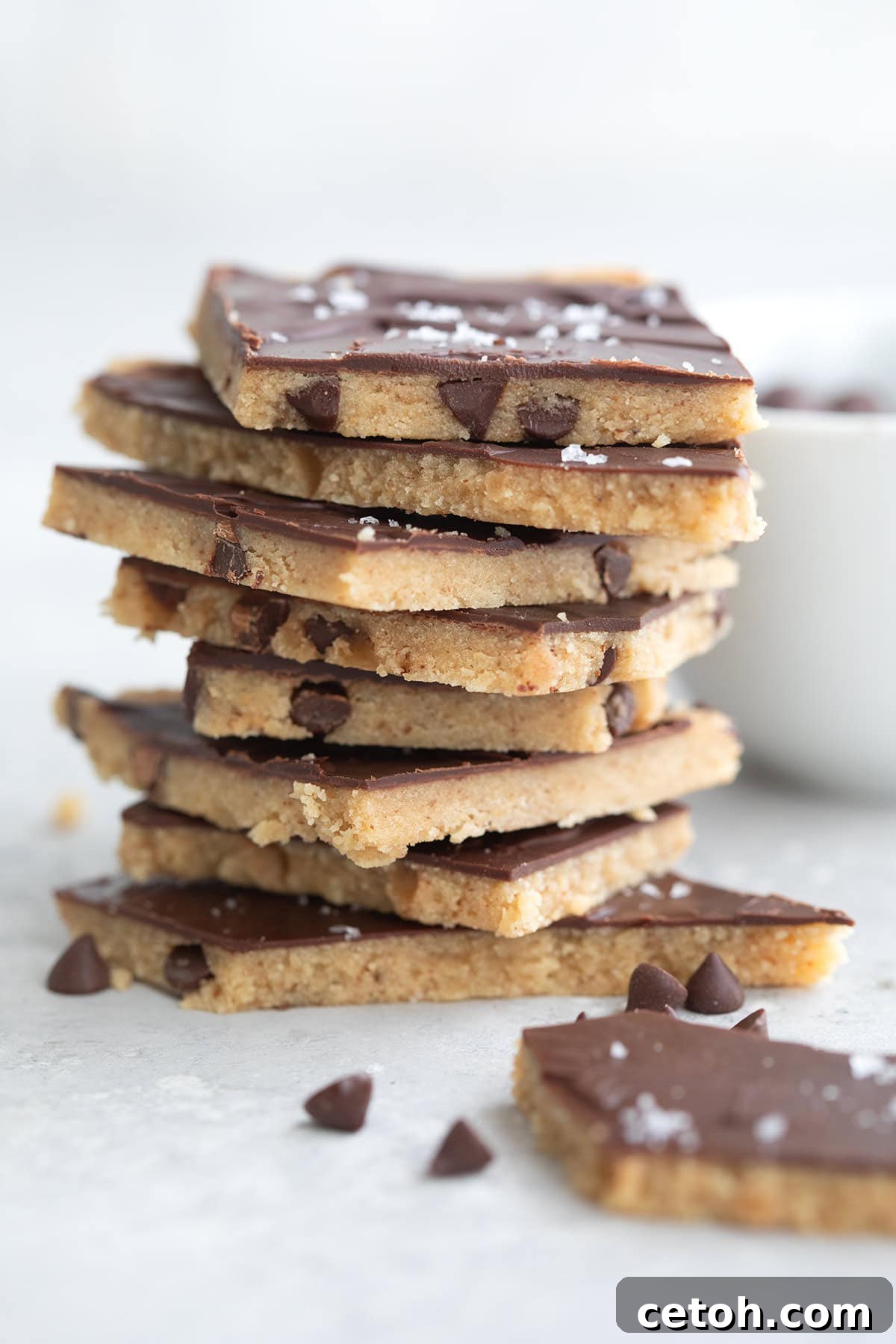
Craving a delicious treat that supports your healthy lifestyle? Look no further than this incredible **Protein Cookie Dough Bark**! It’s the ultimate low-carb, high-protein snack that truly satisfies. Whether you’re searching for a quick energy boost, a guilt-free dessert, or a perfect post-workout refuel, this recipe ticks all the boxes. Bursting with flavor and packed with healthy fats and a solid 10 grams of protein per serving, it’s designed to keep you feeling full, energized, and completely satisfied.
Maintaining a protein-rich diet can sometimes feel challenging, especially when life gets busy. While well-rounded meals should form the foundation of your nutrition, having accessible, healthy snacks on hand can significantly help bridge any nutritional gaps. This is where easy, make-ahead recipes like our Peanut Butter Protein Balls or savory Keto Taco Bites come into play, offering quick and convenient protein hits exactly when you need them. They are not just about adding protein; they’re also excellent for warding off those pesky cravings for less nutritious, sugar-laden options that can derail your progress.
Lately, this easy Protein Cookie Dough Bark has become my go-to snack. I always keep a batch in the freezer, ready to grab a piece or two after lunch or whenever a snack attack strikes. It offers that delightful feeling of indulgence, yet it’s packed with wholesome ingredients that support my health goals. It’s the perfect blend of decadent flavor and smart nutrition, making it an absolute favorite for anyone following a low-carb or keto lifestyle.
Why You’ll Love This Protein-Packed Snack
This Protein Cookie Dough Bark isn’t just another snack; it’s a game-changer for anyone seeking delicious, healthy, and convenient options. Here’s why it deserves a spot in your rotation:
- Effortlessly Easy & Quick: Forget complicated baking! This high-protein snack requires a mere 12 minutes of active preparation time. The rest is passive freezing, allowing it to firm up perfectly in about an hour. It’s ideal for busy individuals who want homemade goodness without the fuss.
- Perfect for Meal Prep: As a fantastic make-ahead recipe, you can prepare a large batch and store the finished protein bark in the freezer. It stays fresh and delicious for up to a month, providing a convenient grab-and-go option whenever hunger strikes.
- Irresistible Cookie Dough Flavor: If you’re a fan of the classic taste of cookie dough, you’re in for a treat. This bark genuinely captures that beloved flavor profile, making it not just an excellent snack but also a satisfying, low-carb keto dessert that will curb any sweet cravings.
- Highly Adaptable for Dietary Needs: This recipe is incredibly versatile. You have the freedom to choose your favorite low-carb sweeteners and protein powders, allowing you to customize it to your specific dietary preferences or availability of ingredients.
- Exceptional Macros for Low-Carb & Keto Diets: Each serving boasts an impressive nutritional profile, with approximately 9.6 grams of protein, a modest 7.4 grams of total carbs, and a significant 4.3 grams of fiber. This results in just 3.1 grams of net carbs per serving, making it an ideal choice for supporting your low-carb or ketogenic goals while keeping you satiated.
Key Ingredient Insights
Understanding each ingredient’s role is key to creating the perfect Protein Cookie Dough Bark. Here’s a closer look at what goes into this delightful treat:
- Almond Butter: This forms the creamy base of our cookie dough, contributing essential moisture and a rich, nutty flavor that’s crucial for achieving that authentic cookie dough texture. For those with nut allergies or who prefer a different flavor, feel free to substitute with other unsweetened nut butters like cashew butter, or seed butters such as sunflower seed butter (for a nut-free option) or tahini. Ensure your chosen butter is smooth and natural, without added sugars.
- Butter: A small amount of unsalted butter enhances both the flavor and the tender, melt-in-your-mouth texture of the bark. If you’re looking for a dairy-free alternative, high-quality coconut oil or even avocado oil can be used, though they might subtly alter the final taste.
- Powdered Sweetener: To avoid any gritty texture, it’s vital to use a powdered low-carb sweetener. Erythritol, allulose, monk fruit, or stevia in powdered form are excellent choices. You can also use highly concentrated liquid sweeteners like pure stevia or monk fruit drops, but you might need to adjust the dry ingredients slightly to maintain the right dough consistency.
- Vanilla Protein Powder: I highly recommend using a vanilla-flavored protein powder as it significantly boosts the overall cookie dough taste. However, the type of protein is flexible: whey, egg white, or a plant-based protein powder will work. Be aware that collagen peptides can make the bark softer and potentially gummier, so use them with caution or be prepared for a slightly different texture.
- Almond Flour: This low-carb flour is essential for stabilizing the cookie dough bark, providing structure and helping it hold its shape. If you need to make this recipe nut-free, sunflower seed flour is a fantastic alternative that works well without compromising the texture too much.
- Keto Chocolate Chips: Mini chocolate chips are my preference for this recipe, as their smaller size ensures a more even distribution throughout the bark, giving you a chocolatey bite in every piece. For the chocolate topping, a good quality sugar-free dark chocolate, like Lily’s, works perfectly to create a rich, indulgent layer.
- Coconut Oil (for topping): A touch of coconut oil is added to the sugar-free dark chocolate when melting. This helps the chocolate achieve a smoother, more fluid consistency, making it easier to spread evenly over the cookie dough base for a professional finish. Other neutral-flavored oils can also be used.
- Salt: A pinch of salt is a secret weapon in sweet recipes; it balances the sweetness and intensifies all the flavors. For an extra gourmet touch, consider sprinkling a little flaked sea salt on top of the chocolate layer before freezing, which adds a wonderful contrast and crunch.
Step-by-Step Preparation Guide
Creating this delicious Protein Cookie Dough Bark is straightforward. Follow these simple steps for a perfect batch every time:
- Melt the Wet Ingredients: In a medium-sized, microwave-safe bowl, combine the almond butter and butter. Gently melt them together, stirring frequently until the mixture is smooth and fully combined. This can be done in the microwave in 20-30 second intervals, or by placing the bowl over a saucepan of barely simmering water (bain-marie style), ensuring the bottom of the bowl does not touch the water.
- Incorporate Sweetener: Once the almond butter and butter are melted and smooth, stir in your powdered sweetener until it is thoroughly combined. Use a silicone spatula to work out any lumps, ensuring the mixture is perfectly smooth and homogenous.
- Add Dry Ingredients: Next, add the protein powder, almond flour, and salt to the bowl. Stir diligently until all the dry ingredients are fully incorporated and a cohesive dough begins to form. If you find the dough appears too dry or crumbly, add water one teaspoon at a time, mixing well after each addition, until it reaches a firm, yet pliable cookie dough consistency that isn’t sticky.
- Fold in Chocolate Chips: Gently fold in the mini keto chocolate chips. Continue stirring until they are evenly distributed throughout the cookie dough mixture, ensuring every piece of bark will have a delightful chocolatey crunch.
- Shape the Dough: Gather the prepared cookie dough into a ball. Transfer it to a large piece of parchment paper placed on a clean work surface. Use your hands to pat it down into a rough rectangle. Place another piece of parchment paper on top and use a rolling pin to roll the dough out evenly to a thickness of approximately 1/4 inch. Carefully remove the top parchment paper and transfer the bottom parchment with the rolled-out dough onto a cookie sheet or baking tray.
- Prepare Chocolate Topping: In a small, separate bowl, combine the chopped sugar-free dark chocolate and coconut oil. Melt them together until smooth and glossy. You can use the microwave (short bursts) or a bain-marie for this step. Once melted, carefully spread this smooth chocolate mixture evenly over the entire surface of the rolled-out cookie dough bark.
- Freeze and Serve: Place the cookie sheet with the bark into the freezer. Allow it to freeze until it is completely firm, which typically takes at least 1 hour. Once firm, you can either break the bark into irregular pieces with your hands for a rustic look or use a sharp knife to cut it into neat squares or rectangles. Store the finished Protein Cookie Dough Bark in an airtight container in the freezer to maintain its crisp texture.
Expert Tips for Protein Cookie Dough Bark Perfection
While this Protein Cookie Dough Bark recipe is incredibly adaptable, understanding how different ingredients can impact the final result is crucial for success. Here are some detailed tips to help you achieve the perfect texture and flavor:
Sweetener Choices and Texture: I strongly recommend using a bulk powdered sweetener, such as powdered erythritol (like Swerve) or powdered allulose. These types of sweeteners not only provide sweetness but also contribute to the structure and body of the bark, giving it a more robust and less fragile texture. If you opt for highly concentrated sweeteners like pure stevia or monk fruit extract, which don’t add bulk, you might need to slightly increase the amount of almond flour or protein powder (by 1-2 tablespoons) to achieve the desired firm cookie dough consistency. Always taste and adjust to your preferred sweetness level, as different brands and types of sweeteners vary in intensity.
Protein Powder Variances: Most types of protein powder – including whey, egg white, and various plant-based proteins (pea, rice, hemp) – should work well in this recipe. I personally love using Just Ingredients Vanilla Bean protein powder, which is a casein-free blend of whey, collagen, and plant proteins, offering a great flavor and texture. However, if you choose to use collagen peptides as your primary protein source, be aware that they can result in a softer, potentially gummier bark. This might still be enjoyable, but it won’t have the same snap as bark made with other protein types. If you only have unflavored protein powder on hand, don’t worry! Simply add an extra tablespoon or so of your powdered sweetener and about 1 teaspoon of vanilla extract to enhance the flavor.
Optimizing Fats and Oils: A creamy nut or seed butter is essential for giving this bark its signature consistency and rich mouthfeel. While almond butter is specified, feel free to experiment. For a nut-free version, sunflower seed butter is an excellent substitute. Peanut butter is another delicious option if you enjoy its distinct flavor. Additionally, the butter in the recipe can be replaced with coconut oil for a dairy-free alternative, or even a neutral-flavored avocado oil. Each fat choice will subtly alter the flavor and texture, so choose one that aligns with your dietary needs and taste preferences.
Adjusting Water Content: The exact amount of water needed can vary significantly depending on the specific brands and types of ingredients you use, especially the oiliness of your nut butter and the absorbency of your protein powder. Therefore, a precise quantity of water is not specified. In my tests, I typically needed about 2 teaspoons of water using the listed ingredients. Begin by adding water one teaspoon at a time, mixing thoroughly after each addition. You’re aiming for a dough that resembles firm cookie dough – pliable enough to roll but not sticky or overly wet. If your dough turns out too soft or wet, gradually add more dry ingredients, such as an extra tablespoon of protein powder or almond flour, until you reach the perfect firm, non-sticky consistency.
Quality of Ingredients: Using high-quality ingredients can make a noticeable difference in the final taste and texture of your protein bark. Opt for fresh almond butter, good quality butter, and your favorite trusted brands for protein powder and chocolate. This ensures the best possible flavor and nutritional outcome.
Frequently Asked Questions About Protein Cookie Dough Bark
Absolutely! Unlike wheat-based flour, which requires heat treatment to eliminate potential foodborne pathogens such as E. coli and Salmonella, uncooked almond flour is perfectly safe for consumption. It is derived from blanched raw almonds, and since most people consume raw almonds without any concerns, eating raw almond flour is generally considered safe. This makes it an ideal ingredient for no-bake recipes like our Protein Cookie Dough Bark.
For the best texture, particularly to maintain its pleasant crispness and firm snap, this cookie dough bark should be stored in an airtight container in the freezer. When left at room temperature, it tends to become quite soft due to the fat content. While the refrigerator is also an option, it will result in a slightly softer bark, which some people prefer. Stored properly in the freezer, it can last for up to two months, making it an excellent meal prep item.
Each serving of this deliciously satisfying Protein Cookie Dough Bark is thoughtfully designed to be low-carb. It contains approximately 7.4 grams of total carbohydrates. However, a significant portion of these carbs comes from dietary fiber, with 4.3 grams of fiber per serving. This means that each serving boasts a remarkably low net carb count of just 3.1 grams, making it perfectly suitable for those following ketogenic and other low-carb dietary plans.
Protein Cookie Dough Bark
Ingredients
- 1/4 cup (62.5 g) almond butter
- 2 tbsp (28.4 g) butter
- 1/3 cup (63.33 g) powdered sweetener
- 1/2 cup (54 g) vanilla protein powder
- 1/2 cup (56 g) almond flour
- 1/8 tsp salt
- Water as needed
- 1/4 cup (45 g) mini keto chocolate chips
- 1 ounce (28.35 g) sugar-free dark chocolate, chopped
- 1 teaspoon (4 g) coconut oil
Instructions
-
In a medium bowl, melt the almond butter and butter together, stirring until melted and smooth. You can do this in the microwave or over a pan of barely simmering water.
-
Stir in the sweetener until well combined, working out any lumps with a silicone spatula.
-
Add the protein powder, almond flour, and salt and stir well to combine. If the dough is dry and crumbly, add water 1 teaspoon at a time. (The mixture should be like cookie dough but should not be sticky.)
-
Stir in the chocolate chips until well distributed.
-
Gather the dough up into a ball and transfer to a large piece of parchment paper. Pat into a rough rectangle. Top with another piece of parchment and roll out to about 1/4 inch thickness. Remove the top parchment and transfer to a cookie sheet.
-
In a small bowl, melt the dark chocolate and coconut oil together until smooth. Spread the chocolate evenly overtop the cookie dough bark.
-
Freeze until firm, at least 1 hour, then break with your hands or cut into pieces. Store in the freezer.