
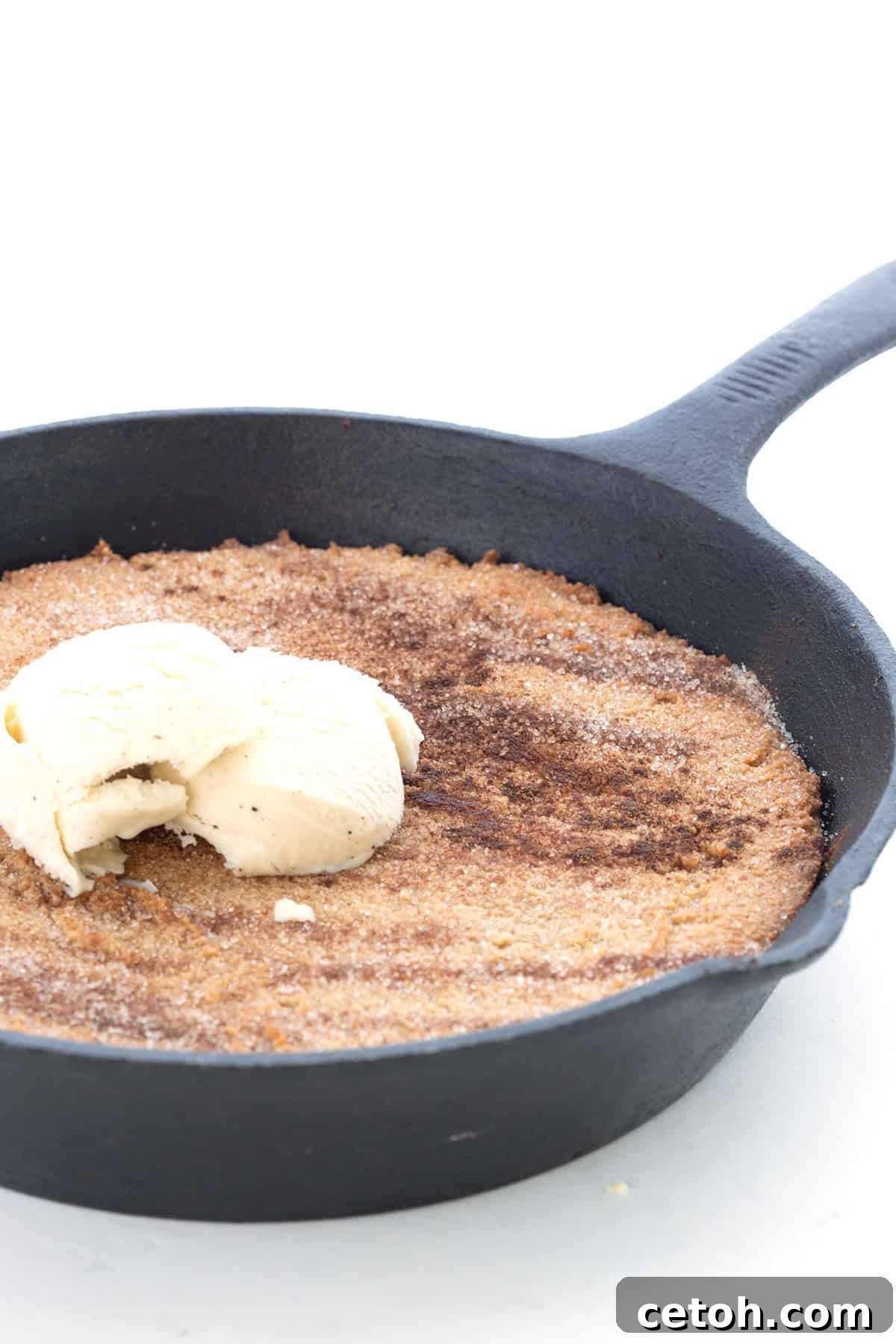
Indulge in the heartwarming comfort of a freshly baked cookie without derailing your low-carb lifestyle. This Cinnamon-Dusted Keto Snickerdoodle Skillet Cookie isn’t just a dessert; it’s a delightful experience, delivering all the sweet and tender goodness you crave. Perfectly golden around the edges with a soft, gooey center, it’s an ideal treat to share, especially when crowned with a generous scoop of creamy keto vanilla ice cream. Forget the fuss of individual cookies; this skillet wonder brings ease and incredible flavor together in one unforgettable package, making it a staple for any low-carb enthusiast.
The Timeless Charm of Snickerdoodles, Reimagined for Keto
For many, the word “snickerdoodle” evokes a sense of nostalgic comfort, a classic cookie experience distinctively marked by its cinnamon-sugar coating and a subtle tangy flavor. Growing up, these delightful treats weren’t part of my culinary vocabulary, a discovery I happily made upon moving to the U.S. for grad school. The name itself is charmingly whimsical, a perfect match for a cookie that’s both playful and profoundly satisfying. It was around this time I also encountered the concept of the keto diet, a dietary approach focused on low carbohydrates and high healthy fats.
Bringing these two formerly unfamiliar terms together has resulted in a truly exceptional dessert: the Keto Snickerdoodle Skillet Cookie. This creation perfectly marries the traditional snickerdoodle’s iconic taste and texture with the principles of ketogenic eating. My children often remark that this tender, almond flour-based dessert reminds them of apple pie, a sentiment I wholeheartedly agree with. There’s something about the warm cinnamon and soft, sweet crumb that creates a similar comforting aroma and flavor profile, making it an instant family favorite.
Unlike traditional snickerdoodles that rely on refined sugar and wheat flour, this keto version utilizes almond flour and natural, low-carb sweeteners, ensuring it fits seamlessly into a ketogenic or low-carb diet. Yet, it retains that unmistakable snickerdoodle essence, offering a guilt-free indulgence that doesn’t compromise on flavor or satisfaction. This isn’t just a cookie; it’s a celebration of how classic flavors can be adapted to new dietary needs, proving that healthy eating doesn’t mean sacrificing deliciousness.
The Art and Ease of Baking Cookies in a Skillet
Baking cookies in a skillet has become a beloved method in my kitchen, transforming the traditional cookie-making process into an effortless and highly rewarding experience. This isn’t my first foray into skillet baking, nor will it be my last. My very first keto skillet cookie, a classic chocolate chip version, has garnered such adoration that my children request it annually as their birthday cake. Its popularity is a testament to the undeniable charm and convenience of this baking technique.
Why Skillet Baking is a Game-Changer for Desserts
The beauty of a skillet cookie lies in its simplicity and the unique texture it achieves. There’s no need for scooping individual portions, lining baking sheets, or rotating trays. You simply press the dough into a single pan, and the oven does the rest. This method not only saves time and effort but also yields a dessert with an unparalleled textural profile: a delightfully crisp exterior that gives way to a warm, soft, and exquisitely gooey center. It’s the kind of dessert that feels both rustic and gourmet, perfect for sharing directly from the pan or portioning out into individual servings.
While the gooey, warm cookie scooped straight from the pan is my personal favorite – an irresistible indulgence, especially with melting keto vanilla ice cream – you also have the option of allowing the cookie to cool completely. Once chilled, it can be neatly sliced, making it perfect for meal prep or a more formal presentation. This versatility ensures that a skillet cookie can suit any occasion, from a casual family treat to an impressive dessert for guests.
Expanding Your Skillet Dessert Repertoire
The possibilities for skillet cookies extend far beyond just chocolate chip and snickerdoodle. Many low-carb cookie doughs adapt beautifully to skillet baking, inviting creativity and experimentation. I’m excited to try my Keto White Chocolate Macadamia Nut Cookies in a skillet soon, anticipating the delightful combination of crispy edges and a buttery, nutty interior. Similarly, my peanut butter cream cheese cookies would undoubtedly be a tasty contender, offering a rich, dense texture that would be heavenly baked in a cast-iron pan.
Beyond traditional cookies, the skillet can also be used for other low-carb desserts like brownies, blondies, or even fruit crumbles with a keto-friendly topping. Its even heat distribution and ability to go from oven to table make it an incredibly efficient and stylish vessel for a wide array of sweet creations. The visual appeal of a bubbling, warm dessert served directly in a rustic cast iron skillet adds an extra layer of charm, making it a conversation starter and a guaranteed crowd-pleaser.
Crafting Your Perfect Keto Snickerdoodle Skillet Cookie: Key Ingredients and Steps
Creating this irresistible Keto Snickerdoodle Skillet Cookie is surprisingly straightforward, relying on a few fundamental low-carb ingredients. Each component plays a crucial role in achieving the classic snickerdoodle flavor and the perfect skillet cookie texture.
Essential Ingredients for Your Keto Skillet Snickerdoodle
- Almond Flour: The foundation of this low-carb dessert. For the best texture, always opt for blanched, finely ground almond flour. This ensures a tender crumb and prevents a gritty mouthfeel often associated with coarser almond flours. It’s naturally gluten-free and low in carbohydrates.
- Keto Sweetener: A granular keto sweetener, such as erythritol, xylitol (be cautious with pets), or a blend like Swerve, is essential. These sweeteners provide the desired sweetness without impacting blood sugar levels, making the cookie truly sugar-free. Ensure it’s granular to mimic the texture of sugar in the dough and the topping.
- Cream of Tartar: This is the secret ingredient that gives snickerdoodle cookies their distinctive tangy flavor and characteristic chewiness. Do not omit it, as it’s crucial for the authentic snickerdoodle experience. It reacts with baking soda to create the unique taste.
- Baking Soda: Used as the leavening agent (not baking powder). Baking soda reacts with the cream of tartar to create the signature slightly acidic tang and helps the cookie rise and spread beautifully in the skillet.
- Butter: Adds richness, moisture, and a wonderful flavor to the cookie. Melted butter integrates smoothly into the dough. For a dairy-free option, coconut oil or ghee can be used as a direct substitute.
- Egg: Acts as a binder, holding the dough together and contributing to the cookie’s structure and moisture content. A large egg is typically recommended.
- Cinnamon: Both for the dough and, most importantly, for the iconic cinnamon-sugar topping. Ground cinnamon provides that warm, aromatic spice that defines a snickerdoodle.
- Salt: A small amount of salt enhances all the other flavors, balancing the sweetness and making the cinnamon pop.
- Vanilla Extract: A splash of pure vanilla extract elevates the overall flavor profile, adding a fragrant warmth that complements the cinnamon beautifully.
Step-by-Step Guide to Your Perfect Keto Snickerdoodle Skillet Cookie
- Prepare Your Skillet for Success: Preheat your oven to 325°F (160°C). While a 10-inch cast iron skillet is highly recommended for its excellent heat retention and even cooking, any 10-inch ovenproof skillet will work. Crucially, make sure to grease it generously with butter or coconut oil. This prevents sticking and ensures your cookie releases easily, giving you that lovely crusty edge.
- Whisk Together the Dry Essentials: In a large mixing bowl, combine the almond flour, keto sweetener, cream of tartar, baking soda, cinnamon, and salt. Whisk these dry ingredients thoroughly to ensure they are evenly distributed. Pay special attention to the cream of tartar and baking soda; their even distribution is key to the cookie’s distinct tang and proper leavening. Remember, it’s baking soda that creates the traditional snickerdoodle flavor when paired with cream of tartar.
- Fold in the Wet Ingredients: Create a well in the center of your dry ingredients and add the melted butter (or coconut oil) and the egg, followed by the vanilla extract. Stir everything together until just combined. Overmixing can lead to a tougher cookie, so mix until no dry streaks remain and the dough forms a soft, pliable consistency.
- Spread Evenly in the Pan: Transfer the cookie dough to your prepared skillet. Using a spatula or the back of a spoon, spread the mixture out evenly across the bottom of the pan. Ensuring the dough has a uniform thickness is vital for even baking, preventing some parts from being overcooked while others remain raw.
- Bake Until Golden Perfection: Place the skillet in the preheated oven and bake for 22 to 25 minutes. The cookie is ready when the edges are set and lightly golden, and the center is just barely set but still looks soft and slightly gooey. A toothpick inserted into the center should come out with moist crumbs, not wet batter.
- Adorn with the Iconic Cinnamon Topping: While the cookie is still warm (but removed from the oven), quickly sprinkle the cinnamon and additional keto sweetener evenly over the top. The warmth of the cookie will help the topping adhere and create that quintessential snickerdoodle sparkle. This step is non-negotiable for true snickerdoodle authenticity!
- Serve and Savor: Allow the skillet cookie to cool in the pan for about 10 minutes before serving. This brief resting period helps it set slightly, making it easier to scoop. Serve it warm, perhaps with a dollop of keto vanilla ice cream or fresh whipped cream, and dig in to enjoy this glorious low-carb treat!
Frequently Asked Questions About Your Keto Snickerdoodle Skillet Cookie
While coconut flour is a popular low-carb alternative, it behaves very differently from almond flour. It’s much more absorbent, requiring significantly less quantity and more liquid. Therefore, it’s not a suitable cup-for-cup replacement. Instead, I highly recommend using sunflower seed flour. It can be substituted at a 1:1 ratio with almond flour and will yield a similar texture. A small note on sunflower seed flour: it can sometimes react with leavening agents like baking soda, causing your baked goods to turn green. To prevent this cosmetic change (which doesn’t affect flavor or safety), add about a tablespoon of white vinegar or lemon juice to your wet ingredients. This acidity helps neutralize the reaction.
Absolutely! This keto snickerdoodle skillet cookie is wonderfully adaptable. Butter can be easily replaced with coconut oil for a fantastic dairy-free option. Ensure you use refined coconut oil if you don’t want any coconut flavor in your cookie. Ghee is another excellent alternative; while it’s clarified butter, most people sensitive to dairy find they can tolerate it since the milk solids have been removed. Both will give you a rich, moist result.
Yes, you certainly can! While a cast iron skillet is ideal for its even heat distribution and rustic appeal, it’s not strictly necessary. This recipe works beautifully in a 9 or 10-inch glass or ceramic pie plate, or any other oven-safe baking dish of a similar size. Keep in mind that baking times may vary slightly. Glass and ceramic can sometimes take a little longer to heat through and bake, so keep a close eye on your cookie, looking for those golden edges and a just-set center.
You can certainly prepare this delicious cookie a day or two in advance. However, there are a few considerations regarding texture and flavor. If allowed to cool completely, the cookie will become much less soft and gooey, transforming into a more traditional, sliceable cookie. While still delicious, it loses some of that fresh-from-the-oven magic. Additionally, leaving the cookie in a cast iron skillet for extended periods can sometimes impart a subtle metallic taste. This is completely harmless and actually adds a bit of iron to your diet, but the flavor might not be as appealing to everyone. If you plan to make it ahead, I recommend baking it in a glass or ceramic pie plate instead, and then transferring it to an airtight container once cooled, if possible, to avoid any potential metallic notes.
Yes, you can! Freezing is a great way to extend the life of your keto skillet cookie and ensures you always have a quick low-carb treat on hand. Once the cookie has cooled completely, you can cut it into individual slices or leave it as a whole. Wrap it tightly in plastic wrap, then place it in an airtight freezer-safe bag or container. It will keep well in the freezer for up to 2-3 months. To enjoy, simply thaw individual slices at room temperature or gently reheat them in the microwave or a low oven until warm and soft.
For this Keto Snickerdoodle Skillet Cookie, granular erythritol-based sweeteners or a blend like Swerve Granular are highly recommended. These sweeteners bake well, provide excellent bulk, and don’t typically have an overpowering aftertaste. Allulose is another fantastic option, offering a very clean taste and texture similar to sugar, but you might need to adjust quantities slightly as it’s often about 70% as sweet as sugar. Avoid liquid sweeteners for this recipe as they can alter the dough’s consistency. Powdered sweeteners can also be used, but granular versions are best for replicating the texture of sugar in the dough and the delightful cinnamon topping.
Storage Best Practices for Your Keto Snickerdoodle Skillet Cookie
Proper storage ensures your delicious Keto Snickerdoodle Skillet Cookie remains fresh and enjoyable for as long as possible. Here’s how to keep your low-carb treat at its best:
Once the skillet cookie has cooled completely, you have a couple of storage options. You can leave it inside its baking pan, especially if it’s a glass or ceramic dish, and cover it tightly with plastic wrap or aluminum foil. Stored on the counter, it will remain fresh for up to 4 days. If you prefer to store it in the refrigerator, it will last for up to a week. Refrigerating can make the cookie slightly firmer, but a quick warm-up in the microwave or oven will restore its tender texture.
A crucial point to remember if you’re using a cast iron skillet: while it’s convenient to store the cookie directly in the pan, prolonged contact can sometimes cause the cookie to absorb a subtle metallic taste. This isn’t harmful, but if you’re sensitive to flavors, it’s advisable to transfer the cookie out of the cast iron pan for long-term storage. To do this, simply cut the cooled cookie into individual pieces and transfer them to an airtight container. This method not only prevents any metallic taste but also makes it easier to grab a single serving whenever a craving strikes. Whichever method you choose, ensuring an airtight seal is key to maintaining freshness and preventing the cookie from drying out.
This Keto Snickerdoodle Skillet Cookie offers a truly remarkable low-carb dessert experience. Its ease of preparation, combined with the classic comforting flavors of a snickerdoodle, makes it an absolute winner for anyone following a ketogenic diet or simply seeking a healthier sweet treat. Enjoy the warmth, the spice, and the satisfying chewiness, knowing you’re indulging wisely!
Keto Snickerdoodle Skillet Cookie Recipe
Ingredients
Cookie:
- 2 cups almond flour, (super fine )
- 1/2 cup Swerve Sweetener, Granular
- 1 tsp cream of tartar
- 1/2 tsp baking soda
- 1/2 tsp ground cinnamon
- 1/2 tsp salt
- 1/2 cup butter, melted
- 1 large egg
- 1/2 tsp vanilla extract
Cinnamon Topping:
- 1 tbsp Swerve Sweetener, Granular
- 3/4 tsp cinnamon
Instructions
-
Preheat the oven to 325F and grease a 10-inch oven proof skillet (cast iron is best).
-
In a large bowl, whisk together the almond flour, sweetener, cream of tartar, baking soda, cinnamon, and salt. Stir in the butter, egg, and vanilla extract until well combined.
-
Spread the dough in the prepared skillet and smooth the top. Bake 22 to 25 minutes, until the cookie is set around the edges and just barely set in the center. Remove and let cool 10 minutes before serving.
Topping:
-
In a small bowl, whisk together the sweetener and cinnamon. Sprinkle over the cookie. To serve, scoop the cookie out by the spoonful or cut into slices when it’s completely cool.
-
Top with low carb vanilla ice cream or lightly sweetened whipped cream.
Nutrition
I’d love to know your thoughts, leave your rating below!