
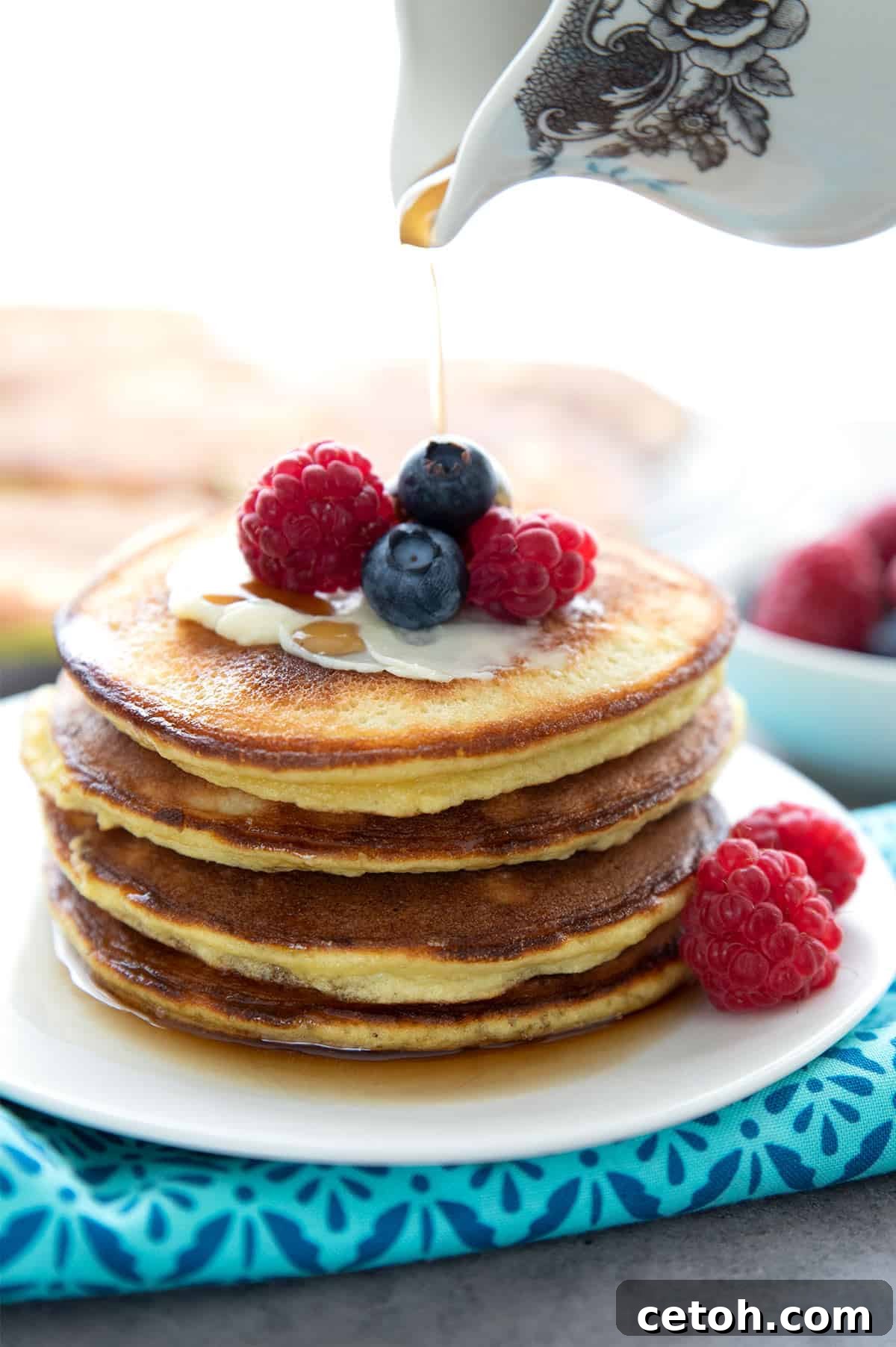
Welcome to the ultimate guide for crafting the most delicious and fluffy Coconut Flour Pancakes! If you’re following a keto or low-carb lifestyle, finding a satisfying breakfast that fits your macros can sometimes be a challenge. But look no further! These delightful pancakes are not only incredibly easy to prepare but also boast less than 3g net carbs per serving, making them the perfect start to your day.
Working with coconut flour can often feel like a culinary adventure into an entirely different dimension, especially if you’re accustomed to traditional wheat-based baking. This popular keto ingredient behaves uniquely, defying many conventional baking expectations. However, once you understand its properties, you’ll discover its incredible versatility and utility in a wide array of recipes. From savory delights like Keto Bagels to decadent desserts such as my renowned sugar-free Chantilly Cake, coconut flour can transform your low-carb kitchen.
For those new to the world of coconut flour, these Keto Coconut Flour Pancakes serve as an excellent introduction. This straightforward recipe provides a fantastic opportunity to familiarize yourself with the ingredient’s characteristics and how it interacts with other components. And the best part? You’ll be rewarded with a wholesome and incredibly tasty keto breakfast that will quickly become a household favorite. If you prefer exploring other low-carb flour options, you might also enjoy my equally delightful keto pancakes made with almond flour.
Why These Keto Coconut Flour Pancakes Are a Must-Try
This particular recipe for keto pancakes holds a special place, being one of the very first I ever developed. It quickly rose to become a fan favorite, and over the years, I’ve continuously refined and perfected it to ensure truly light, airy, and consistently fluffy results. The journey to perfection led to several key discoveries that elevate these pancakes far beyond the ordinary.
One of the most ingenious tricks I stumbled upon was the strategic inclusion of sparkling water instead of plain still water. The effervescence from the carbonation introduces tiny air pockets into the batter, which in turn contributes significantly to the pancakes’ unparalleled lightness. Given that coconut flour can sometimes result in a denser texture due to its high absorbency, every bit of added aeration is crucial for achieving that coveted delicate and tender crumb.
Baking with coconut flour often necessitates a surprisingly generous quantity of eggs. While this might raise concerns about an “eggy” flavor or rubbery texture, rest assured that when prepared correctly, these pancakes avoid both pitfalls entirely. The abundance of eggs is essential for binding the highly absorbent coconut flour and providing structure, preventing the pancakes from falling apart. Coupled with a touch of vanilla extract, the delicate coconut notes are perfectly balanced, ensuring a pleasant flavor without being overpowering. As one delighted reader shared: “This was my first time using coconut flour, and my pancakes turned out delicious! They are very buttery, which is just the way I like them.”
Beyond their exquisite taste and texture, these pancakes are also an exceptional make-ahead recipe. You can prepare a large batch and store them conveniently in the refrigerator for up to a week, ready to be reheated for quick breakfasts. For longer storage, they freeze beautifully for several months, making healthy, low-carb breakfasts effortless even on the busiest mornings.
Essential Ingredients for Fluffy Coconut Flour Pancakes
This post may contain Amazon or other affiliate links. As an Amazon Associate I earn from qualifying purchases.
Creating perfect low-carb pancakes starts with understanding each ingredient’s role. Here’s a detailed look at what you’ll need and why:
- Coconut Flour: This is the star of our show! It’s crucial to note that coconut flour’s absorbency can vary significantly between brands. For consistent and reliable results, I highly recommend using quality brands like Bob’s Red Mill or King Arthur Baking. If you opt for a different brand, be prepared to potentially adjust the liquid content. If your batter seems too thin, gradually add another tablespoon or two of flour until the desired consistency is achieved. For deeper insights into working with this unique ingredient, explore my comprehensive tutorial on baking with coconut flour.
- Swerve Sweetener (Erythritol-based): For this recipe, erythritol-based sweeteners like Swerve Granular are your best bet. They provide sweetness without affecting the texture and consistency adversely. It’s important to avoid alternative sweeteners such as allulose, which tends to cause excessive browning, potentially leaving your pancakes looking and tasting burnt. For a full breakdown of low-carb sweetening options, read more about keto sweeteners here.
- Eggs: Eggs are vital for binding the coconut flour and providing structure, preventing your pancakes from crumbling. For optimal blending and to prevent the butter from clumping, ensure your eggs are at room temperature before incorporating them into the batter.
- Butter: You can use either salted or unsalted butter, depending on your personal preference. Melted butter adds richness and moisture to the pancakes, contributing to their tender texture.
- Sparkling Water: This is our secret weapon for achieving that coveted light and fluffy texture! The carbonation introduces air into the batter, making the pancakes airy. However, if sparkling water isn’t available, regular water can be used as a substitute, though the pancakes may be slightly less airy.
- Oil/Butter for the Pan: A small amount of cooking oil or butter is essential for greasing your skillet, preventing sticking, and promoting a beautiful golden-brown crust on your pancakes.
- Pantry Staples: Don’t forget the basics! You’ll need baking powder for lift, salt to enhance the flavors, and pure vanilla extract to add a warm, inviting aroma and delicious taste.
Simple Step-by-Step Directions to Perfect Your Pancakes
1. Whisk the Dry Ingredients: In a spacious mixing bowl, combine the coconut flour, your chosen erythritol-based sweetener (like Swerve), baking powder, and salt. Whisk these dry ingredients together thoroughly, ensuring any stubborn clumps of coconut flour are completely broken up. This step is crucial for an evenly textured batter.
2. Incorporate the Wet Ingredients: Introduce the room-temperature eggs, melted butter, and vanilla extract to your dry mixture. Stir everything together until just combined. Next, pour in the sparkling water (starting with 1/3 cup as indicated in the recipe card) and whisk until the batter is smooth and uniform. Coconut flour is highly absorbent, so allow the batter to rest for a few minutes. This resting period gives the flour time to fully absorb the moisture, resulting in a perfectly thickened batter. If, after resting, the batter seems too thick, add a touch more sparkling water, a tablespoon at a time, until it reaches an ideal consistency for spreading.
3. Cook the Pancakes: Heat a non-stick skillet over medium heat. Lightly brush or wipe the surface with a small amount of oil or butter. Using a scoop or spoon, portion out about two to three tablespoons of batter onto the hot skillet for each pancake. Gently spread the batter into a 3 to 4-inch circular shape. Keeping the pancakes smaller makes them significantly easier to flip and handle, especially with coconut flour batter.
4. Achieve Golden Perfection: Cook the pancakes for several minutes on the first side. You’ll know they’re ready to flip when the bottoms are beautifully golden brown, the edges appear set and dry, and small bubbles begin to form on the surface. Carefully slide your flipper underneath and, with a swift and confident motion, flip each pancake. Continue to cook on the second side until it also turns a lovely golden brown. Once cooked, transfer the pancakes to a plate to keep warm, or place them on a baking sheet in a low oven while you continue cooking the remaining batter. Repeat this process until all the batter is used, yielding a stack of perfectly cooked, fluffy coconut flour pancakes.
Expert Tips and Frequently Asked Questions for Coconut Flour Pancake Success
Baking with coconut flour can be a unique experience, especially for newcomers. Its distinct properties require a slightly different approach than traditional flours. To ensure your low-carb coconut flour pancakes turn out perfectly every time, here are some invaluable tips and answers to common questions:
- Size Matters for Flipping: To make the flipping process as easy as possible, keep your pancakes relatively small. Aim for a diameter of 3 to 4 inches. This manageable size allows for smooth turning without worrying about them breaking apart.
- The Bubble Indicator: Just like with traditional pancakes, observing the surface is key. Wait to see small bubbles appear on the top side of the pancake before attempting to flip. This indicates that the bottom is cooked through and firm enough to handle. Gently wiggle your spatula beneath the pancake, then flip with a quick, decisive motion.
- Batter Consistency is Crucial: As mentioned, coconut flour brands vary greatly in their absorbency. This means the amount of liquid needed can fluctuate. Before cooking your entire batch, try making one small test pancake. The batter should not be so thin that it pours like water; you should have to scoop it onto the skillet and then gently spread it into a circle.
- Adjusting Batter Thickness: If your test pancake reveals the batter is too thin, simply whisk in an additional tablespoon of coconut flour. If it’s too thick and doesn’t spread easily, add another tablespoon or two of sparkling or regular water until it reaches the desired scoop-and-spread consistency. This flexibility is vital for adapting to different brands of coconut flour.
Frequently Asked Questions
No, it’s not a simple cup-for-cup substitution. Coconut flour is exceptionally absorbent and requires a unique ratio of eggs, fat, and liquids to create a successful pancake batter. You use significantly less coconut flour compared to wheat flour. To ensure the best results, it’s highly recommended to follow this dedicated coconut flour pancake recipe as written, rather than attempting direct substitutions in conventional recipes.
The most common reason for coconut flour pancakes falling apart is insufficient eggs. Coconut flour needs a high quantity of eggs to act as a binder and provide structure. Most successful coconut flour recipes call for at least 6 large eggs per half cup of flour. Resist the temptation to reduce the egg count or to thin the batter with extra liquid, as this can result in a fragile, goopy, or undercooked mess that won’t hold together when flipped.
Absolutely! These coconut flour pancakes are a wonderfully healthy and nourishing option, especially for those on a keto or low-carb diet. Each serving contains approximately 5.9g of total carbohydrates and a generous 3.3g of fiber, bringing the net carbs down to just 2.6g per serving. Furthermore, they offer a substantial amount of protein (7.7g per serving) compared to traditional pancakes, which contributes to increased satiety and keeps you feeling full and energized for much longer.
Delightful Ways to Serve Your Coconut Flour Pancakes
Now that you’ve whipped up a magnificent stack of these tender and delicious coconut flour pancakes, it’s time to explore the myriad of ways to enjoy them. Whether you prefer something simple and quick or a more indulgent treat, there’s a topping combination for every craving:
- Quick & Easy Spreads: For a rapid and satisfying on-the-go breakfast, I adore spreading a generous layer of creamy peanut butter or my homemade Keto Nutella onto these pancakes. The healthy fats and protein keep you fueled throughout your morning.
- Decadent Brunch Toppings: Elevate your weekend brunch with rich and flavorful syrups. Try topping your pancakes with my luxurious Pecan Praline Syrup, offering a nutty, sweet crunch, or a vibrant Wild Blueberry Syrup for a burst of fruity goodness.
- Best Store-Bought Syrups: If you’re looking for convenience without compromising on flavor, All-U-Lose maple-flavored syrup is an excellent choice for a classic pancake experience. It’s a fantastic sugar-free option that perfectly mimics traditional maple syrup.
- Explore Flavored Syrups: For those who love variety, ChocZero offers an amazing collection of flavored syrups. From rich caramel to sweet peach, these sugar-free options can transform your pancakes into a new culinary adventure every time.
These Keto Coconut Flour Pancakes are more than just a recipe; they’re an invitation to enjoy a healthier, equally delicious breakfast. Their delicate texture, balanced flavor, and low-carb profile make them an unbeatable choice for anyone seeking a wholesome and satisfying start to their day. Master the art of coconut flour baking with this recipe, and you’ll unlock a world of possibilities for your low-carb kitchen.
Coconut Flour Pancakes Recipe
Ingredients
- 1/2 cup (60 g) coconut flour
- 1/4 cup (3 tbsp) Swerve Granular
- 1 tsp (0.5 tsp) baking powder
- 1/4 tsp (0.5 tsp) salt
- 6 large (6) eggs
- 1/4 cup (56.75 g) butter, melted
- 1 tsp (0.5 tsp) vanilla extract
- 1/3 to 3/4 cup (177.44 g) sparkling water (or regular water)
- Additional butter or oil for the pan
Instructions
-
In a large bowl, whisk together the coconut flour, sweetener, baking powder, and salt. Break up any clumps in the coconut flour.
-
Add the eggs, butter, and vanilla and stir to combine. Add 1/3 cup of the sparkling water and whisk until smooth. Add more water, a little at a time, as needed. Let the batter rest a few minutes so the coconut flour absorbs the moisture.
-
Heat a large skillet over medium heat and brush lightly with oil or butter. Using about 3 tablespoons of batter at a time, scoop onto the skillet and spread into a 3 inch circle.
-
Cook until the bottoms are golden brown, the top is set around the edges, and a few bubbles appear in the top. Flip carefully and continue to cook until the second side is golden brown.
-
Remove from pan and keep warm on plate or baking sheet in oven, while repeating with remaining batter.
Video
Notes
Storage Information: Store the pancakes in a covered container in the fridge for up to a week. They can also be frozen, tightly wrapped up, for several months.
Nutrition
I’d love to know your thoughts, leave your rating below!