
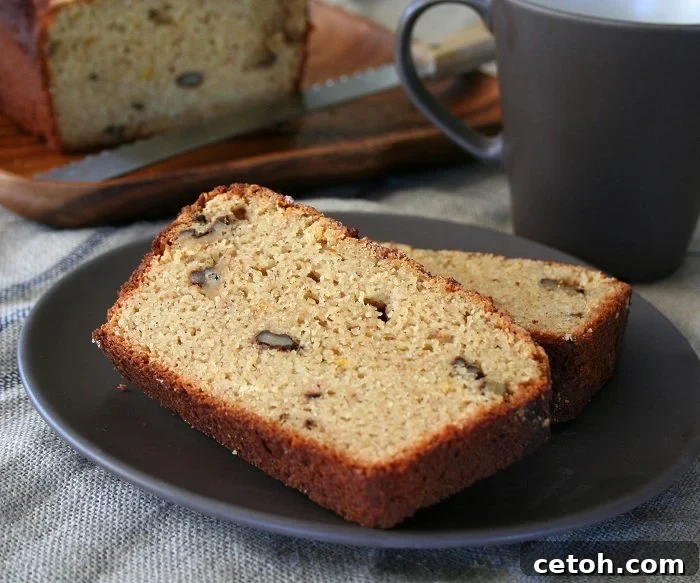
Amish Friendship Bread holds a special place in the hearts of many, a beloved tradition that combines the joy of baking with the warmth of sharing. This cherished quick bread, known for its moist texture and sweet, cinnamon-spiced flavor, typically involves a unique starter passed from friend to friend, symbolizing community and connection. However, for those navigating a low-carb, gluten-free lifestyle, this classic treat has long been off-limits due to its high sugar and flour content.
That’s why I was absolutely thrilled when Eliza reached out to me, asking if it was possible to recreate the magic of Amish Friendship Bread in a healthier, low-carb format. Eliza, a true inspiration, has successfully guided many of her friends and family toward healthier eating habits, becoming a beacon of low-carb living. Her request came with perfect timing, as the holiday season approaches, a time when traditions, especially those involving food, become even more meaningful. She wanted to offer her loved ones the same comforting flavors and delightful texture they remembered, but in a package that aligns with their healthier choices. How could I possibly decline such a heartfelt plea?
The Culinary Challenge: Adapting a Beloved Classic
Transforming Amish Friendship Bread into a low-carb, gluten-free masterpiece was certainly an intriguing challenge. My own experience with the original recipe was fleeting, a single occasion years ago when a friend gifted me a starter and its accompanying instructions. I recall feeling a bit bewildered by the concept of a starter sitting on my counter for ten days, requiring daily attention. Yet, the final quick bread was wonderfully moist and undeniably sweet, brimming with cinnamon. True to tradition, I shared the starter with three more friends, fulfilling my part in the chain. However, given the labor-intensive nature for what is essentially a quick bread, and having given away all my starter, I never revisited the recipe.
When Eliza proposed her idea, my initial thought was that it would be straightforward. But then, the starter concept resurfaced. The traditional starter is a mixture of flour, sugar, and milk that ferments over time. Clearly, a traditional starter would defeat the purpose of a low-carb and gluten-free version. The fundamental question became: what was the true essence of the starter? Beyond being a charming way to encourage baking and sharing among friends, chain-letter style, its primary culinary function is to introduce a tangy, sourdough-like flavor and contribute to the bread’s moistness and unique texture. Replicating these characteristics without the conventional ingredients and long fermentation period became the core of this recipe’s development.
Ingenious Shortcuts: The Low-Carb Starter Solution
My primary consideration for this low-carb Amish Friendship Bread was how to achieve that characteristic tangy flavor and moist texture without the traditional, carbohydrate-laden starter. The original starter relies on milk souring over days, and while that process naturally occurs, it’s not ideal for a quick, health-conscious recipe. I pondered the science behind the souring process. Milk will sour regardless of the ingredients it’s mixed with, suggesting that a low-carb alternative could be feasible.
I specifically asked Eliza if she needed to have leftover starter to pass on, as this would significantly influence my approach. Her response simplified things immensely: she typically uses all of her starter to bake loaves as gifts, eliminating the need for a continuously propagating starter. This liberated me to focus purely on flavor and texture. My “Carolyn fashion” preference for efficiency also played a role; waiting ten days for a starter was simply not appealing.
To replicate the souring process efficiently, I devised a simple yet effective shortcut: a touch of lemon juice. By combining whole milk with lemon juice, the milk curdles and thickens, mimicking the initial stages of a souring starter in mere minutes. This allowed me to cut the “counter-sitting” time from ten days down to just three, significantly speeding up the preparation. For those with safety concerns about intentionally souring milk, an even quicker alternative exists: simply add a bit more lemon juice and proceed directly to mixing the bread ingredients. While it might not be precisely “authentic” in its fermentation, the resulting bread will still be wonderfully flavorful and tangy, capturing the spirit of the original. This accelerated method ensures that anyone, especially those preparing for holiday baking, can enjoy this fantastic bread without the lengthy commitment.
The Art of Low-Carb Baking: Crafting Texture and Sweetness
Reaching the desired taste and texture for this low-carb, gluten-free Amish Friendship Bread was a journey of careful ingredient selection and precise ratios. The challenge was to mimic the original’s moist, rich crumb and sweet, cinnamon-infused flavor, all while eliminating traditional flour and sugar.
For the structure and mouthfeel, a combination of almond flour and coconut flour proved ideal. Almond flour provides a fine texture and healthy fats, while coconut flour, known for its high absorbency, helps achieve that crucial moistness without making the bread dense. Unflavored whey protein powder was also incorporated, not just for its protein content, but also for its ability to improve the bread’s structure and tenderness, common hurdles in gluten-free baking.
Sweetness was achieved using a granulated erythritol blend, a popular sugar alternative that bakes beautifully without the glycemic impact of traditional sugar. The sugar-free vanilla pudding mix played a dual role: it enhanced the vanilla flavor profile and contributed significantly to the bread’s incredible moisture, a key characteristic of the original Amish Friendship Bread. A good quality oil, such as grapeseed oil, provided the necessary fat for a rich crumb, ensuring the bread remains tender and never dry.
The classic cinnamon-sugar topping, a signature element of Amish Friendship Bread, was recreated with erythritol and ground cinnamon. This simple topping, sprinkled generously over the batter before baking, melts into a delightful, slightly crisp, and aromatic crust during the baking process, adding another layer of familiar flavor and texture. The result is a bread that is incredibly moist, perfectly sweet, with just the right amount of cinnamon warmth, and a subtle tang from our quick “starter” method. My memory of the original may be somewhat faded, but this adaptation is truly delicious, and I am confident Eliza, and anyone else who tries it, will agree.
Why Choose This Low-Carb, Gluten-Free Version?
This reimagined Amish Friendship Bread isn’t just a delicious treat; it’s a testament to healthy eating without compromise. By opting for low-carb and gluten-free ingredients, this recipe offers numerous benefits:
- Keto and Low-Carb Friendly: With significantly reduced net carbs, it fits perfectly into ketogenic and low-carbohydrate dietary plans, allowing you to enjoy a classic comfort food guilt-free.
- Gluten-Free: Ideal for individuals with gluten sensitivities, celiac disease, or those choosing to avoid gluten for other health reasons. Almond and coconut flours provide a wonderful, wheat-free alternative.
- Sugar-Free: Using granulated erythritol eliminates added sugars, making it a great option for diabetics or anyone looking to reduce their sugar intake for better overall health.
- Packed with Healthy Fats: Almond flour and grapeseed oil contribute healthy monounsaturated and polyunsaturated fats, which are beneficial for heart health and satiety.
- Rich in Fiber: Almond and coconut flours are excellent sources of dietary fiber, promoting digestive health and helping to stabilize blood sugar levels.
This recipe proves that you don’t have to sacrifice flavor or tradition when pursuing a healthier lifestyle. It’s about smart substitutions that open up a world of culinary possibilities for everyone.
Tips for Baking Perfection and Delightful Variations
Achieving a perfect loaf of Low-Carb Amish Friendship Bread is straightforward with a few key considerations:
- Proper Pan Preparation: Always grease your loaf pan very well. Low-carb flours can sometimes stick more than traditional wheat flour. Lining with parchment paper, leaving an overhang on the sides, can also help for easy removal.
- Doneness Check: Baking times can vary slightly depending on your oven. The best way to check for doneness is to insert a wooden skewer or toothpick into the center of the loaf. If it comes out clean, your bread is ready. If it’s browning too quickly on top, loosely tent it with aluminum foil for the last 15-20 minutes of baking.
- Cooling is Key: Allow the bread to cool in the pan for at least 15-20 minutes before attempting to remove it. This helps it set and prevents it from crumbling. Transfer it to a wire rack to cool completely before slicing.
Feel free to get creative with variations:
- Nutty Additions: While chopped nuts are included, consider experimenting with different types, like pecans or walnuts, or even toasted slivered almonds for added crunch.
- Sugar-Free Chocolate Chips: Fold in a half-cup of sugar-free chocolate chips for a delightful chocolatey twist.
- Spice It Up: Enhance the warm spice profile by adding a pinch of nutmeg, allspice, or cardamom to the dry ingredients.
- Citrus Zest: For an extra layer of brightness, add a teaspoon of orange or lemon zest to the batter.
This Low-Carb Amish Friendship Bread is incredibly versatile and makes for a wonderful breakfast, a wholesome snack, or a delightful dessert. Serve it simply with a cup of coffee or tea, or elevate it with a dollop of sugar-free whipped cream or a thin spread of cream cheese frosting for an extra special treat.
Storage and Freshness
To keep your Low-Carb Amish Friendship Bread fresh and moist, store it properly:
- Room Temperature: Once completely cooled, wrap the loaf tightly in plastic wrap or aluminum foil. It will stay fresh at room temperature for up to 3-4 days.
- Refrigeration: For extended freshness, store the wrapped bread in the refrigerator for up to a week.
- Freezing: This bread freezes beautifully! Wrap individual slices or the whole loaf tightly in plastic wrap, then again in aluminum foil. It can be frozen for up to 2-3 months. Thaw at room temperature or gently warm slices in the microwave or toaster oven.
With these tips, you can enjoy this healthy, delicious bread for days, or have a ready supply for unexpected guests or future cravings.
★
★
★
★
Amish Friendship Bread – Low Carb and Gluten-Free
16
servings
Ingredients
Starter:
-
1
cup
whole milk -
2
tbsp
lemon juice -
1
cup
almond flour
-
1/2
cup
Swerve Sweetener or granulated erythritol
Bread:
-
2
cups
almond flour
, divided -
1
cup
Swerve Sweetener or granulated erythritol, divided -
1/2
cup
oil, I used grapeseed -
3
large eggs -
1
tsp
vanilla extract
-
1
small box sugar-free vanilla pudding mix -
1/3
cup
unflavoured whey protein powder
-
1/4
cup
coconut flour
-
2
tsp
baking powder
-
1
tsp
baking soda -
1
tsp
ground cinnamon
-
1/2
tsp
salt -
1/2
cup
chopped nuts
Topping:
-
1
tbsp
Swerve Sweetener or granulated erythritol -
1
tsp
ground cinnamon
Instructions
-
For the starter, combine whole milk and lemon juice in a medium bowl and let thicken 10 minutes.
-
Add almond flour and granulated erythritol and stir to combine.
-
Transfer to a ziploc bag and remove as much air as possible. Then seal bag and allow to sit on counter for 3 days (see notes), massaging to mix ingredients 2 to 3 times a day.
-
On the 4th day, preheat oven to 325F and grease a 9 x 5 inch loaf pan very well.
-
Pour starter into a large bowl. Add one cup almond flour, 1/2 cup granulated erythritol, oil, eggs and vanilla extract and mix well. Set aside.
-
In a medium bowl, whisk together remaining 1 cup almond flour, remaining 1/2 cup granulated erythritol, vanilla pudding mix, whey protein powder, coconut flour, baking powder, baking soda, cinnamon and salt.
-
Add dry ingredients to starter mixture and stir until fully combined. Pour into prepared loaf pan.
-
For the topping, in a small bowl, whisk together granulated erythritol and cinnamon. Sprinkle over batter in pan.
-
Bake 50-60 minutes or until loaf is cooked through and a tester inserted in the center comes out clean. If you find that your loaf is browning too quickly, cover with foil for the last 15 to 20 minutes of baking.
-
*Please note that you are trying to sour the milk in this recipe. If you have concerns regarding the safety of doing so, simply add 2 more tbsp of lemon juice and continue directly to next step. It may not be as “authentic” but it should still taste great.
Notes
*Please note that you are trying to sour the milk in this recipe. If you have concerns regarding the safety of doing so, simply add 2 more tbsp of lemon juice and continue directly to next step. It may not be as “authentic” but it should still taste great.
★
★
★
★
I’d love to know your thoughts, leave your rating below!