
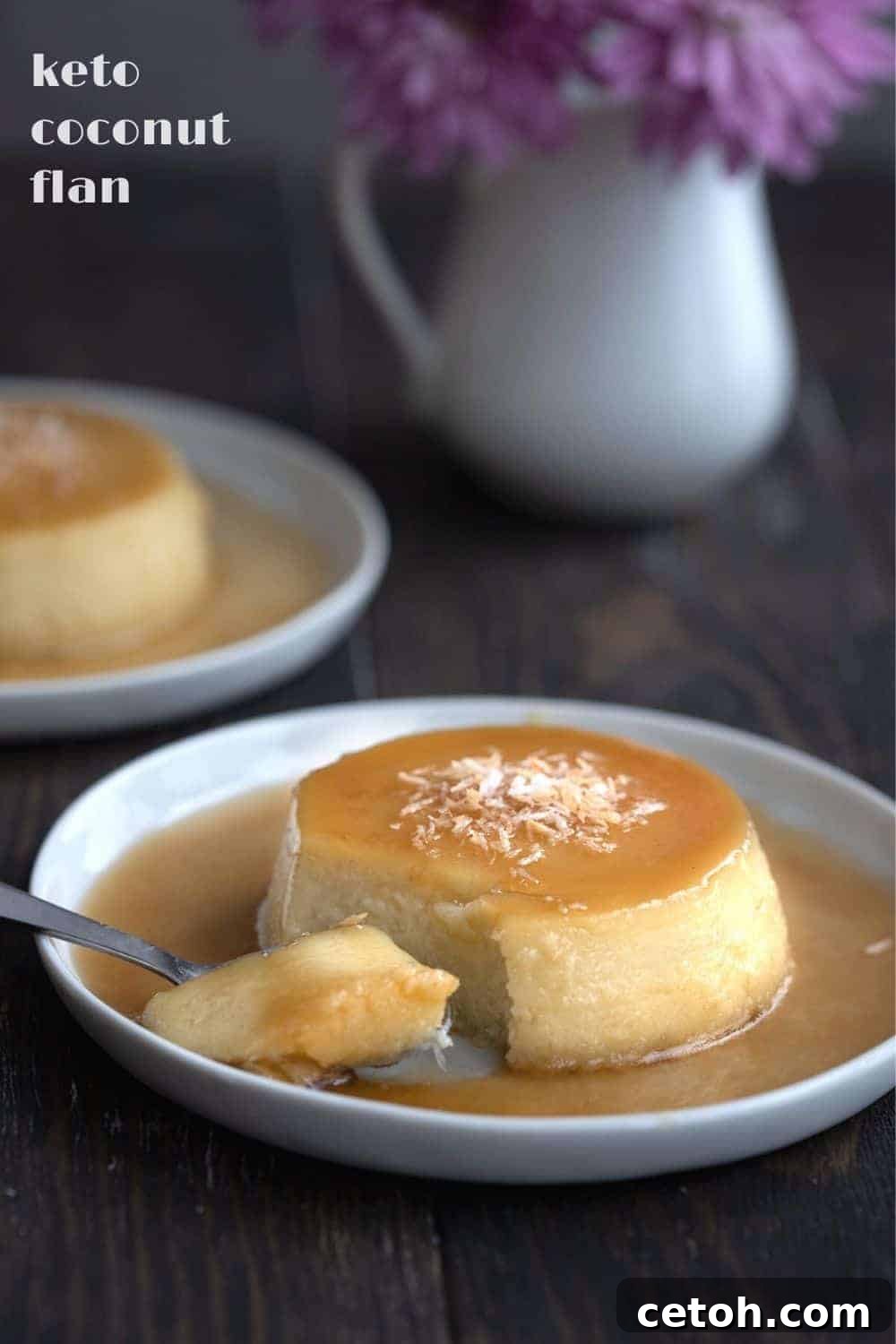
Indulge in Guilt-Free Bliss: The Ultimate Keto Coconut Flan Recipe
Embark on a culinary journey with this exquisite keto coconut flan, a truly sugar-free rendition of the beloved classic, Flan de Coco. This rich, creamy custard, infused with the tropical essence of coconut milk and delicate shredded coconut, is crowned with a luscious, sweet caramel sauce. Beyond its irresistible flavor and elegant presentation, you’ll be delighted to discover just how surprisingly simple it is to prepare in your own kitchen!
Flan is often an underestimated dessert, possessing a depth and sophistication that belies its humble appearance. In my younger days, I admit I might have overlooked such a treat in favor of more visually extravagant creations. However, I assure you, passing up this sugar-free keto coconut flan would be a significant missed opportunity. It’s a dessert that consistently wows with its silky texture and profound flavor, proving that sometimes, the simplest things are the most profound.
So, pause whatever you’re doing, gather your ingredients, and head to your kitchen to whip up this delightful coconut flan. You’ll be rewarded with a dessert experience that is both satisfying and perfectly aligned with your low-carb lifestyle!
This recipe has graced my website since 2012, and I recently decided it was due for a refresh. The moment I took my first bite of the updated version, I instantly regretted not revisiting it sooner. I had genuinely forgotten the sheer richness, the unparalleled creaminess, and the utterly delectable taste that makes this flan so special. Rest assured, I won’t be making that mistake again any time soon – this keto coconut flan is now a permanent fixture in my dessert repertoire.
The Allure of Flan: A Timeless Dessert with a Global Story
At its core, traditional flan is a remarkably simple custard, typically made from eggs, cream, and a generous amount of sugar, often featuring a clear, glistening caramel topping. Yet, its simplicity belies a long and fascinating history that traces back to the Roman Empire. From its ancient origins, flan journeyed across continents, adapting and evolving in countless cultures, each imbuing it with their unique culinary traditions and local ingredients.
The flan most familiar to many is characterized by its signature caramelized sugar sauce, which forms a golden layer at the bottom of the baking dish, then beautifully cascades over and pools around the custard when inverted onto a serving plate. This elegant dessert holds immense popularity throughout Latin America, frequently appearing on menus in Mexican and other Latin American restaurants across the United States, delighting diners with its sweet, creamy embrace.
Growing up in Canada, I was more acquainted with a similar dessert known as crème caramel, a term of French origin. It wasn’t until later that I realized crème caramel and flan are essentially the same delightful creation, a testament to the dessert’s universal appeal and its various names across different regions. Both “flan” and “crème caramel” beautifully encapsulate the essence of this smooth, rich custard topped with a sweet, amber caramel.
The Global Journey of Coconut Flan: Flan de Coco’s Diverse Roots
Coconut flan, often referred to as Flan de Coco, is a delightful variation of this classic dessert, with numerous countries proudly claiming it as a beloved local treat. Its presence is noted in a rich tapestry of cuisines, appearing as a staple in Mexican, Cuban, Puerto Rican, Brazilian, Vietnamese, and even Gabonese culinary traditions. This widespread adoption clearly demonstrates the universal appeal of crafting a luxurious custard with the unique sweetness and creamy texture that coconut milk provides.
Across these diverse cultures, variations abound in the preparation of coconut flan. Many recipes traditionally incorporate a blend of sweetened condensed milk and coconut milk, often enhanced with the pleasant chewiness of shredded coconut. Other versions might opt for regular dairy milk and cream, while some recipes specifically call for whole eggs, and still others prefer the richness contributed solely by egg yolks. This rich diversity underscores a fundamental truth about flan: there isn’t one single, prescriptive way to create this magical dessert. Each adaptation brings its own charm, flavor profile, and texture, all while maintaining the core essence of a truly satisfying custard.
Crafting the Perfect Keto Coconut Flan: An Updated Recipe for Modern Tastes
When I first ventured into creating a keto-friendly version of flan, I went through the elaborate process of making my own sugar-free keto condensed milk. While the result was undoubtedly delicious, my ongoing culinary explorations have revealed that this extra step is actually unnecessary. I’ve since discovered that simply combining thick coconut cream with heavy cream yields a perfectly luscious texture, replicating the indulgence of traditional flan without the added complexity.
Furthermore, my original method involved preparing the caramel sauce separately and pouring it over the baked custard. However, the world of keto sweeteners has advanced considerably since 2012. We now have access to a far greater array of ingredients that allow us to achieve the ideal consistency and flavor for our sugar-free caramel. Consequently, I’ve revamped that aspect of the recipe as well, leading to a more streamlined and foolproof approach.
The culmination of these updates is a rich, profoundly creamy keto coconut flan that is不僅 easier to make, but also boasts an even lower carbohydrate count. This refined recipe delivers all the decadence you crave, perfectly adapted for a ketogenic lifestyle, proving that healthy eating doesn’t mean sacrificing flavor or elegance.
How to Make Keto Coconut Flan: Expert Tips for a Flawless Dessert
Ready to create this magnificent keto coconut flan? Follow these essential tips to ensure your dessert turns out perfectly rich, smooth, and utterly delicious.
Mastering the Sugar-Free Caramel
Achieving a caramel sauce that remains soft and decadent without recrystallizing into a hard, gritty texture is crucial for this keto flan. This requires a precise combination of specific low-carb sweeteners:
- **Erythritol-based Sweetener:** You’ll need a granulated erythritol-based sweetener, such as Swerve or Lakanto Classic. These provide bulk and a good base for caramelization.
- **Allulose, BochaSweet, or Xylitol:** These sweeteners are essential for preventing recrystallization, as they behave more like traditional sugar when heated, staying liquid and pliable. Please note, most “monk fruit sweetener” blends on the market primarily consist of erythritol, so they would fall into the first category. Ensure your second sweetener is genuinely allulose, BochaSweet, or xylitol for best results.
When cooking the caramel, be vigilant! Use a sturdy, heavy-bottomed saucepan to ensure even heating and prevent scorching. Watch it carefully to ensure it doesn’t burn or become too dark, as this can impart a bitter flavor. Once the caramel reaches a deep golden brown, promptly divide it among your prepared ramekins. It will begin to firm up slightly as it cools, forming a perfect base for your custard.
The Silky Coconut Custard
The key to a silky-smooth custard lies in careful preparation. Since coconut cream is often semi-solid at room temperature, it’s vital to gently warm it until it liquifies before combining with other ingredients. You can conveniently use the same saucepan in which you made the caramel, simply adding the heavy cream and shredded coconut to the warmed coconut cream.
When incorporating the warmed cream mixture into the egg yolks, do so slowly and gently. Whisk with a light hand to avoid creating excessive froth or incorporating too much air, which can lead to bubbles in the finished custard. A smooth, well-combined mixture is the goal for that signature melt-in-your-mouth texture.
Once your creamy egg mixture is ready, carefully pour it over the hardened caramel in each ramekin, ensuring an even distribution.
The Secret to Perfection: A Gentle Water Bath (Bain Marie)
The term “bain marie” might sound fancy, but it simply refers to a water bath – an indispensable technique when baking custards. Baking flan in a water bath shields the delicate custard from the harsh, dry heat of the oven, allowing it to cook slowly and gently. This controlled cooking environment is crucial for achieving that distinctively creamy, smooth, and wobble-perfect texture that flan is famous for.
Out of curiosity, I once experimented by baking a custard without a water bath. The result was stark: it rose dramatically and puffed up alarmingly, developed a much browner top, and possessed a distinctly more “eggy” flavor compared to custards baked with the bain marie method. This experiment unequivocally confirmed the necessity of the water bath. Do not skip this step!
To set up your bain marie, select a large baking dish or roasting pan that can comfortably accommodate all your ramekins. Carefully place the ramekins inside the larger dish. Then, pour hot or boiling water into the larger dish until the water level reaches approximately halfway up the sides of the ramekins. Exercise caution to prevent any water from splashing into the custard mixtures. Once assembled, carefully transfer the entire baking dish to the preheated oven.
The Grand Reveal: Flipping Your Flan
One of the most satisfying and delightful aspects of serving a dessert like keto flan is its elegant presentation. The moment you invert the flan and watch the glistening caramel sauce ooze over the top, cascade down the sides, and create a beautiful, delicious pool on the plate is truly magical.
To ensure a clean release of the custard from the ramekin, gently run a thin, sharp knife around the inside edge of each ramekin. Try to keep the knife as close to the dish’s edge as possible to avoid cutting into the delicate custard. Place a small serving plate on top of the ramekin, then, with confidence, flip both together. Give the entire assembly a firm but gentle shake to loosen the flan. You’ll often hear a soft “plop” as the flan detaches and settles onto the plate. As you carefully lift the ramekin away, the rich caramel will beautifully flow out, completing the stunning presentation.
Dairy-Free Delight: An Easy Adaptation
For those seeking a dairy-free version of this delectable keto flan, the modification is wonderfully simple. Merely substitute the heavy whipping cream with an additional cup of coconut cream. This adjustment ensures the flan retains its luxurious creaminess and rich flavor, making it accessible for everyone to enjoy.
Frequently Asked Questions about Keto Flan
Can You Prepare Keto Flan Ahead of Time?
Absolutely! This coconut flan is an ideal make-ahead dessert, perfect for entertaining or simply enjoying throughout the week. It can be easily prepared a day or two in advance and stored in the refrigerator. The secret to its make-ahead success lies in using the recommended sugar-free sweeteners, which ensure the caramel remains beautifully soft and liquid even after chilling.
For optimal storage, wrap each individual flan tightly to protect its delicate texture and flavor. Before serving, allow the flan to come to room temperature. This crucial step permits the caramel sauce to soften and liquify once more, restoring its signature ooey-gooey consistency and ensuring the best possible presentation and taste experience.
Explore More Keto Coconut Desserts
If you love the tropical flavor of coconut and are looking for more low-carb dessert options, here are some other delicious keto coconut treats to try:
- Keto Coconut Cream Poke Cake
- Keto Chocolate Coconut Cups
- Keto Coconut Cheesecake
- Keto Raspberry Coconut Popsicles
- No Bake Coconut Balls
- Keto Almond Joy Macaroons
Keto Coconut Flan
Servings: 6 servings
Prep Time: 20 mins
Cook Time: 45 mins
Total Time: 1 hr 5 mins
This delectable keto flan is a sugar-free version of the classic Flan de Coco. It’s a rich custard with coconut milk and shredded coconut, topped off by a sweet caramel sauce. And it’s surprisingly easy to make!
Pin Recipe
Share on Facebook
Rate this Recipe
Ingredients
- 1/4 cup (45.5 g) granulated Swerve Sweetener
- 1/4 cup (59.15 g) allulose (or BochaSweet)
- 1 tbsp (2 tsp) water
- 1 cup (240 g) coconut cream
- 1 cup (238 g) heavy cream
- 1/3 cup (26.67 g) shredded coconut
- 3 large eggs
- 1/2 cup (91 g) powdered Swerve Sweetener
- 1/2 tsp (0.5 tsp) vanilla extract
- 1/2 tsp (0.5 tsp) coconut extract
Instructions
- Preheat the oven to 350F and lightly grease six 4-ounce ramekins. Set the ramekins inside a large baking dish.
- In a medium saucepan over medium heat, whisk together the Swerve, allulose, and water. Cook, whisking frequently, until the sweeteners have dissolved. Allow to cook until it becomes deep golden brown, about 3 to 5 minutes. Divide among the prepared ramekins.
- Using the same pan, combine the coconut cream, heavy cream, and shredded coconut over low heat. Bring to a simmer and whisk to combine, then remove from heat.
- In a large bowl, whisk the eggs, powdered Swerve, and extracts until well combined. Slowly whisk in the coconut cream mixture, trying to not froth it too much. Divide the egg/cream mixture among the prepared ramekins.
- Pour boiling water into the baking dish until it comes about halfway up the sides of the ramekins, taking care not to get any water into them. Transfer the whole baking dish to the oven.
- Bake about 40 to 50 minutes, until the flan is almost completely set. Remove the baking dish from the oven and carefully remove the ramekins from the baking dish. Let cool completely.
- To serve, run a sharp knife around the edges of the flan. Cover with a small dish and flip over. Give a good shake to loosen the flan and remove the ramekin.
Nutrition
Serving: 1 flan | Calories: 332kcal | Carbohydrates: 4.4g | Protein: 4.3g | Fat: 31.1g | Cholesterol: 136mg | Fiber: 0.6g
I’d love to know your thoughts, leave your rating below!