
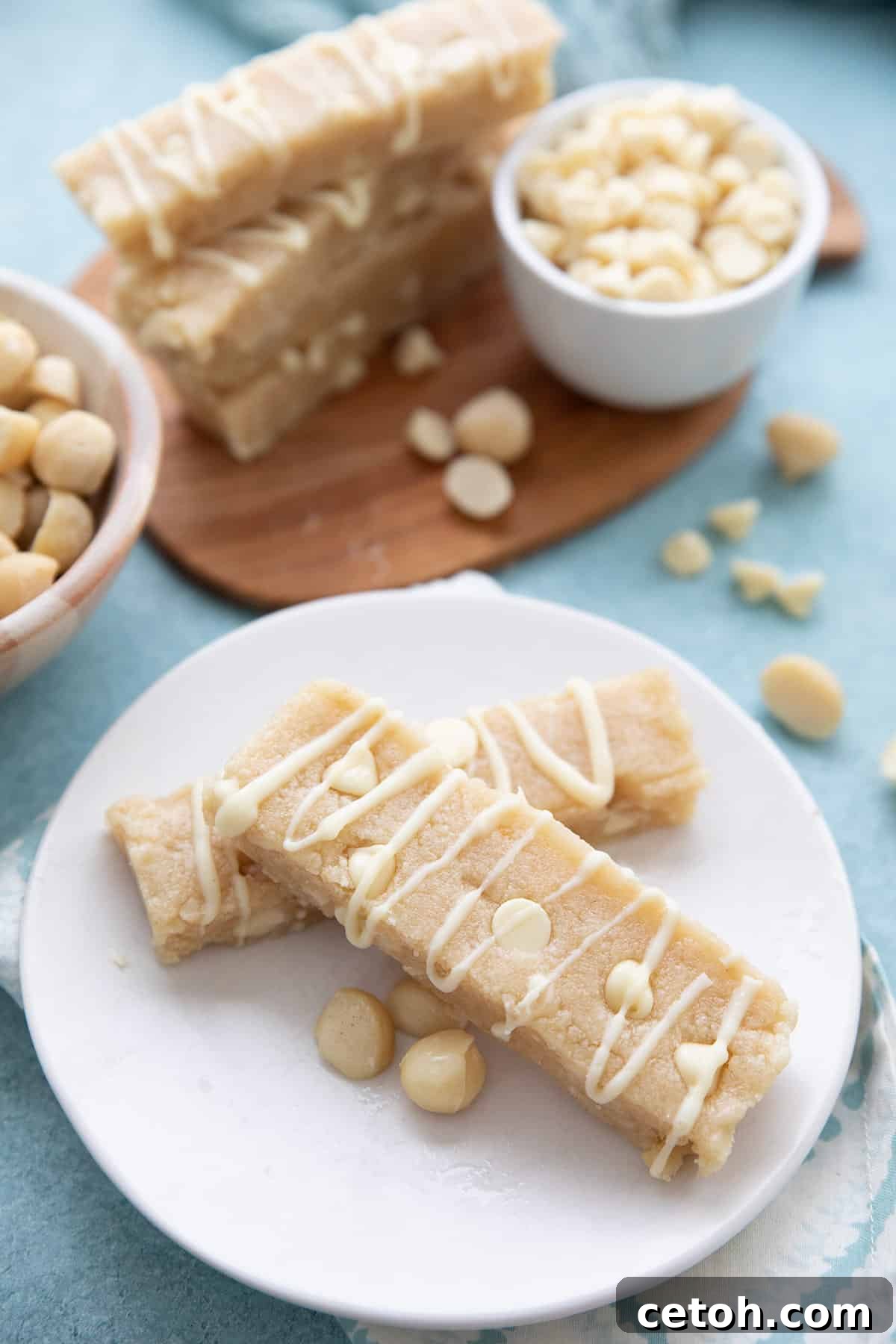
Welcome to the ultimate guide for crafting your own delicious and nutritious Keto Protein Bars! Forget those disappointing, store-bought options filled with questionable ingredients and hidden carbs. Our easy-to-follow, no-bake recipe allows you to create delectable, heart-healthy snacks in just 15 minutes, each packed with 13g of protein and only 2g net carbs. Featuring the rich, buttery goodness of macadamia nuts and the sweet indulgence of sugar-free white chocolate, these homemade bars are a game-changer for anyone on a ketogenic diet.
If you’re seeking a genuinely satisfying and wholesome snack that supports your low-carb lifestyle, look no further. These bars are not only incredibly simple to prepare, requiring no oven at all, but they are also a powerhouse of nutrition. Loaded with antioxidant-rich macadamia nuts, they provide an excellent source of healthy fats and fiber, alongside nearly 14g of muscle-building protein. Fans of our Keto White Chocolate Macadamia Nut Cookies will undoubtedly fall in love with these convenient and irresistible bars.
Why Choose Homemade Keto Protein Bars?
As we age, our bodies’ protein requirements often increase, especially when following a ketogenic diet. Research increasingly supports the importance of adequate protein intake, particularly for women, to maintain muscle mass and satiety. This realization has driven my passion for creating delicious and effective low-carb, high-protein recipes, such as my popular Peanut Butter Protein Balls.
The market is saturated with “keto-friendly” protein bars, yet a vast majority fall short of expectations. Many boast unappealing flavors, strange textures, and a laundry list of questionable additives. It’s frustrating to invest in a snack that promises health benefits but ultimately disappoints. These commercial bars often contain hidden sugars, artificial sweeteners that can cause digestive upset, or ingredients that technically fit the “keto” label but offer little nutritional value.
Making your own homemade keto protein bars offers unparalleled advantages. You gain complete control over every ingredient, ensuring only the freshest, highest-quality components make it into your snack. This transparency means no hidden nasties, no unexpected carb counts, and no artificial flavors. Furthermore, you can customize these bars to your exact taste preferences – adjust the sweetness level, experiment with different flavor profiles, or even add your favorite keto-friendly mix-ins.
Beyond taste and quality, homemade bars are often more cost-effective than their store-bought counterparts. The savings accumulate, especially if protein bars are a regular part of your diet. And let’s not forget the superior nutritional profile: our bars boast a mere 2g net carbs per serving, significantly lower than the 4-5g found in many pre-packaged options. This makes them an ideal choice for strict keto followers looking to maximize their fat and protein intake while minimizing carbohydrates. Are you convinced yet? Let’s dive into how you can start making these incredibly delicious and healthy snacks today!
Essential Ingredients for Your Keto Protein Bars
This post may contain Amazon or other affiliate links. As an Amazon Associate I earn from qualifying purchases.
- Macadamia Nuts: These form the creamy, rich base of our keto protein bars. For the best flavor and texture, use raw, unsalted macadamia nuts. Macadamias are celebrated in the keto community for their high monounsaturated fat content and extremely low carb count, making them a perfect choice for heart health and sustained energy. If you’re looking to reduce costs without compromising too much on texture, blanched almonds can be used for part of or all the nuts.
- Protein Powder: To maintain the delicate macadamia flavor, I highly recommend using unflavored whey protein isolate. Flavored protein powders, while convenient, can easily overpower the natural taste of the nuts and chocolate. Whey protein isolate is ideal for its low-carb profile and excellent mixability. Other protein types, such as casein or a plant-based blend, can work, but note that collagen protein may require less added water to achieve the desired consistency, so add it gradually, one tablespoon at a time, to avoid a crumbly or overly sticky mixture.
- Sweetener: Since these are no-bake low-carb protein bars, a powdered sweetener is crucial to prevent a gritty texture. Powdered erythritol blends (like Swerve Confectioners) are excellent choices, offering sweetness without the caloric impact or glycemic spike of sugar. See our “Expert Tips” section for additional sweetener options and how to adjust for desired sweetness.
- Almond Flour: A small amount of fine almond flour provides essential structure and volume to the protein bars, helping them hold their shape without being overly dense. Alternatively, if you prefer or need a nut-free option, you can use coconut flour, but be cautious with the quantity; due to its high absorbency, I recommend using only about 3 tablespoons of coconut flour as a substitute.
- White Chocolate: For that irresistible sweet drizzle and added flavor, I used ChocZero sugar-free white chocolate chips, known for their clean ingredients and excellent melt. However, feel free to experiment with sugar-free dark chocolate or milk chocolate chips for a different twist. Ensure your chosen brand is genuinely low in net carbs.
- Coconut Oil: A touch of coconut oil is essential when melting the white chocolate. It helps create a smooth, pourable consistency and prevents the chocolate from seizing, which can happen if melted without an emulsifier. While other oils can be used, avoid butter as its water content can cause the chocolate to seize.
- Pantry Staples: A dash of pure vanilla extract enhances the overall flavor profile, adding warmth and depth. A pinch of salt balances the sweetness and brings out the nutty notes of the macadamia.
Step-by-Step Directions for No-Bake Keto Protein Bars
- Prepare the Pan and Nuts: Begin by lining a 9×5 inch loaf pan with parchment paper or waxed paper, allowing the edges to overhang. This creates “handles” for easy removal later. Set aside about 10 macadamia nuts and finely chop them with a sharp knife; these will be mixed in for extra texture.
- Process the Macadamias: Place the remaining macadamia nuts into a food processor. Process them on high speed, continuously scraping down the sides and blade, until they begin to release their natural oils and transform into a coarse, creamy nut butter. This may take a few minutes and multiple stops to scrape. The goal is a consistency that is thick but still has some texture.
- Combine Dry Ingredients: To the nut butter in the food processor, add the unflavored protein powder, almond flour (or coconut flour), powdered sweetener, vanilla extract, and salt. Continue to process until all ingredients are thoroughly combined and the mixture appears uniform. Remember to scrape down the sides of the bowl as needed to ensure everything is incorporated.
- Achieve the Right Consistency: At this stage, your mixture will likely be quite dry and crumbly. Add 1/4 cup of water and continue processing. The mixture should gradually start to clump together. If it still appears too dry or crumbly, add more water, one tablespoon at a time, processing after each addition. The mixture is ready when you can firmly squeeze a small portion in the palm of your hand and it holds its shape. This binding step is crucial for the bars’ structure.
- Form and Chill the Bars: Transfer the mixture from the food processor to a medium-sized bowl. Stir in half of the sugar-free white chocolate chips and the reserved chopped macadamia nuts. Press this mixture firmly and evenly into your prepared loaf pan. Ensure it’s tightly packed for solid bars. Refrigerate the pan for at least one hour to allow the bars to firm up completely.
- Slice and Drizzle: Once firm, lift the entire block of bars out of the pan using the parchment paper overhangs. Place it on a cutting board. Using a very sharp knife (see expert tips for a trick!), slice the block into 8 equally sized bars.
- Prepare the White Chocolate Drizzle: In a small, microwave-safe bowl, combine the remaining white chocolate chips and the coconut oil. Microwave on high power in short, 15-20 second bursts, stirring well after each burst, until the chocolate is smooth and fully melted. Be careful not to overheat. Drizzle this melted white chocolate generously over the sliced bars. Allow the drizzle to set in the refrigerator for another 15-20 minutes, or until the chocolate hardens.
Expert Tips for Perfect Keto Protein Bars
Crafting the perfect homemade keto protein bars is simple with a few insider tricks:
- Macadamia Nut Alternatives: While macadamia nuts are fantastic for keto due to their low-carb profile and abundance of healthy fats, they can be a bit pricey. To make this recipe more budget-friendly, you can substitute a portion of the macadamias with blanched almonds. This will slightly alter the flavor and texture but still yield a delicious and nutritious bar. For a different flavor profile altogether, you could experiment with other keto-friendly nuts like pecans or walnuts, though the fat content and consistency might vary.
- Precision Cutting: The inclusion of white chocolate chips and chopped macadamias can make these bars a bit challenging to slice cleanly. For best results, use a very sharp knife. An excellent trick is to heat your knife under hot water, wipe it dry, and then make each cut. Reheat and wipe as needed between slices. This helps the warm blade glide through the chocolate and nuts more easily, resulting in clean, professional-looking bars. You can choose to cut them into long, traditional protein bar shapes or opt for easier-to-handle squares (e.g., four down, two across, making eight squares total).
- Sweetener Options: As these are no-bake bars, selecting a powdered sweetener is essential to ensure a smooth, grit-free texture. Granulated sweeteners will not dissolve and will leave an unpleasant crunch. Powdered erythritol, allulose, or monk fruit/stevia blends are excellent choices. You can also fine-tune the sweetness by combining different powdered sweeteners; for example, if you find erythritol too cooling, try adding a small amount of liquid stevia or monk fruit extract to reduce the overall erythritol quantity while maintaining sweetness. Always taste and adjust to your personal preference.
- Flavor Variations: Don’t hesitate to get creative with your flavors! Add a pinch of cinnamon or a dash of almond extract for an extra dimension. For a chocolatey twist, you could incorporate a tablespoon of unsweetened cocoa powder into the base mixture. A hint of orange or peppermint extract could also be delightful, especially when paired with white chocolate.
- Storage for Longevity: While these bars are quite stable and can be left at room temperature for a few hours without spoiling, for optimal freshness and firmness, it’s best to store them in an airtight container in the refrigerator. They will maintain their delicious taste and texture for several weeks. For longer storage, you can also freeze individual bars in parchment paper, then transfer them to a freezer-safe bag for up to 2-3 months. Thaw in the fridge or at room temperature for a quick snack.
Frequently Asked Questions About Keto Protein Bars
Absolutely, but with a significant caveat. Many commercial protein bars are surprisingly high in carbs and sugars, making them unsuitable for the keto diet despite marketing claims. Even bars labeled “keto” can sometimes contain ingredients that spike blood sugar or add unnecessary net carbs. The best and safest approach is to make your own keto protein bars at home, like this recipe. This way, you have full control over the ingredients and can ensure they truly align with your low-carb goals.
The carbohydrate content can vary widely depending on the ingredients. Our particular White Chocolate Macadamia Keto Protein Bars are meticulously crafted to be very low in net carbs. Each bar contains approximately 6.5g of total carbohydrates and an impressive 4.5g of dietary fiber. This means you’re only getting a fantastic 2g of net carbs per serving, making them an excellent choice for maintaining ketosis.
These homemade low-carb protein bars are quite robust and don’t spoil easily. They can comfortably be left at room temperature for several hours, making them ideal for a grab-and-go snack or packing in a lunchbox. However, for extended freshness and to maintain their firm texture, I highly recommend storing them in an airtight container in the refrigerator. When properly stored, they will remain fresh and delicious for several weeks.
While this recipe heavily relies on macadamia nuts and almond flour, you can explore nut-free options. For the macadamia nuts, sunflower seed butter or a combination of toasted coconut flakes and seeds (like pumpkin or sunflower seeds) could work, though the flavor and fat profile will change significantly. For the almond flour, using 3 tablespoons of coconut flour is an option, as mentioned in the ingredients. Remember that any substitutions will alter the taste and texture, so it might require some experimentation to get it just right.
The beauty of these keto protein bars lies in their simplicity! Being a “no-bake” recipe means you don’t need to turn on your oven. The ingredients are combined and then chilled to set, which saves time, energy, and makes the process incredibly quick and accessible. This method also helps to preserve the nutritional integrity of delicate ingredients like protein powder and healthy fats in macadamia nuts.
More Delicious Keto Recipes You Will Love
If you enjoy these keto protein bars, be sure to explore more of our fantastic low-carb creations:
- Keto Chocolate Protein Muffins: A delicious way to start your day or enjoy as a treat.
- Creamy Keto Coffee Protein Shake: Your morning coffee and protein boost, all in one.
- No-Bake Keto Macaroons: Another easy and delightful no-bake keto dessert.
- Rich Keto Macadamia Nut Pie: Perfect for special occasions or a decadent dessert.
- Velvety Keto White Chocolate Mousse: A light and airy sugar-free dessert.
Keto Protein Bars Recipe
8 bars
15 mins
15 mins
Ingredients
- 1 cup (134 g) raw macadamia nuts, divided
- 1 cup (108 g) unflavored whey protein isolate
- 1/2 cup (55 g) almond flour, or 3 tbsp coconut flour
- 1/3 cup (63.6 g) Swerve Confectioners, or other powdered sweetener
- 1 tsp vanilla extract
- 1/4 tsp (0.25 tsp) salt
- 4 to 6 tbsp (4 tbsp) water
- 1 1/2 ounces (42.52 g) sugar-free white chocolate chips, divided
- 1/2 tsp (0.5 tsp) coconut oil
Instructions
-
Line a 9×5 inch loaf pan with parchment or waxed paper. Set aside about 10 of the macadamia nuts and use a sharp knife to chop them finely.
-
Place the remaining macadamia nuts in a food processor and grind until they start to release their oils and become a nut butter. You will have to scrape down the blade and sides of the processor multiple times.
-
Add the protein powder, almond flour, sweetener, vanilla, and salt. Continue to process until well mixed, scraping down the sides as needed.
-
At this point, the mixture will be quite dry. Add 1/4 cup of the water and continue to process until the mixture begins to clump together. Add more water as needed, a little at a time. Once you can squeeze the mixture together in the palm of your hand, it’s ready.
-
Transfer to a bowl and stir in half of the white chocolate chips and chopped nuts. Press the mixture into the prepared pan firmly and evenly. Refrigerate about an hour to firm up.
-
Lift out by the edges of the parchment and slice into 8 bars.
-
In a small microwave-safe bowl, combine the remaining white chocolate chips and the coconut oil. Melt on high in short bursts, stirring frequently until smooth. Drizzle over the bars.
Notes
Protein powder: I recommend unflavored whey protein isolate for this recipe, as flavored varieties will overwhelm the macadamia flavor. Other kinds of protein work as well but collagen may not require as much added water. So add it just a tablespoon at a time.
Sweetener Options: Because these bars aren’t baked, you want to choose a powdered sweetener, to avoid grittiness. But they should work with any powdered sweetener. You can also cut down on the erythritol by adding some stevia or monk fruit extract.
Nutrition
Calories: 239kcal |
Carbohydrates: 6.5g |
Protein: 13.7g |
Fat: 17.5g |
Fiber: 4.5g