
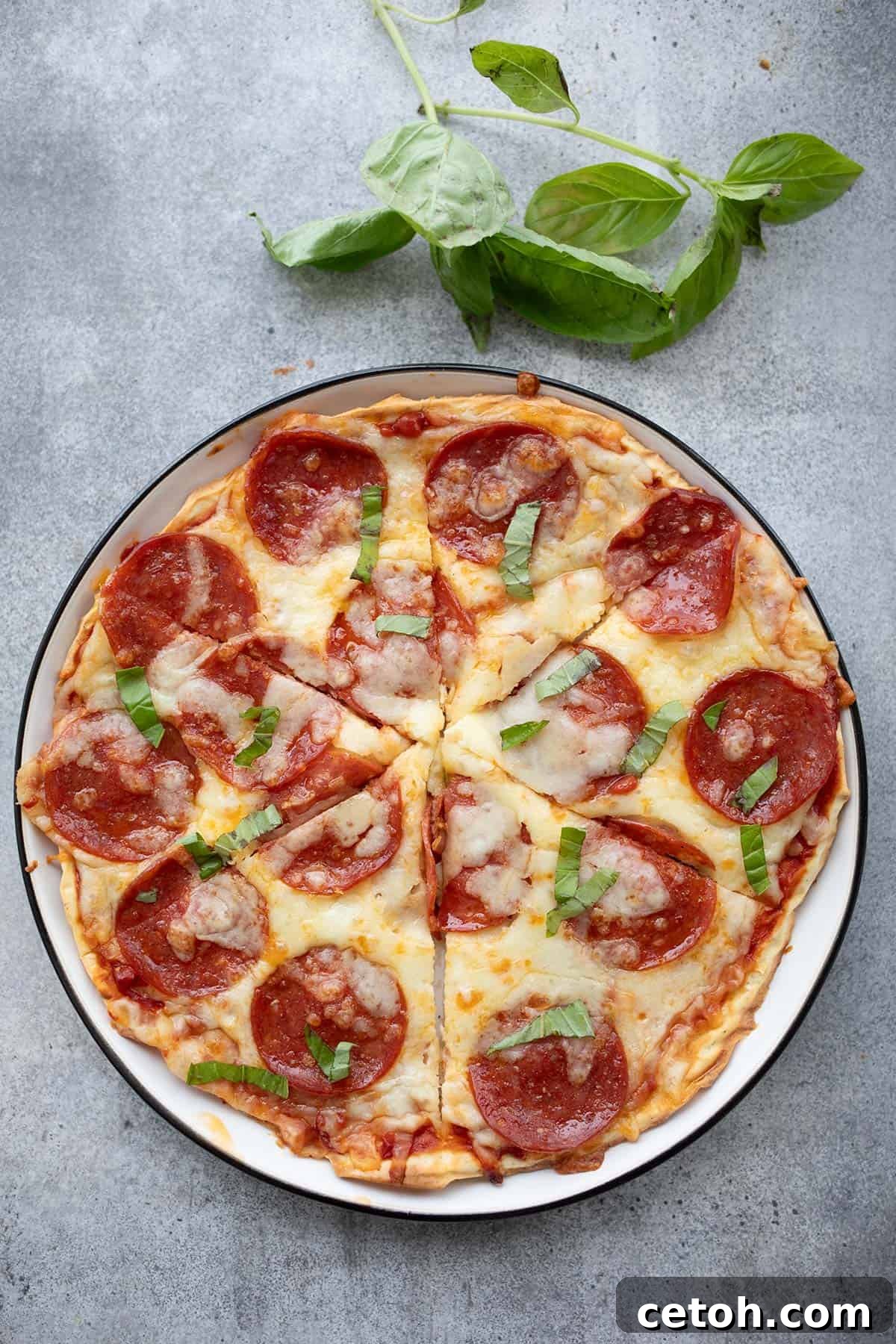
Welcome to the ultimate guide for a guilt-free pizza experience! If you’re searching for a delicious, satisfying meal that supports your health and fitness goals, look no further. This revolutionary protein pizza recipe, featuring an ingenious cottage cheese crust, is designed to fuel your body without compromising on taste. Boasting an impressive nutritional profile with over 30 grams of protein and a mere 6 grams of carbohydrates, it’s the perfect choice for anyone following a low-carb, high-protein, or keto lifestyle.
The culinary world has recently been abuzz with the incredible versatility of cottage cheese, particularly its transformation into surprisingly delicious and sturdy low-carb bases. As a dedicated enthusiast of high-protein low-carb recipes, I’ve been experimenting with this humble dairy product, and the results have been nothing short of spectacular. This protein pizza represents the pinnacle of those efforts, offering a crust that’s not only easy to make but also perfectly textured and flavorful.
You’ve likely encountered the viral cottage cheese flatbread trend that has taken social media by storm. Many food bloggers have embraced this innovative approach, and for good reason! While I often prefer to adapt successful ideas rather than merely follow trends, the concept of a cottage cheese base immediately sparked an idea: could it form the foundation for a truly exceptional low-carb, high-protein pizza crust? It turns out, my instincts were spot on. The possibilities are truly exciting, and if you share my enthusiasm for cottage cheese, you’ll also adore my Protein Bagels and Cottage Cheese Muffins.
Why You Absolutely Must Try This Protein Pizza
This protein pizza crust redefines convenience and taste in the world of healthy eating. Its ease of preparation is genuinely remarkable, often surprising those accustomed to more complex low-carb alternatives. It surpasses the effort required for traditional keto pizza crusts made with fathead dough, which, while delicious, can be more demanding. Moreover, this cottage cheese crust offers a lighter, less dense texture than many alternatives, providing a satisfying bite without the heavy feeling often associated with conventional pizza.
The process is incredibly straightforward. You simply combine all the crust ingredients in a blender or food processor until perfectly smooth. This mixture is then divided into two round cake pans, yielding two perfectly sized 8-inch crusts. The beauty of this recipe lies in its simplicity and versatility. Once the crusts are baked to a firm, golden perfection, they become a blank canvas for your culinary creativity. Just place them on a lightly greased baking sheet, pile on your favorite pizza toppings, and bake until the cheese is bubbling and melted. The result? A seriously delicious, nutritious, and incredibly easy protein pizza that will become a staple in your healthy eating repertoire.
Essential Ingredient Notes for Your Protein Pizza
Crafting the perfect protein pizza begins with understanding the role of each ingredient. Here’s a closer look at what you’ll need and why these components are key to a successful, delicious, and nutritious crust.
- Cottage Cheese: This is the star of our crust, providing both the foundational structure and a significant protein boost. I typically opt for part-skim 2% cottage cheese as it yields a lighter texture while still delivering ample protein. Brands like Good Culture are excellent choices, often offering around 14g of protein per serving, making them ideal for this recipe. Ensure it’s blended until super smooth to avoid any curdy texture in your final crust.
- Eggs: Eggs are absolutely crucial for binding the crust ingredients together. They act as a natural adhesive, ensuring that your pizza crust maintains its integrity and doesn’t crumble during baking or slicing. Don’t skip them!
- Protein Powder: For this recipe, whey protein powder is highly recommended. It contributes to the crust’s structure and protein content without negatively impacting the texture. Other types, like egg white protein, might result in a rubbery crust. While some plant-based proteins or collagen could potentially work, their performance hasn’t been extensively tested in this specific recipe, so stick to whey for best results if possible.
- Coconut Flour: A small amount of coconut flour plays a vital role in providing additional structure and volume to the crust. Its high absorbency helps balance the moisture from the cottage cheese and eggs, preventing the crust from becoming too dense or soggy. If you prefer using almond flour, you’ll need approximately ⅓ cup to achieve a similar consistency due to its different absorption properties.
- Pizza Seasoning: This ingredient is key for infusing the crust with that classic savory pizza flavor right from the start. A good quality pizza seasoning blend, or even a mix of Italian seasoning and dried basil, will elevate the taste of your base, complementing your chosen toppings beautifully.
- Pizza Toppings of Choice: The beauty of this crust is its versatility. You can go traditional with pepperoni and cheese, or venture into more gourmet territory. When topped with classic pepperoni and mozzarella, this pizza delivers over 30g of protein per serving, making it an incredibly satisfying and muscle-building meal. Consider fresh vegetables, different cheeses, or other lean proteins to customize your experience.
Crafting Your Protein Pizza: Step-by-Step Directions
Follow these easy steps to create two perfect, high-protein pizza crusts ready for your favorite toppings. Precision and care at each stage will ensure a delightful end product.
- Prepare Your Workspace and Preheat: Begin by preheating your oven to 350°F (175°C). This ensures the oven is at the optimal temperature when your crusts are ready to bake. Line two 9-inch round baking pans with parchment paper. This is a critical step to prevent sticking. Lightly grease the parchment paper with a non-stick spray or a thin layer of oil to ensure the crusts release easily after baking.
- Blend the Dough Ingredients: In a high-speed blender or food processor, combine the cottage cheese, large eggs, whey protein powder, coconut flour, and pizza seasoning. Blend thoroughly until the mixture is completely smooth and uniform. There should be no visible lumps of cottage cheese. This smooth consistency is vital for a desirable crust texture. Scrape down the sides of the blender if necessary to ensure all ingredients are fully incorporated.
- Form the Crusts: Carefully divide the blended mixture evenly between the two prepared baking pans. Using a spatula or the back of a spoon, gently spread the dough mixture out to the edges of each pan, forming an even layer. To help settle the dough and ensure a uniform thickness, gently shake the pans from side to side a few times. This will help prevent any thin spots or bubbles in the crust.
- Initial Bake for the Crusts: Transfer the pans to the preheated oven and bake for 25 to 30 minutes. The baking time may vary slightly depending on your oven. The crusts are ready when they are firm to the touch, and the edges begin to turn a light golden brown. Once baked, remove the pans from the oven and allow the crusts to cool in the pans for at least 10 minutes. This cooling period is important for the crusts to set properly and firm up, making them easier to handle.
- Prepare for Toppings: After the initial cooling, carefully peel the baked crusts from the parchment paper. They should come off easily. Lightly grease a fresh baking sheet. Place the crusts upside down on the greased baking sheet. This technique helps ensure both sides of the crust get nicely browned and adds to the overall crispy texture.
- Add Toppings and Final Bake: Now comes the fun part! Spread your favorite low-sugar pizza sauce evenly over each crust, then layer on your preferred toppings—from classic pepperoni and mozzarella to vibrant vegetables and other protein choices. Return the topped pizzas to the 350°F (175°C) oven and bake for an additional 10 to 15 minutes, or until the cheese is beautifully melted and bubbly, and the toppings are heated through to your liking. Serve hot and enjoy your perfectly personalized protein pizza!
Expert Tips for Protein Pizza Perfection
Achieving a consistently excellent protein pizza every time is simple with a few key techniques. These tips will help you avoid common pitfalls and enhance your overall pizza-making experience.
- Parchment Paper is Your Best Friend: Always line your baking pans with parchment paper and ensure the parchment itself is lightly greased. This dual protection is crucial for preventing the cottage cheese crusts from sticking to the pan, ensuring they release cleanly and maintain their shape. If you don’t have two round pans, you can alternatively spread the entire crust mixture onto one large 11×15 inch baking sheet, creating a single rectangular pizza. Adjust baking time slightly if using a single, larger crust.
- The Art of Flipping: For an optimal texture and even browning, I highly recommend flipping the crusts upside down onto your baking sheet before adding your toppings. This allows the side that was previously against the parchment paper to get a beautiful golden crisp during the second bake, adding an extra layer of deliciousness to your pizza.
- Flour Substitution Guide: While coconut flour is specified for its unique absorbent properties and provides excellent structure, you can substitute it with almond flour if preferred. If making this swap, use approximately ⅓ cup of almond flour. Keep in mind that almond flour absorbs less liquid than coconut flour, so the consistency of your dough might be slightly different, but it will still yield a fantastic crust.
- Even Spreading is Key: When dividing the dough between the pans, take a moment to spread it as evenly as possible. Thin spots can become brittle or overcooked, while thick spots might remain too soft. Gently shaking the pans helps to naturally even out the mixture.
- Don’t Rush the Cool-Down: After the initial bake, allowing the crusts to cool for at least 10 minutes is essential. This crucial step lets the crusts firm up and prevents them from tearing or crumbling when you handle them. Patience here pays off in a sturdy, manageable base.
- Customization Beyond Toppings: Consider adding a pinch of garlic powder or onion powder to the crust mixture for an extra layer of savory flavor. A sprinkle of red pepper flakes can also add a subtle kick if you enjoy a little heat.
Frequently Asked Questions About Protein Pizza
Here are answers to some common questions about this unique and delicious protein pizza recipe, designed to help you make the most of your culinary adventure.
This innovative high-protein pizza features a crust primarily made from cottage cheese, eggs, and protein powder. These key ingredients create a thin, sturdy, and flavorful base that is both low in carbohydrates and rich in protein. Once the crust is prepared, you can enhance its protein content further by adding your favorite toppings. For example, a classic pepperoni and cheese combination can boost this low-carb pizza to over 30g of protein per serving, making it an incredibly satisfying meal option.
Absolutely! The convenience of this protein pizza extends to meal preparation. These versatile pizza crusts can easily be baked ahead of time, cooled, and stored in an airtight container in the refrigerator for up to 5 days. For longer storage, they can also be frozen for several months. To prevent freezer burn and maintain their quality, ensure they are wrapped tightly in plastic wrap or placed in a freezer-safe bag before freezing. This makes weeknight dinners incredibly quick and easy – just grab a crust, top it, and bake!
This protein pizza recipe is designed to be very low in carbohydrates. Each serving of the crust alone contains approximately 4.5g of total carbohydrates and 1.3g of fiber. This results in a net carb count of about 3.2g per slice of crust. It’s important to remember that these nutritional figures are for the crust only. The overall carbohydrate and nutritional count will change based on the specific pizza sauce and toppings you choose to add, so be mindful of those selections to keep your meal aligned with your dietary goals.
Yes, as long as you use gluten-free protein powder and ensure all your toppings and sauces are certified gluten-free, this protein pizza recipe is naturally gluten-free. The crust itself contains no traditional flour, relying on coconut flour (or almond flour) which are both gluten-free alternatives. Always double-check ingredient labels if gluten sensitivity is a concern.
Beyond the classic pepperoni and cheese, the possibilities for toppings are endless! Consider a Mediterranean-inspired pizza with spinach, feta, sun-dried tomatoes, and olives. For a robust flavor, try a BBQ chicken pizza with sugar-free BBQ sauce, shredded chicken, and red onion. Vegetable lovers can pile on bell peppers, mushrooms, onions, and zucchini. Don’t forget herbs like fresh basil or oregano for an aromatic finish. You can also experiment with different cheese blends like provolone, parmesan, or a spicy Monterey Jack.
Explore More Keto and Low-Carb Pizza Creations
If you’re hooked on the idea of enjoying pizza while sticking to your low-carb or keto goals, you’re in luck! There’s a whole world of innovative recipes beyond this protein pizza to satisfy your cravings. Here are some fantastic options to keep your menu exciting and delicious:
- Keto Breakfast Pizza: Start your day with a savory and satisfying pizza that fits your low-carb lifestyle.
- Easy Pizza Chicken: A quick and simple way to get all the pizza flavors without the traditional crust.
- Chicken Alfredo Pizza: Indulge in a creamy, rich pizza experience with an Alfredo base.
- Keto Pizza Casserole: All the flavors of pizza layered into a comforting, easy-to-make casserole.
- Jalapeno Popper Pizza: For those who love a bit of a kick, this pizza combines creamy, spicy goodness.

Protein Pizza Recipe
Servings: 4 servings
Prep Time: 10 mins
Cook Time: 22 mins
Total Time: 32 mins
This Protein Pizza recipe offers an easy cottage cheese crust that packs a powerful nutritional punch. With over 30 grams of protein and only 6 grams of carbs (with classic toppings), it’s a delicious and healthy way to fuel up for any meal.
You can also find a printable version of this recipe for convenience, and don’t forget to share your creations!
Equipment
- 2 9-inch round baking pans
- Blender or Food Processor
- Parchment Paper
- Baking Sheet
Ingredients
- 1 cup cottage cheese
- 2 large eggs
- ⅓ cup whey protein powder
- 2 tbsp coconut flour
- 1 tsp pizza seasoning (or Italian seasoning)
- Pizza toppings of choice
Instructions
- Preheat the oven to 350ºF (175°C) and line two 9-inch round baking pans with parchment paper. Grease the parchment paper lightly.
- In a blender, combine the cottage cheese, eggs, protein powder, coconut flour, and pizza seasoning. Blend until completely smooth.
- Divide the mixture evenly between the two prepared pans, spreading it out to the edges to form an even layer. Gently shake the pans to further even out the dough.
- Bake for 25 to 30 minutes, or until the crusts are firm to the touch and lightly golden. Remove from the oven and let cool for at least 10 minutes in the pans.
- Once cooled, carefully peel the crusts from the parchment paper. Lightly grease a baking sheet and place the crusts upside down on the baking sheet.
- Add your favorite pizza toppings. Return to the 350ºF (175°C) oven and bake until the cheese is melted and bubbly, about 10 to 12 minutes, or until toppings are cooked to your liking. Serve immediately.
Notes
Nutritional Information with classic toppings (1/3 cup tomato sauce, 4 ounces pepperoni, 1 cup shredded mozzarella): Calories: 361; Carbs: 6.1g; Fiber: 1.4g; Protein: 31.4g; Fat: 21.2g. Please note that nutritional values can vary based on specific brands and exact quantities used.
Storage Information: Store any leftover cooked pizza slices in an airtight container in the fridge for up to 5 days. Unbaked crusts can be made ahead and stored in the fridge for 5 to 7 days, or wrapped tightly and frozen for several months, making them excellent for meal prep.
Substitution for Coconut Flour: If you do not have coconut flour, you can substitute with ⅓ cup almond flour. Adjustments to dough consistency might be needed slightly as almond flour absorbs less liquid.
Nutrition (Crust Only)
Serving: 1 serving = 1/2 pizza (crust only)
Calories: 121 kcal
Carbohydrates: 4.5 g
Protein: 18.3 g
Fiber: 1.3 g
Note: These values are approximate and for the crust only. Topping choices will alter the final nutritional information.
I’d love to know your thoughts, leave your rating below!
Embrace a healthier way to enjoy your favorite comfort food with this fantastic protein pizza. It’s not just a recipe; it’s a testament to how creative and satisfying low-carb, high-protein eating can be. With its simple preparation, versatile topping options, and impressive nutritional benefits, this cottage cheese crust pizza is poised to become a beloved staple in your kitchen. Experiment with flavors, make it your own, and enjoy every protein-packed bite. Don’t hesitate to share your experiences and variations in the comments—your next favorite meal starts here!