
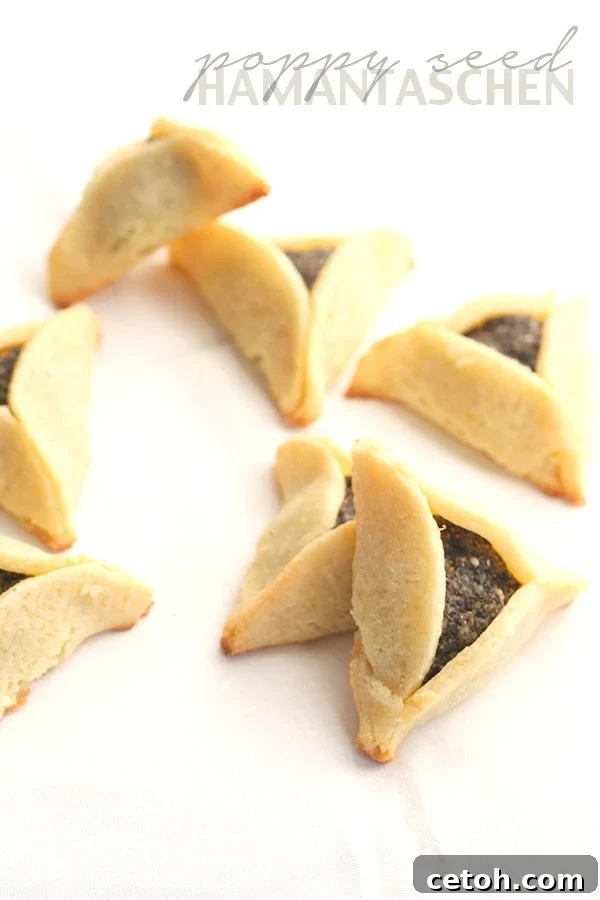
Tender almond flour pastry filled with a sweet poppy seed filling. This traditional Jewish cookie receives a delicious low-carb, grain-free makeover, perfect for Purim or any time you crave a delightful, guilt-free treat.
Discovering the Delight of Hamantaschen: A Healthy Twist for All
The culinary world is a tapestry of rich traditions, and among them, Jewish baking stands out with its incredible array of pastries. From the flaky layers of rugelach to the sweet, braided loaves of challah, Jewish bakeries have long been synonymous with exquisite baked goods. Today, we’re diving into another beloved classic: Hamantaschen. While traditionally enjoyed during the festive holiday of Purim, these triangular cookies with their delightful fillings are a treat any time of year. And for those navigating dietary restrictions, we’re bringing you an innovative, low-carb and grain-free version that doesn’t compromise on flavor or texture.
This particular recipe was born from a special request from my friends at A Sweet Life Diabetes Magazine. Being Jewish themselves, they sought a healthier, low-carb rendition of this traditional Purim cookie. I was thrilled to take on the challenge, having long admired the delicious-looking hamantaschen recipes I’ve encountered across various food blogs. The result is a pastry that respects its heritage while embracing modern dietary needs.
The Rich History of Hamantaschen and Purim
Hamantaschen, meaning “Haman’s pockets” or “Haman’s ears,” are an iconic pastry associated with the Jewish holiday of Purim. This joyful festival commemorates the deliverance of the Jewish people from Haman’s plot to annihilate them, as recorded in the Book of Esther. The triangular shape of the cookie is said to represent Haman’s three-cornered hat or, in some interpretations, his folded ears. Sharing these sweet treats with friends and family is a central part of Purim celebrations, symbolizing joy, community, and the triumph of good over evil. Crafting these cookies allows us to connect with centuries of tradition, making them not just a dessert, but a meaningful cultural experience.
Why Choose Low-Carb and Grain-Free Hamantaschen?
For many, traditional baked goods, while delicious, can pose challenges. A low-carb, grain-free approach offers numerous benefits:
- Blood Sugar Management: For individuals with diabetes, or those looking to manage their blood sugar levels, reducing carbohydrates is essential. This recipe uses sweeteners like Swerve and stevia, along with almond flour, to minimize impact on glucose.
- Gluten-Free Diet: Traditional Hamantaschen are made with wheat flour, making them unsuitable for those with gluten sensitivities or celiac disease. Almond flour provides a fantastic gluten-free alternative, creating a tender, rich pastry.
- Keto-Friendly: Following a ketogenic diet often means saying goodbye to many desserts. This recipe allows keto dieters to enjoy a beloved classic without straying from their macros.
- Overall Wellness: Even without specific dietary restrictions, many people choose to reduce grains and sugar for general health and well-being, including improved energy levels and reduced inflammation.
Our goal here is not to eliminate tradition, but to adapt it, making these wonderful cookies accessible to a wider audience without sacrificing the comforting flavors we all love.
Poppy Seed Hamantaschen
18
cookies
20
15
Ingredients
For the Poppy Seed Filling
- 6 tbsp poppy seeds
- 2 tbsp chia seeds
- 1/2 cup unsweetened almond milk or cashew milk
- 3 tbsp powdered Swerve Sweetener
- 1 tsp orange zest
For the Almond Flour Pastry
- 2 cups finely ground almond flour
- 1/4 cup Swerve Sweetener
- 1/4 tsp salt
- 1 tsp lemon zest
- 1 large egg
- 2 1/2 TBSP butter, melted
- 1/8 tsp stevia extract
Instructions
-
Prepare the Filling: For the filling, grind poppy seeds and chia seeds in a food processor or coffee grinder until they achieve a fine, meal-like consistency, similar to flax seed meal. This step is crucial for achieving the desired smooth texture.
-
Cook the Filling: Combine the freshly ground seeds, unsweetened nut milk (almond or cashew), powdered Swerve Sweetener, and orange zest in a small saucepan. Place over medium-low heat. Stir constantly and bring the mixture to a gentle simmer. Continue to cook, stirring frequently, until the milk is fully absorbed and the mixture has significantly thickened. Remove from heat and set aside to cool completely. The filling will thicken further as it cools.
-
Preheat Oven & Prep Baking Sheet: While the filling cools, preheat your oven to 325°F (160°C). Line a large baking sheet with parchment paper or a silicone baking mat to prevent sticking.
-
Make the Pastry Dough: In a medium-sized mixing bowl, combine the finely ground almond flour, Swerve Sweetener, salt, and lemon zest. Whisk these dry ingredients together thoroughly. Next, add the large egg, melted butter, and stevia extract to the dry mixture. Stir everything together with a spoon or spatula until a cohesive dough forms. It should be soft but manageable.
-
Roll and Cut the Dough: Turn the prepared dough out onto a large piece of parchment paper. Place another large piece of parchment paper on top of the dough. Using a rolling pin, roll the dough evenly between the two sheets of parchment paper to approximately 1/8 inch thickness. This method helps prevent sticking and makes handling the delicate almond flour dough easier. Using a 3-inch round cookie cutter, cut out as many circles as possible from the rolled dough. Carefully loosen each circle from the parchment using a thin, sharp knife or an offset spatula. Transfer these circles to your prepared baking sheet. To prevent the dough from drying out, cover the cut circles with plastic wrap while you continue working with the remaining dough.
-
Fill and Shape Hamantaschen: Gather any dough scraps, gently reroll them between parchment paper, and cut out additional circles until all dough is used (you should yield approximately 18 cookies in total). Spoon about 3/4 of a teaspoon of the cooled poppy seed filling into the center of each dough circle. To form the traditional triangular shape, gently fold in three sides of the circle, pinching the corners firmly together to seal and create a visible filling window in the center. Ensure the edges are well-sealed to prevent the filling from leaking during baking.
-
Bake to Perfection: Place the shaped hamantaschen into the preheated oven. Bake for 12 to 15 minutes, or until the edges of the cookies are just golden brown. Keep a close eye on them as almond flour bakes quickly. Once baked, remove the hamantaschen from the oven and allow them to cool completely on the baking sheet before handling. They will firm up as they cool.
Notes
Nutrition Information (per cookie)
Serving: 1 cookie
- Calories: 110 kcal
- Carbohydrates: 4.14 g
- Protein: 3.78 g
- Fat: 9.43 g
- Cholesterol: 4 mg
- Sodium: 59 mg
- Fiber: 2.51 g
Tips for Perfect Low-Carb Hamantaschen
Working with almond flour dough can be a bit different from traditional wheat flour, but with a few tips, you’ll master these hamantaschen in no time:
- Chill the Dough: If your dough feels too soft or sticky, briefly chilling it in the refrigerator for 15-30 minutes can make it much easier to handle and roll out.
- Parchment Paper is Your Friend: Always roll the dough between two sheets of parchment paper. This prevents sticking and makes transferring the delicate circles much simpler.
- Grind Your Poppy Seeds Fine: For the authentic poppy seed filling texture, grinding the seeds into a fine meal is essential. This helps them absorb the liquid better and creates a smoother filling.
- Don’t Overfill: A common mistake is to put too much filling, which can cause the cookies to burst open during baking. Stick to about 3/4 teaspoon per cookie.
- Seal Firmly: When shaping the triangles, ensure you pinch the corners together very well. This helps maintain the iconic shape and keeps the filling locked inside.
- Watch Your Bake Time: Almond flour baked goods can go from perfectly golden to overcooked quickly. Keep an eye on them, especially during the last few minutes, looking for just lightly golden edges.
Exploring Other Low-Carb Filling Options
While the poppy seed filling is a classic and truly delicious choice, don’t hesitate to experiment with other low-carb fillings to suit your taste:
- Raspberry Chia Seed Jam: As mentioned in the recipe notes, a homemade low-carb raspberry chia seed jam is an excellent, fruity alternative. The chia seeds also help achieve a thick, spreadable consistency.
- Sugar-Free Chocolate Ganache: A rich, dark chocolate ganache made with sugar-free chocolate and heavy cream can create a decadent and satisfying hamantaschen.
- Nut Butter & Spice: A mixture of almond butter or cashew butter combined with a touch of cinnamon and a low-carb sweetener can offer a creamy, nutty profile.
- Lemon Curd: A zesty, sugar-free lemon curd provides a bright and tangy contrast to the rich almond flour pastry.
Storing Your Hamantaschen
These low-carb hamantaschen are best enjoyed fresh, but they can be stored to maintain their deliciousness. Store them in an airtight container at room temperature for up to 3-4 days. For longer storage, you can refrigerate them for up to a week. If you plan to make them ahead, they can also be frozen for up to a month. Thaw at room temperature or warm gently in a low oven for a few minutes before serving for a fresh-baked feel.
Whether you’re celebrating Purim, adhering to a low-carb lifestyle, or simply exploring healthier baking options, these Poppy Seed Hamantaschen offer a truly delightful experience. They’re a testament to how traditional flavors can be beautifully re-imagined for modern dietary needs. We hope you enjoy baking and sharing them as much as we do!
I’d love to know your thoughts and how these turned out for you. Feel free to leave your comments and ratings below!