
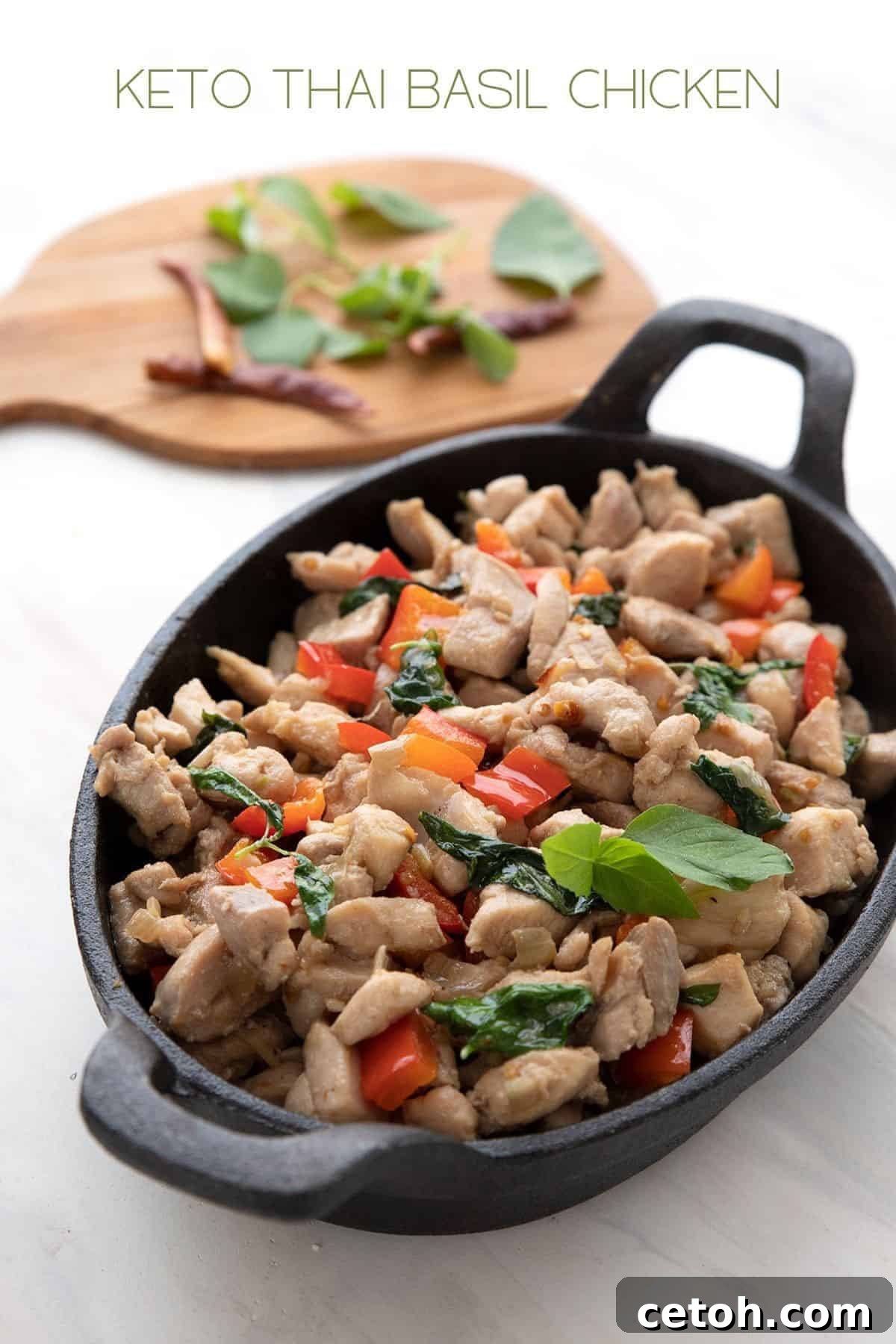
Authentic & Easy Keto Thai Basil Chicken Stir-Fry: Your 20-Minute Weeknight Miracle!
Craving a vibrant, flavorful, and incredibly quick meal that fits perfectly into your low-carb or keto lifestyle? Look no further than this sensational Keto Thai Basil Chicken stir-fry. Known in Thailand as Pad Kra Pao Gai, this classic dish is famous for its explosive spicy, savory, and umami flavors. Our rendition makes it accessible and healthy, allowing you to enjoy authentic Thai taste right in your own kitchen.
For those of us who adore Thai cuisine, the struggle is real when trying to find healthy, low-carb options that don’t compromise on flavor. This Thai Basil Chicken recipe is a game-changer, delivering all the bold taste you expect from your favorite takeout spot without any added sugars or high-carb ingredients. It’s a quick chicken stir-fry that comes together in just 20 minutes, making it an ideal choice for busy weeknights when you need a delicious and satisfying meal fast.
Whether you serve it elegantly in crisp lettuce wraps for a refreshing bite or over a bed of fluffy cauliflower rice to soak up all the incredible sauce, this dish is destined to become a staple in your collection of easy keto dinner recipes. The simplicity of its preparation belies the depth of its flavor, proving that healthy eating can be both convenient and profoundly delicious.
Why You’ll Fall in Love with This Keto Thai Basil Chicken Recipe
There are countless reasons why this Keto Thai Basil Chicken stir-fry has earned its place as a beloved dish. First and foremost, its speed is unparalleled. From chopping your ingredients to plating a steaming hot meal, you’re looking at a mere 20 minutes. This makes it a perfect contender for those frantic evenings when cooking feels like a chore, but you still crave something wholesome and exciting.
Beyond its speed, the flavor profile is truly captivating. Thai cuisine is renowned for its harmonious balance of spicy, sour, sweet, and salty notes, often underscored by a rich umami depth. This recipe captures that essence beautifully, thanks to the aromatic combination of fresh Thai basil, fiery chilies, pungent garlic, savory fish sauce, and gluten-free tamari. Each bite is an explosion of taste that will transport your senses straight to the bustling street food markets of Thailand.
As a devoted fan of Thai food, I’ve spent years perfecting low-carb versions of my favorite dishes. This includes popular recipes like keto pad Thai, a comforting Thai chicken soup, and a crisp Thai Cucumber Salad. This Thai basil chicken recipe, originally crafted in 2014, is another shining example of how traditional flavors can be adapted for a healthy lifestyle without compromise. Rediscovering it recently reminded me of its pure brilliance – a truly “why don’t I make this more often?” kind of meal that I’m sure you’ll experience too!
Understanding Pad Kra Pao Gai: The Heart of Thai Basil Chicken
Thai basil chicken, or Pad Kra Pao Gai (sometimes spelled Pad Krapow Gai), is one of Thailand’s most beloved and iconic dishes. It’s a staple in nearly every Thai restaurant and a popular choice for quick, satisfying meals due to its ease of preparation and powerful flavor. The name itself translates to “stir-fried holy basil with chicken,” highlighting the central role of basil in this culinary masterpiece.
The Significance of Basil Varieties
Traditionally, Pad Kra Pao Gai calls for Thai holy basil, known for its distinct peppery, slightly anise-like flavor and robust aroma. This variety is different from the more common Italian-style sweet basil found in most Western grocery stores, which has a milder, sweeter, and sometimes minty profile. Thai holy basil can be challenging to find outside of Asian markets, so many recipes (including this one, depending on availability) often use Thai sweet basil as a substitute. Thai sweet basil, while not identical to holy basil, still offers a more authentic Thai flavor than Italian basil, with its slight licorice notes. For this keto adaptation, using whatever fresh Thai basil is accessible will yield delicious results, even if it’s the sweet variety.
Traditional Ingredients and Keto Adaptations
A traditional Pad Kra Pao Gai typically includes chicken (or other meat), holy basil, fresh bird’s eye chilies, garlic, and a savory sauce made from fish sauce, soy sauce, and often a touch of oyster sauce and sugar. The stir-fry is cooked quickly over high heat, ensuring the ingredients retain their freshness and vibrant textures.
For this keto-friendly version, we’ve made a few mindful adjustments to keep the carbohydrate count low without sacrificing authenticity:
- Soy Sauce & Oyster Sauce: We’ve opted for gluten-free tamari, which provides a similar savory depth to soy sauce but is naturally gluten-free and often has a slightly lower carb count. We also ensure that no oyster sauce, which can contain sugar, is used.
- Sweetener: Traditional recipes often include a spoonful of sugar to balance the flavors. However, with the natural sweetness from the shallots and bell pepper, and the sheer vibrancy of the other ingredients, this dish truly doesn’t need it. The complex interplay of spicy, savory, and aromatic elements creates a perfectly balanced taste all on its own.
- Vegetables: While not always in the traditional version, adding some chopped red pepper provides a wonderful pop of color, extra nutrients, and a subtle sweetness that complements the spice.
While I strive for authenticity, my primary goal is to create delicious, accessible keto meals. For those interested in the deepest traditional nuances, I highly recommend exploring resources from expert Thai food bloggers, such as the detailed article on preparing authentic Thai Basil Chicken from Eating Thai Food.
Key Ingredients for an Authentic Keto Thai Basil Chicken
Crafting the perfect Thai Basil Chicken relies on a few core ingredients that deliver its signature flavor. Understanding each component and its role will help you make the best stir-fry possible.
- Chicken Thighs: We use boneless, skinless chicken thighs for this recipe. Thighs are superior to breasts in stir-fries because they remain tender and juicy even when cooked quickly over high heat, thanks to their higher fat content. Cut them into small, bite-sized pieces for even cooking.
- Thai Basil Leaves: The star of the show! As discussed, Thai holy basil is traditional, but Thai sweet basil is a fantastic and more readily available substitute. Its slightly peppery, anise-like flavor is essential for the authentic taste. Add it at the very end of cooking to preserve its fresh aroma.
- Garlic & Shallots: These aromatic powerhouses form the base of flavor. Minced garlic and shallots provide a fragrant, savory foundation that pairs beautifully with the chilies.
- Thai Chilies (Bird’s Eye Chilies): For that characteristic spicy kick! Fresh or dried Thai chilies work well. If using dried, crush them to release their heat. The heat level is adjustable – use more for a fiery dish, less for a milder one. Red pepper flakes can be used as a substitute if Thai chilies are unavailable.
- Coconut Oil: Ideal for high-heat stir-frying due to its high smoke point and subtle tropical flavor that complements Asian dishes.
- Fish Sauce: A non-negotiable ingredient in Thai cuisine! Fish sauce provides an incredible depth of umami and saltiness. Don’t skip it – it’s key to the authentic flavor profile.
- Tamari (or Gluten-Free Soy Sauce): This offers a savory, slightly salty component. Tamari is a great gluten-free alternative to traditional soy sauce.
- Red Pepper (Bell Pepper): While not strictly traditional, a chopped red bell pepper adds beautiful color, a hint of sweetness, and additional nutritional value. It also adds a nice textural contrast.
Mastering the Keto Thai Basil Chicken Stir-Fry Technique
Stir-frying is a cooking method that prizes speed and intense heat to achieve vibrant flavors and tender-crisp textures. To master this Thai Basil Chicken, a few key techniques are essential:
- Mise en Place is Crucial: This French culinary term means “everything in its place.” For a stir-fry, this translates to having all your ingredients prepped (minced, chopped, sauces measured) and ready to go before you even turn on the heat. Stir-fries cook very quickly, so there’s no time to chop while cooking.
- High Heat is Your Friend: A hot pan or wok is fundamental. It ensures that the ingredients sear quickly, developing rich flavors and preventing them from steaming. Ensure your oil is shimmering and hot before adding the aromatics.
- Cook in Stages: Different ingredients require different cooking times. Aromatics like garlic, shallots, and chilies go in first to release their fragrance. The chicken follows, then harder vegetables if you add them (like the bell pepper), and finally, the sauces and delicate basil are added at the very end to prevent overcooking.
- Keep Stirring: The “stir-fry” name is literal! Keep the ingredients moving constantly in the pan. This promotes even cooking and prevents anything from burning.
- Don’t Overcrowd the Pan: Cooking in batches if necessary is better than overcrowding. An overcrowded pan will lower the temperature, causing ingredients to steam rather than sear, leading to a less desirable texture.
Step-by-Step Guide to Cooking Keto Thai Basil Chicken
- Prepare Your Ingredients: Before you even begin to cook, ensure all your ingredients are prepped and within arm’s reach. Mince the garlic and shallots, crush the Thai chilies (a mortar and pestle works best, but the back of a knife will do in a pinch), and chop the boneless, skinless chicken thighs into uniform 1/2-inch pieces. Chop your red pepper. Have your fish sauce and tamari measured out.
- Heat the Oil: Place a large sauté pan or wok over medium-high heat. Add the coconut oil and allow it to get nice and hot, shimmering but not smoking.
- Sauté the Aromatics: Add the minced garlic and shallots to the hot oil. Cook for about 1 minute, stirring constantly, until they become wonderfully fragrant. Next, add the crushed Thai chilies (or red pepper flakes) and continue to cook for another 30 seconds to release their heat and flavor.
- Stir-Fry the Chicken and Pepper: Add the chopped chicken and red pepper to the pan. Stir-fry, turning the chicken frequently, until it is no longer pink and is cooked through, which typically takes around 7 minutes for bite-sized pieces. The chicken should develop a nice sear.
- Add the Flavorful Sauces: Pour in the fish sauce and tamari. Stir well to coat all the chicken and vegetables, allowing the sauces to meld and deepen in flavor for another minute.
- Introduce the Basil: Finally, stir in the fresh Thai basil leaves. Toss them gently with the chicken mixture. Cook only until the basil leaves are just wilted, which will happen very quickly, in about 1 minute. This ensures the basil retains its vibrant color and pungent aroma.
- Season and Serve: Remove the pan from the heat. Sprinkle with a pinch of pepper. Taste and adjust any seasonings as needed – perhaps a dash more fish sauce for umami, or additional red pepper flakes for an extra kick. Serve immediately for the best flavor and texture.
Serving Suggestions for Your Low-Carb Thai Feast
This Keto Thai Basil Chicken is incredibly versatile when it comes to serving. For a truly refreshing and light meal, we highly recommend serving it in crisp lettuce wraps. Large butter lettuce or romaine leaves make excellent “cups” for holding the flavorful chicken mixture. The coolness and crunch of the lettuce perfectly complement the warm, spicy stir-fry.
Another popular and satisfying low-carb option is to serve the Thai Basil Chicken over a generous portion of cauliflower rice. The cauliflower rice readily absorbs all the delicious sauce, making for a hearty and complete meal. You can also get creative with other keto-friendly sides such as:
- Shirataki Noodles: For a noodle-like experience, these zero-carb noodles are a great option.
- Steamed Green Beans or Asparagus: A simple steamed vegetable side adds freshness and nutrients.
- Zucchini Noodles: Lightly sautéed zucchini noodles can also serve as a bed for the stir-fry.
Garnish your dish with a sprinkle of fresh cilantro, a wedge of lime, or extra Thai basil leaves for an added burst of freshness and aroma.
Frequently Asked Questions About Keto Thai Basil Chicken
I can’t find Thai basil, what can I use as a substitute?
While Thai holy basil is traditional, and Thai sweet basil is a good alternative, sometimes neither is available. In that case, you can use conventional Italian basil. It won’t have the exact same flavor profile (lacking the anise or peppery notes of Thai basil), but it will still contribute a fresh, herbaceous quality to the dish. If using Italian basil, I recommend chopping the leaves since they are generally much larger than Thai basil varieties. Chopping ensures better distribution of flavor throughout the stir-fry.
What are Thai chilies and what can I substitute for them?
Thai chilies, also commonly known as bird’s eye chilies, are small, thin, and intensely spicy. They range in color from green to red and are a hallmark of authentic Thai heat. I often use the dried variety as they are easier to source and store. If you can’t find Thai chilies, you have a few good alternatives:
- Fresh Jalapeño or Serrano Peppers: These can provide a good amount of heat. Fine-mince one fresh jalapeño (remove seeds for less heat, keep them for more).
- Red Pepper Flakes: A readily available option. Use 1/4 teaspoon to start and add more to taste, keeping in mind their heat can build.
- Sambal Oelek: This is a ground fresh chili paste that can add both heat and a slight tang.
Can I cook Thai basil chicken in a wok?
Absolutely! A wok is actually the traditional vessel for stir-frying and is excellent for achieving that perfect high-heat sear. If you own one, use it! Its sloped sides and large surface area are ideal for tossing and cooking ingredients quickly and evenly. However, if you don’t have a wok, a large, heavy-bottomed skillet or sauté pan works perfectly well, as long as it can retain high heat.
Can I replace tamari or soy sauce with coconut aminos?
You can substitute tamari or soy sauce with coconut aminos if you prefer. However, it’s important to note two key differences. First, coconut aminos often have a slightly higher carbohydrate count than tamari or regular soy sauce, so be sure to check the nutritional label if strict keto is your goal. Second, coconut aminos have a milder, sweeter flavor and lack the strong, deep umami punch that tamari or soy sauce provides. While still delicious, the overall flavor profile of your dish might be slightly less robust or authentically “Thai” without that strong umami foundation.
Can you make Thai basil chicken in advance?
While you certainly can, like most stir-fries, this dish is truly best enjoyed fresh off the stove. The textures of the chicken and basil are at their peak when just cooked. That said, leftovers make for a fantastic and convenient lunch the next day. The flavors tend to meld even further, though the basil might lose some of its vibrant green color and crispness. Store any leftovers in an airtight container in the refrigerator for up to 3-4 days.
Is this recipe very spicy?
The spice level of this recipe is completely adjustable to your preference! The recipe calls for 3 to 4 dried Thai chilies, which will give it a noticeable kick, typical of traditional Thai dishes. If you prefer a milder flavor, start with 1-2 chilies or even just a pinch of red pepper flakes. For those who love intense heat, feel free to add more chilies. You can always add extra red pepper flakes at the end if you want to increase the spiciness without overdoing it initially.
Can I use chicken breast instead of thighs?
Yes, you can use boneless, skinless chicken breast if you prefer. However, chicken breast tends to be leaner and can dry out more easily when stir-fried over high heat. To keep it tender, ensure you cut it into small, uniform pieces and be careful not to overcook it. Cook just until it’s no longer pink in the center, typically 5-6 minutes. Chicken thighs are generally recommended for stir-fries because their higher fat content makes them more forgiving and ensures a juicier result.
Exploring More Keto-Friendly Takeout Favorites
If you’re loving the idea of recreating your favorite takeout dishes with a healthy, low-carb twist, then you’re in for a treat! The world of keto-friendly versions of classic comfort foods and international cuisine is vast and delicious. Here are some more recipes to help you satisfy those cravings:
- Easy Keto Chicken Fajitas: A sizzling, flavorful Mexican classic perfect for a crowd.
- Air Fryer Lamb Kofta: Deliciously seasoned Middle Eastern meatballs, crispy from the air fryer.
- Slow Cooker Mongolian Beef: Tender beef in a rich, savory sauce, made effortlessly in your slow cooker.
- Keto Mexican Shredded Beef: Versatile and tender shredded beef, perfect for tacos, salads, or bowls.
- Copycat In-N-Out Burger: Recreate the iconic burger experience at home, low-carb style.
- Costco Chicken Bake: A comforting and cheesy chicken and bacon bake, just like the popular food court item.
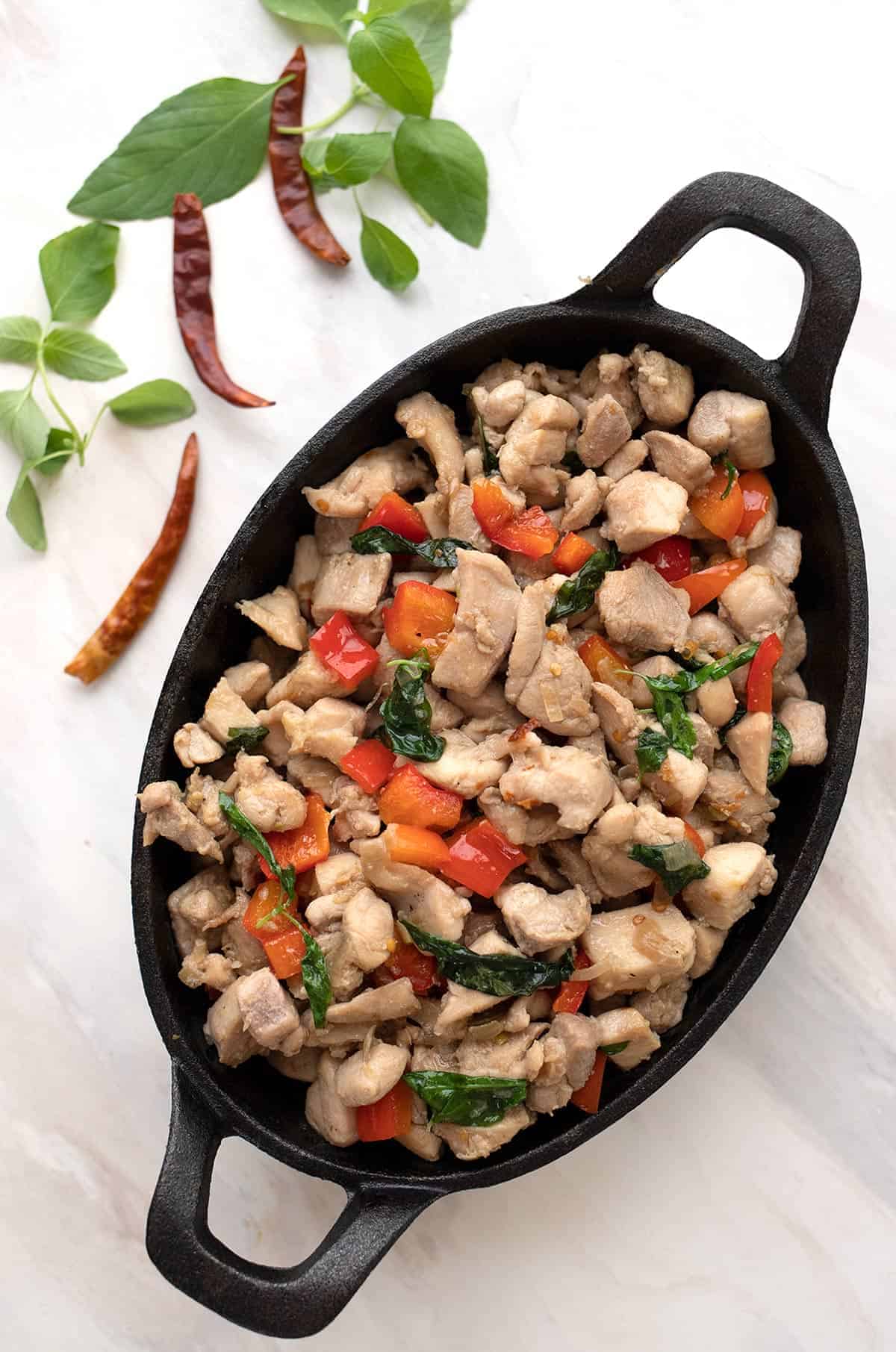
Keto Thai Basil Chicken
Servings: 4 servings
Prep Time: 10 mins | Cook Time: 10 mins | Total Time: 20 mins
Thai basil chicken is an easy chicken stir fry with a classic Thai flavor. Served it in lettuce wraps or over cauliflower rice, it’s one of our favorite easy keto dinner recipes. It takes only 20 minutes to make, start to finish!
Ingredients
- 2 tbsp coconut oil
- 3 cloves garlic, minced
- 1 shallot, minced
- 3 to 4 dried Thai chiles, crushed, OR 1/4 tsp red pepper flakes
- 1 1/2 lb (680.39 g) boneless skinless chicken thighs, cut into 1/2 inch pieces
- 1/2 medium red pepper, chopped
- 2 tbsp fish sauce
- 1 tsp tamari or soy sauce
- 1/4 cup (6 g) Thai basil leaves, packed
- 1/4 tsp pepper
- Additional red pepper flakes to taste
Instructions
- Heat the oil in a large sauté pan over medium-high heat. When hot, add the garlic and shallots. Cook about 1 minute, until fragrant. Add the crushed chiles and cook another 30 seconds.
- Add chicken and red pepper, and stir-fry until the chicken is no longer pink, about 7 minutes. Stir in the fish sauce and tamari.
- Stir in the basil and toss to combine. Cook until wilted, about 1 minute. Remove from heat and sprinkle with pepper. Adjust other seasonings to taste.
- Serve in lettuce wraps or over cauliflower rice.
Nutrition
Serving: 1 serving = 1/4 of recipe | Calories: 416kcal | Carbohydrates: 3.1g | Protein: 29.9g | Fat: 29.8g | Fiber: 0.6g
I’d love to know your thoughts, leave your rating below!