
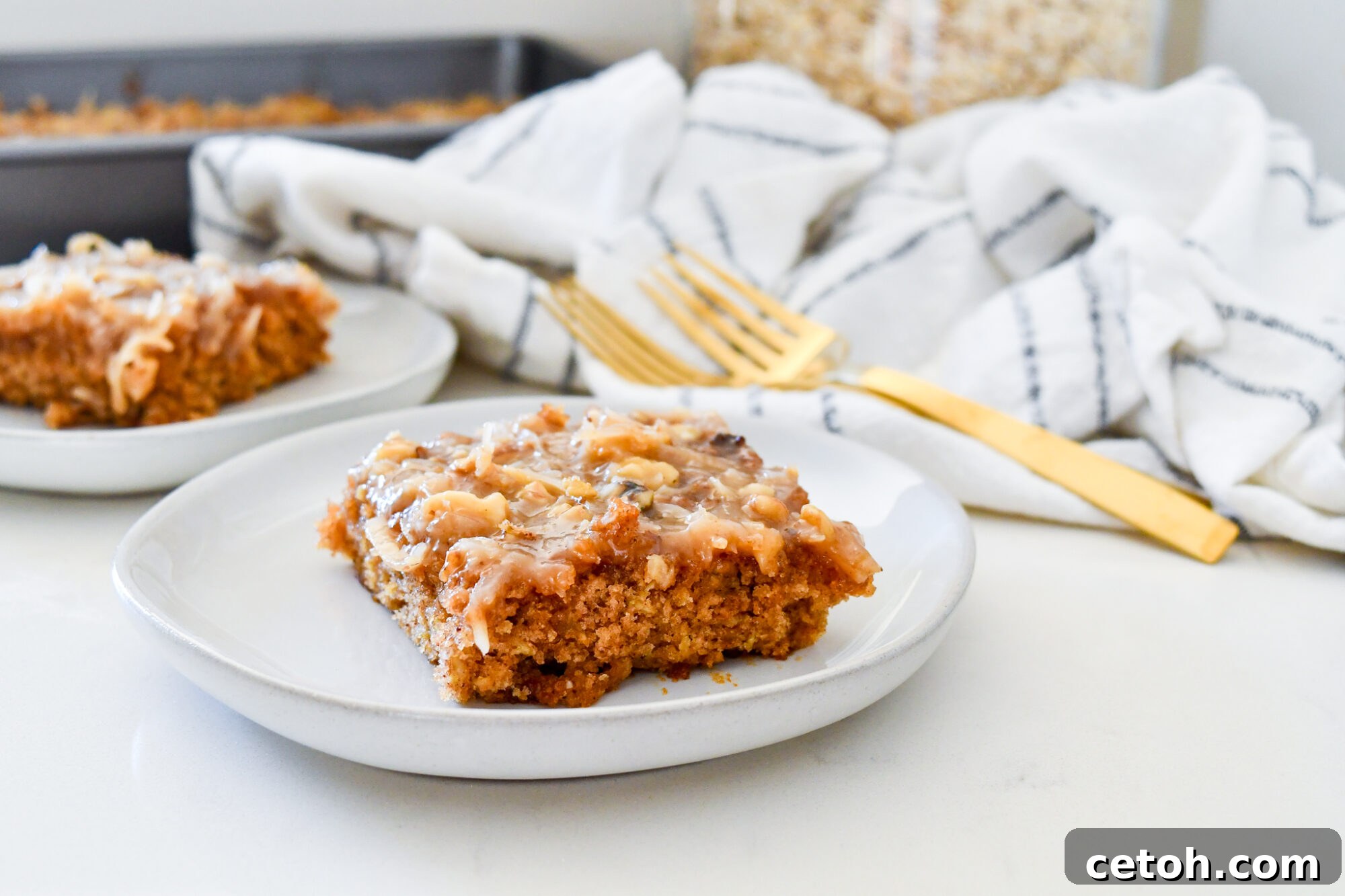
Discover the ultimate comfort food with this delightful Irish Oatmeal Cake recipe. Perfect for any occasion, from a festive St. Patrick’s Day celebration to a cozy year-round treat, this cake is guaranteed to become a family favorite. Its rich, wholesome flavor and incredibly moist texture make it a versatile addition to your breakfast, brunch, dessert, or snack menu. While undeniably delicious served warm straight from the oven, many find it even better at room temperature, allowing the luscious topping ample time to seep into every crumb, creating an irresistible caramel-like richness.
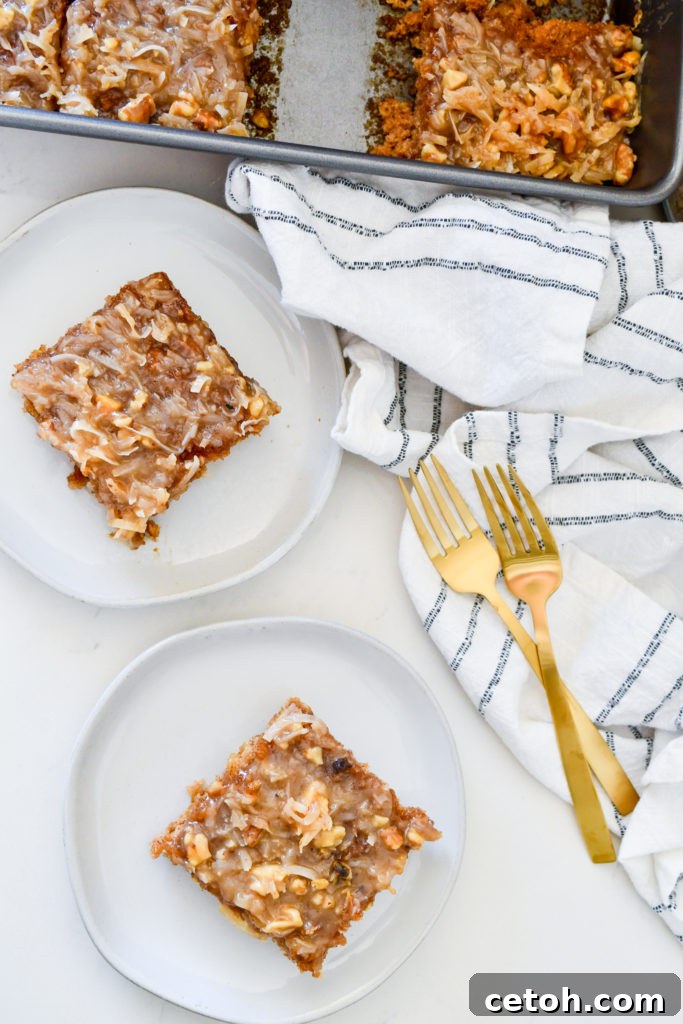
There’s something uniquely comforting about a well-made oatmeal cake, and this Irish rendition elevates it to an extraordinary level. The inclusion of oats provides a hearty texture and depth of flavor that distinguishes it from traditional cakes. It’s a recipe passed down through generations, cherished for its simplicity and the joy it brings to any table. Whether you’re gathering with loved ones or simply seeking a moment of sweet indulgence, this cake promises a memorable experience.
The beauty of this Irish Oatmeal Cake lies not just in its taste, but also in its adaptability. Serve it alongside your morning coffee for a wholesome start to the day, as a delightful ending to a hearty brunch, or as a decadent dessert after dinner. Its subtle sweetness and tender crumb also make it an ideal afternoon snack. No matter when or how you enjoy it, this cake embodies warmth, comfort, and homemade goodness.
Essential Ingredients & Baking Supplies
Crafting this incredible Irish Oatmeal Cake requires a selection of fresh, high-quality ingredients. Most of these are pantry staples, ensuring that a craving for this cake can be satisfied with ease. Here’s what you’ll need to gather:
- Old fashioned oats or quick-cooking oats (we’ll discuss the difference below!)
- Unsalted butter (for both the cake and the topping)
- Granulated sugar
- Packed light brown sugar (adds depth and moisture)
- Large eggs (at room temperature for best results)
- All-purpose flour
- Baking soda (the leavening agent for a tender crumb)
- Ground cinnamon (a warming spice that complements the oats)
- Evaporated milk (crucial for the topping’s creamy texture)
- Shredded coconut (for the iconic topping)
- Walnuts or pecans (for a delightful crunch in the topping)
Beyond the ingredients, having the right tools on hand will make your baking experience smooth and enjoyable. While not strictly “shopping list” items in the traditional sense, these are recommended for effortless preparation:
KitchenAid Cordless Hand MixerAdd to Cart
A good quality baking dish, mixing bowls, and measuring tools are also indispensable. A stand mixer or a reliable hand mixer will significantly ease the task of creaming butter and sugar, ensuring a light and airy batter. Precision in measuring is key to baking success, so ensure your cups and spoons are accurate.
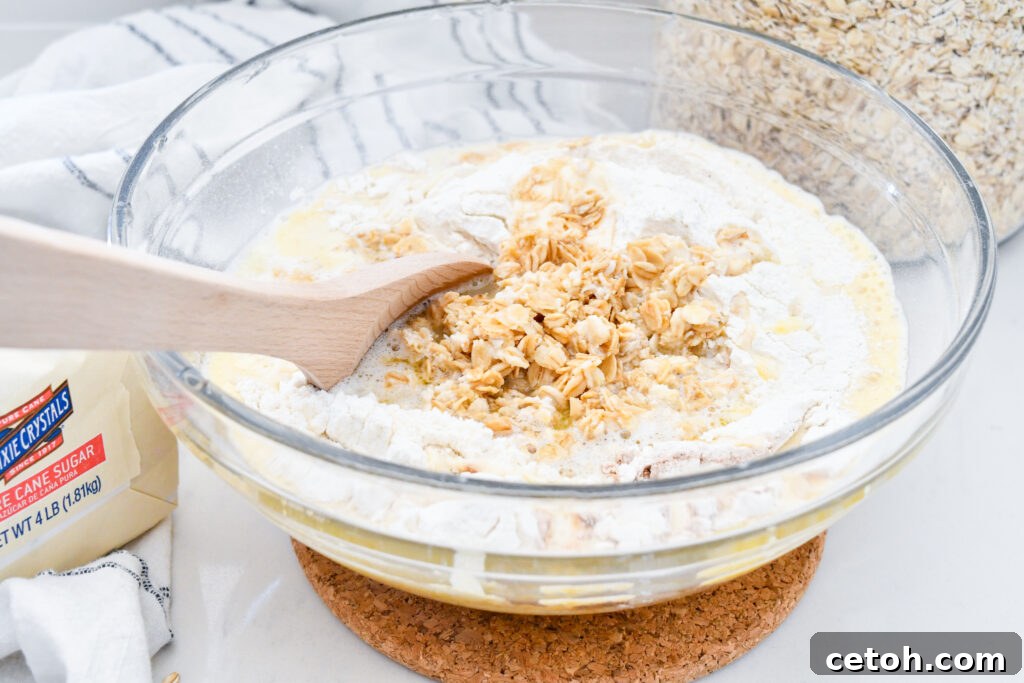
Understanding Oatmeal: Instant vs. Old Fashioned Oats
The type of oats you choose can subtly influence the texture of your baked goods. While both old fashioned and quick-cooking oats work well in this recipe, understanding their differences can help you achieve your desired outcome.
Old Fashioned Oats (Regular Rolled Oats): These oats are whole oat groats that have been steamed and then rolled into flat flakes. This process makes them relatively thick and coarse, allowing them to absorb liquid slowly and maintain more of their chewy texture after cooking. When used in baking, old fashioned oats contribute a hearty, substantial chewiness and a pronounced oat flavor, making them ideal for recipes where a distinct oat presence is desired.
Quick-Cooking Oats: Similar to old fashioned oats, quick-cooking oats undergo the same steaming and rolling process, but they are rolled much thinner and often cut into smaller pieces. This alteration significantly reduces their cooking time. In baking, quick-cooking oats tend to blend more seamlessly into the batter, offering a softer, less discernible texture than their old fashioned counterparts. They still impart a wonderful oat flavor but with a smoother mouthfeel.
Instant Oats: Also known as instant oatmeal, these oats are the most processed of the three. They are pre-cooked, dried, and then rolled very thinly, sometimes even cut into tiny pieces. Instant oats are designed for rapid preparation, often just by adding hot water or a quick microwave zap. While convenient for breakfast, their highly processed nature means they break down significantly during baking, resulting in a very soft, almost mushy texture, and a less robust oat flavor in cakes and cookies.
Baking with Quick-Cooking Oatmeal: What to Expect
The short answer is yes, quick-cooking oatmeal can absolutely be used in baking! The critical factor to consider is the resulting texture. Both old fashioned and quick-cooking oats will yield delicious results, but they create distinct experiences:
If you opt for instant oatmeal, expect a baked good with a lovely oat-y flavor, but the texture will be noticeably smoother and less chewy compared to cakes made with other oat types. This is because instant oats are pre-cooked and finely processed, causing them to almost melt into the batter during baking, losing their structural integrity.
When you use old fashioned oats, you’ll find the cake has a much heartier and chewier texture. These thicker oats take longer to soften, and since you can’t significantly extend the baking time of your cake, cookies, or bread to accommodate them, they retain more of their robust chew. This can be a delightful characteristic for those who enjoy a more substantial bite in their oatmeal cake.
Quick-cooking oats offer a fantastic middle ground. They are thinner than old fashioned oats, so they soften more readily during baking, resulting in a tender crumb with a pleasant, subtle chew, without being overly dense or disappearing entirely into the cake. For this Irish Oatmeal Cake, both old fashioned and quick-cooking oats are suitable choices, allowing you to tailor the texture to your preference. If you prefer a more pronounced oat texture, go for old fashioned; for a slightly softer, more integrated oat presence, quick-cooking oats are perfect.
The Irresistible Coconut Pecan Frosting
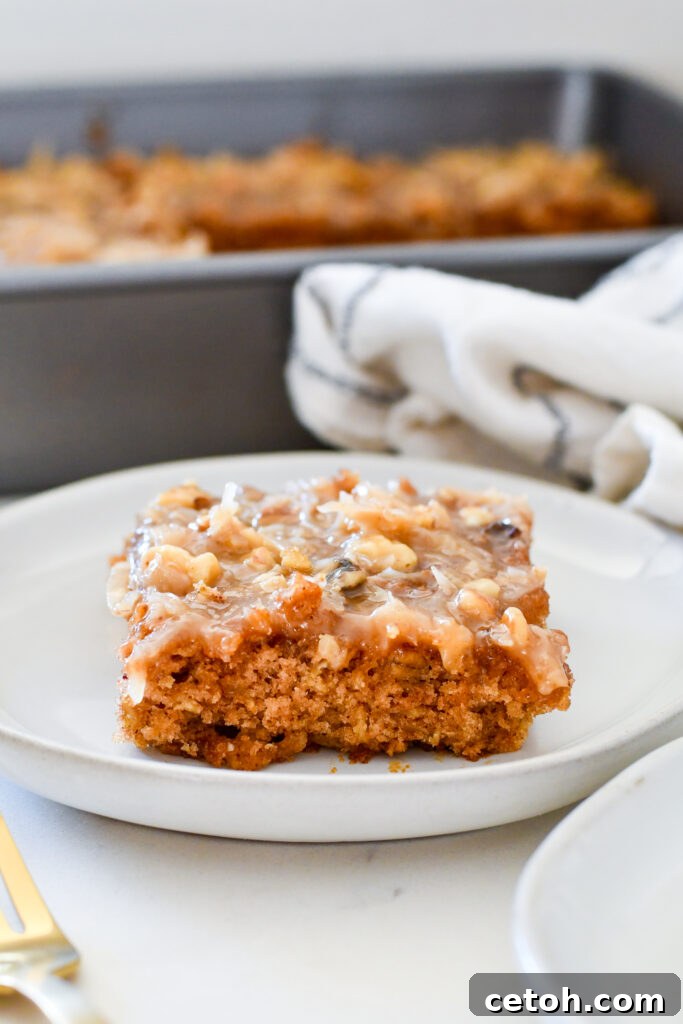
While the Irish Oatmeal Cake itself is a marvel, the coconut pecan topping is truly what elevates this dessert to legendary status. For many, including myself, it’s the absolute favorite part of the entire experience. It’s SO GOOD, you might find yourself wanting to eat it by the spoonful!
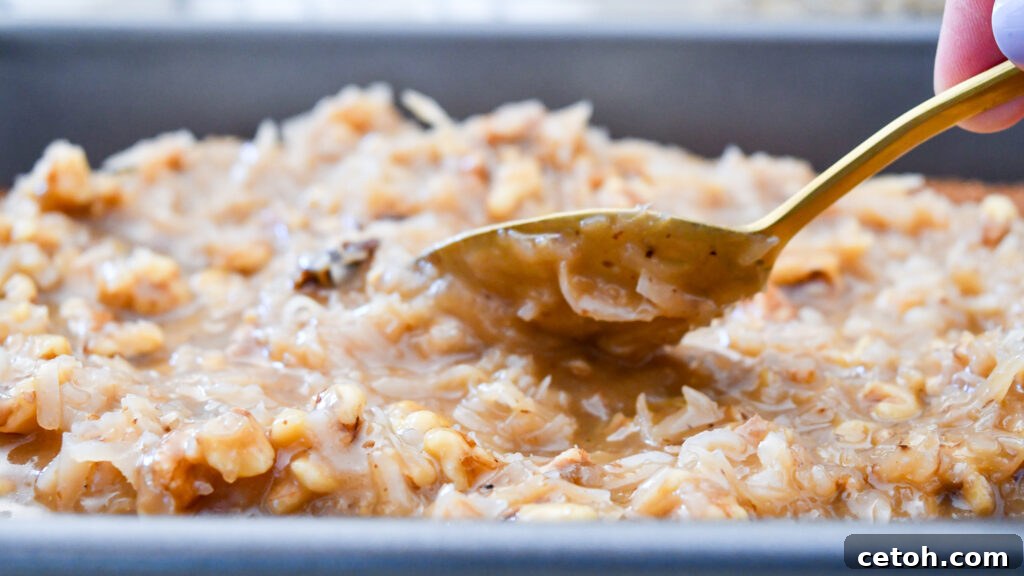
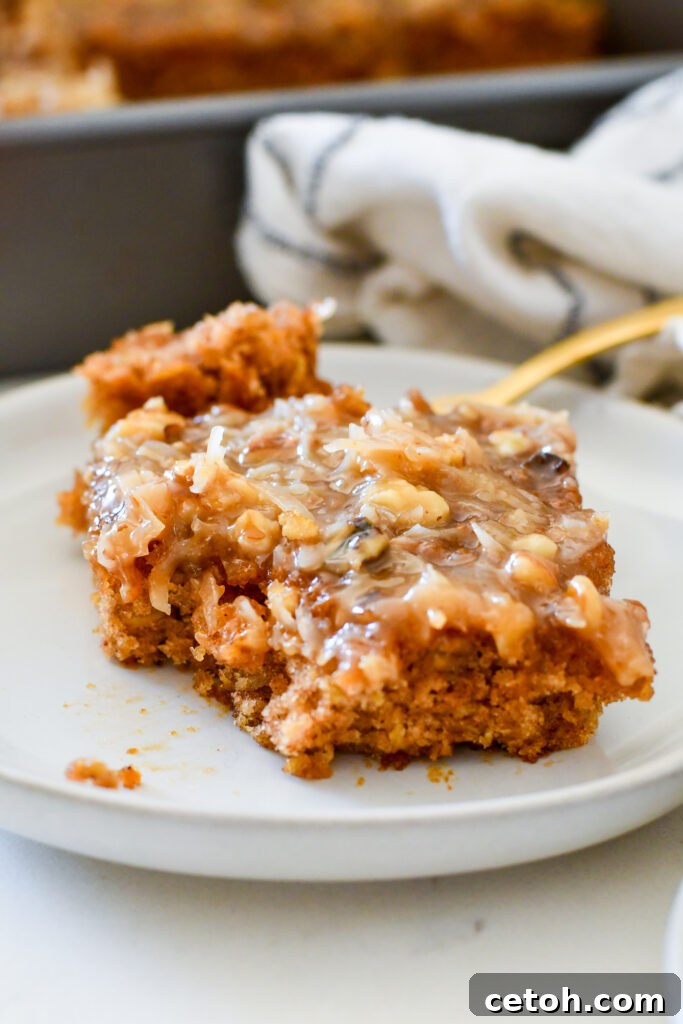
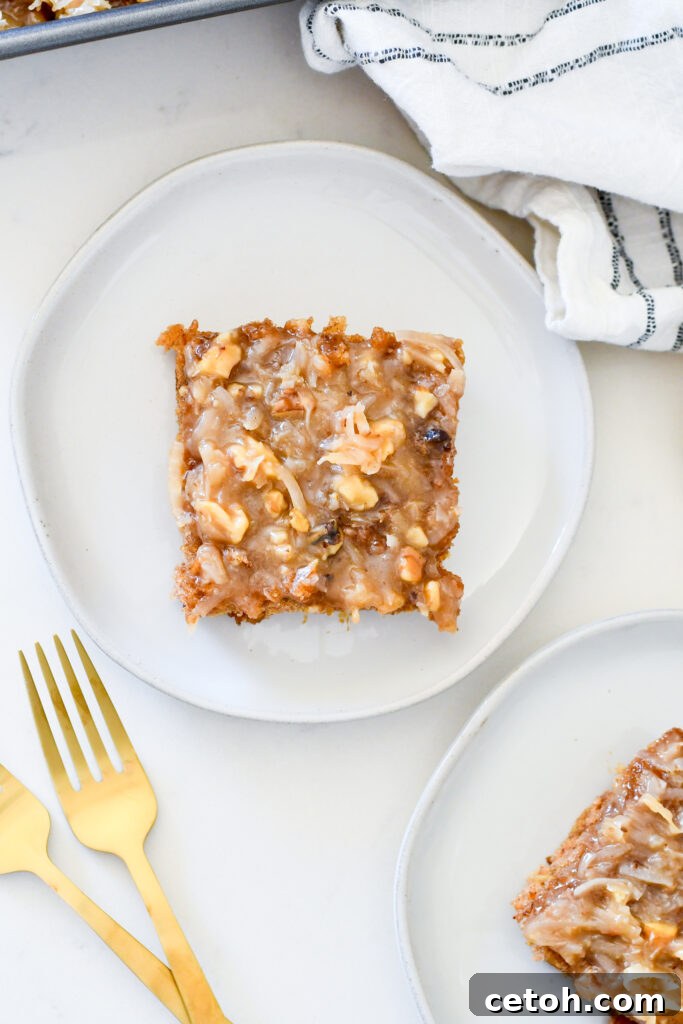
This exquisite topping shares a delightful resemblance to the classic German chocolate cake frosting, but with a nuanced difference. Instead of being thick and dense, our coconut pecan topping is crafted to be much more like a luxurious caramel sauce. This specific consistency is intentional and magical. As it’s generously poured over the warm, freshly baked cake, it begins to seep down, permeating every layer. This infusion not only keeps the cake incredibly moist but also imbues each and every bite with a rich, buttery, and utterly divine caramel-like flavor, complemented by the tropical notes of coconut and the earthy crunch of pecans. It transforms the simple oatmeal cake into a sophisticated and deeply satisfying indulgence.
The blend of sweet coconut, crunchy pecans, and a smooth caramel base creates a harmonious symphony of textures and flavors. It’s a topping that doesn’t just sit on top; it becomes an integral part of the cake, enhancing its overall character and providing that unforgettable finish that makes this Irish Oatmeal Cake truly special.
Irish Oatmeal Cake: The Full Recipe
12 servings
20 minutes
35 minutes
55 minutes
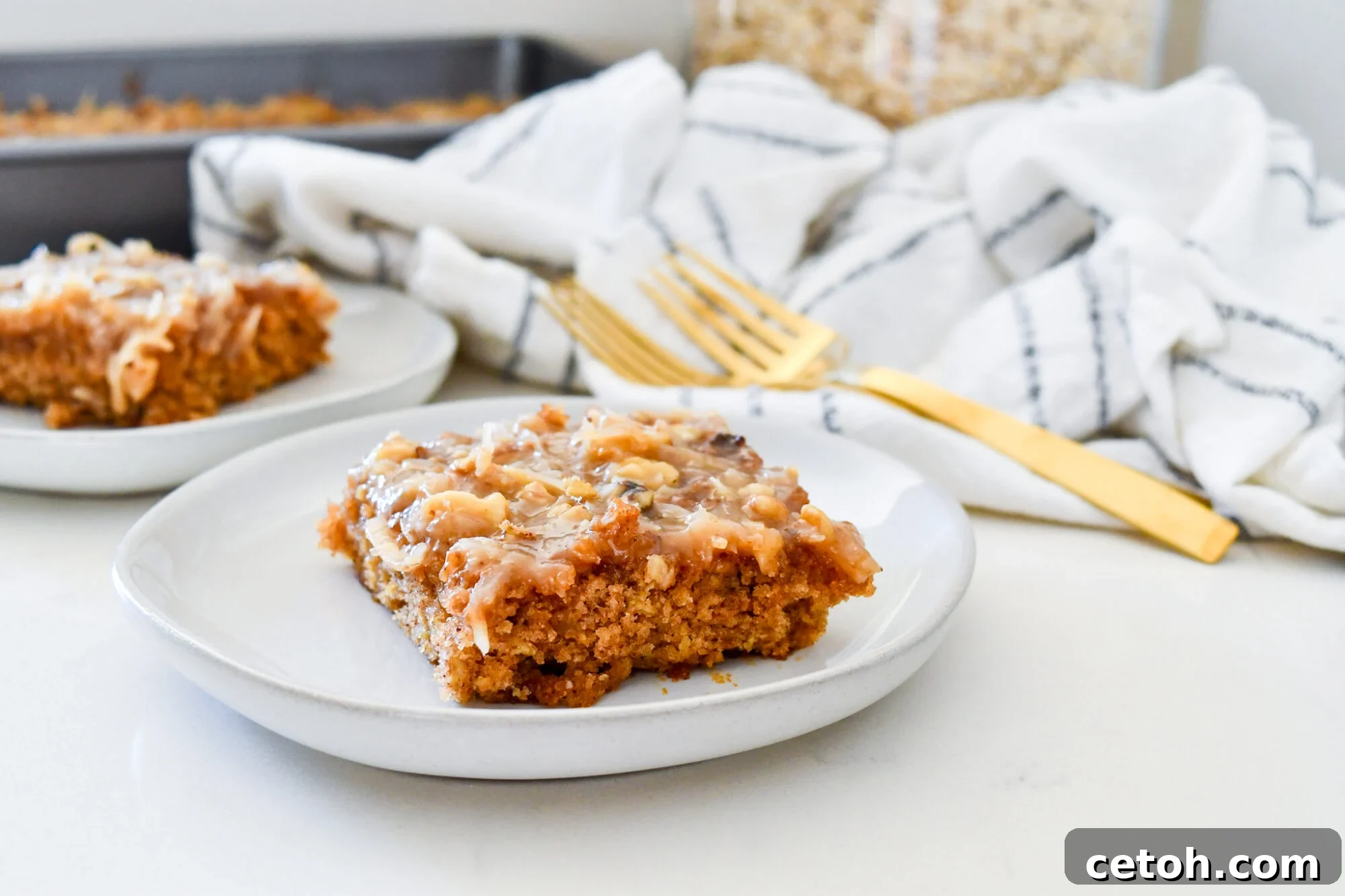
This Irish Oatmeal Cake is a truly special recipe, perfect for any time of year. Its delightful blend of wholesome oats and a rich, caramel-like coconut pecan topping makes it an unforgettable dessert. It’s a versatile treat, ideal for breakfast, brunch, dessert, or a comforting snack. Enjoy it fresh and warm from the oven, or let it sit at room temperature for the topping to fully infuse the cake, making it even more moist and flavorful.
For the complete, detailed step-by-step instructions and precise measurements for the cake and the topping, please refer to the original recipe provided by our partners:
CLICK HERE for the full recipe on the Dixie Crystals website.
Key Ingredients Overview
Below is a summary of the main ingredients required for both the cake and its delicious topping. For exact quantities and preparation steps, please visit the linked recipe.
- Old fashioned oats or quick-cooking oats
- Butter
- Granulated sugar
- Packed brown sugar
- Eggs
- All-purpose flour
- Baking soda
- Cinnamon
- Evaporated milk
- Shredded coconut
- Walnuts or pecans
General Preparation Guide and Tips
While the full recipe link provides exact instructions, here’s a general overview of how an Irish Oatmeal Cake typically comes together, along with some tips for success:
- Prepare the Oats: Begin by pouring boiling water over the oats and allowing them to soak. This step is crucial as it softens the oats, ensuring they integrate beautifully into the cake batter and contribute to its moist texture.
- Cream Wet Ingredients: In a large mixing bowl, cream together softened butter with both granulated and brown sugars until light and fluffy. This aeration process creates pockets of air, resulting in a tender cake. Add eggs one at a time, mixing well after each addition to ensure emulsification.
- Combine Dry Ingredients: In a separate bowl, whisk together the flour, baking soda, and cinnamon. These dry ingredients provide structure and flavor to the cake.
- Alternate Mixing: Gradually add the dry ingredients to the wet ingredients, alternating with the soaked oats. Begin and end with the dry ingredients, mixing just until combined. Be careful not to overmix, as this can lead to a tough cake.
- Bake the Cake: Pour the batter into a greased and floured baking dish. Bake in a preheated oven until a toothpick inserted into the center comes out clean. The cake should be golden brown and spring back lightly when touched.
- Prepare the Topping: While the cake is baking or immediately after it comes out of the oven, prepare the coconut pecan topping. This typically involves melting butter and combining it with brown sugar, evaporated milk, shredded coconut, and chopped nuts. Cook this mixture gently until it thickens slightly and becomes a rich, caramel-like sauce.
- Assemble and Cool: Immediately after taking the hot cake out of the oven, pour the warm coconut pecan topping evenly over the entire surface. The heat of the cake will help the topping seep down, infusing it with moisture and flavor. Allow the cake to cool completely, or serve slightly warm. The topping will set as it cools, but maintain a delightfully gooey consistency.
Baking Tips for a Perfect Irish Oatmeal Cake:
- Room Temperature Ingredients: Ensure eggs and butter are at room temperature. This helps them emulsify better, creating a smoother batter and a finer crumb.
- Don’t Overmix: Mix the batter only until the ingredients are just combined. Overmixing develops gluten in the flour, which can result in a dense and tough cake.
- Test for Doneness: Use the toothpick test. If it comes out clean or with a few moist crumbs attached, your cake is done.
- Generous Topping: Don’t skimp on the topping! Its caramel-like quality is a signature feature of this cake and provides essential moisture.
- Storage: Store leftover cake at room temperature in an airtight container for up to 3 days, or refrigerate for up to a week. The flavors often deepen overnight.
Did you make this recipe?
Please leave a comment on the blog or share a photo on Instagram
Explore More Delightful Cake Recipes
If you loved this Irish Oatmeal Cake, you’re in for a treat! We have a curated selection of other fantastic cake recipes that are perfect for any occasion. From festive holiday bakes to simple everyday desserts, there’s something here for every sweet tooth.