
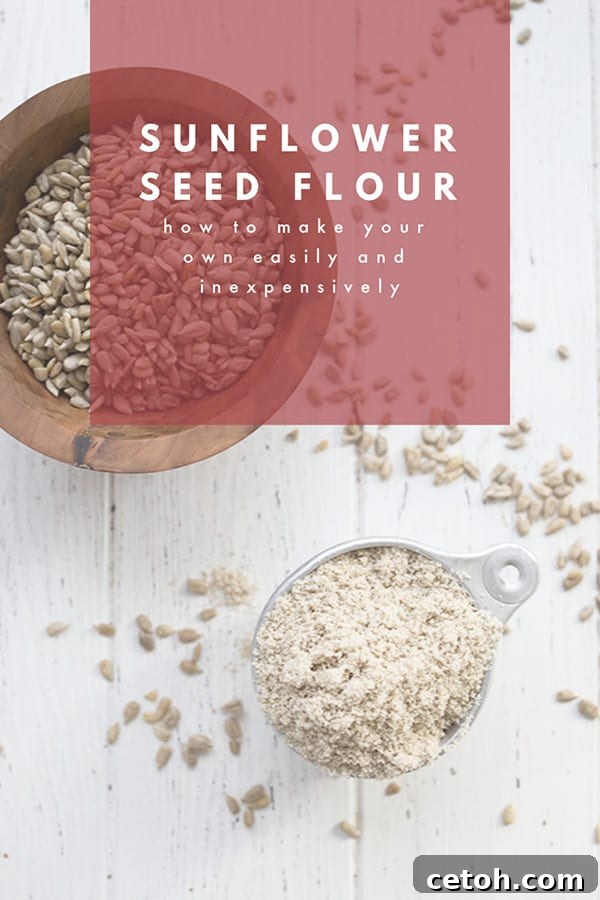
For those navigating the delicious world of low-carb and keto baking, almond flour has long been the go-to ingredient. However, for a significant number of individuals, nut allergies, intolerances, or simply the desire for variety make almond flour an unsuitable option. Enter sunflower seed flour – a truly remarkable, low-carb, and entirely nut-free alternative that promises to revolutionize your baking. Not only is it an excellent substitute for almond flour in countless recipes, but it’s also incredibly easy and cost-effective to prepare right in your own kitchen.
Many readers frequently inquire about reliable nut-free alternatives for various keto recipes. While coconut flour sometimes offers a viable option, its unique properties often necessitate substantial recipe modifications, leading to inconsistent results. This challenge leaves many nut-sensitive keto dieters feeling limited in their culinary pursuits. But fear not, because homemade sunflower seed flour is here to rescue your baking endeavors!
This versatile seed flour stands out as arguably the best one-to-one replacement for almond flour, closely mimicking its texture and baking characteristics without the allergenic concerns. And the best part? Crafting your own at home is surprisingly straightforward, requiring minimal equipment and just a few minutes of your time.
All you need are readily available sunflower seeds, a standard coffee grinder, and a sieve. In less than 10 minutes, you can transform whole seeds into a fine, ready-to-use flour, opening up a world of nut-free, low-carb baking possibilities. It’s truly that simple and efficient!
Why Opt for Homemade Sunflower Seed Flour?
The keto diet has gained immense popularity, bringing with it a fantastic array of low-carb baked goods. However, a vast majority of these recipes heavily rely on almond flour. This presents a significant hurdle for individuals managing nut allergies or sensitivities, often leaving them with a narrow selection of suitable, healthy flour alternatives. While coconut flour can certainly yield delicious nut-free keto treats, it’s not always a direct or ideal substitute for almond flour. Their distinct absorbency and fat content mean that swapping them out typically requires a complete overhaul of the recipe, adjusting ratios of eggs, oils, and liquids, which can be both complex and unpredictable.
In stark contrast, a finely ground seed meal like sunflower seed flour behaves much more similarly to almond flour. This makes it a far more convenient and often direct replacement in most recipes, simplifying the conversion process and ensuring more consistent baking results. Beyond its baking performance, there are compelling reasons to choose the homemade route for your sunflower seed flour.
Cost-Effectiveness and Accessibility
Specialty nut-free flours can be prohibitively expensive and often difficult to find in regular grocery stores. For instance, while certain brands offer pre-ground sunflower seed meal, their price point can be significantly higher than purchasing whole sunflower seeds. Consider the example of raw sunflower seeds: a 4-pack of Bob’s Red Mill sunflower seeds, for instance, might cost around $11-12, offering a substantial quantity for numerous baking projects. Even more economical is buying organic sunflower seeds in bulk, which can be found for as little as $4 per pound at many health food stores or bulk retailers. This makes homemade sunflower seed flour a budget-friendly choice that doesn’t compromise on quality or dietary needs.
Freshness and Quality Control
Grinding your own flour ensures unparalleled freshness. Whole sunflower seeds maintain their nutritional integrity and flavor much longer than pre-ground flour, which can become rancid more quickly due to exposure to air and light. By making it yourself, you control the grind consistency and guarantee that you’re using the freshest possible ingredients, leading to superior taste and texture in your baked goods.
The Simplicity of the Process
Many home bakers might be intimidated by the idea of making their own flour, but the process for sunflower seeds is surprisingly quick and simple. As observed when preparing recipes like Rosemary Parmesan Keto Crackers, achieving a fine grind with a basic coffee grinder is effortless. The key to creating a truly fine flour, however, lies in sifting. After initial grinding, a quick sift through a sieve with a moderately open mesh will separate the finely ground flour from any larger, unground pieces. The coarser pieces can then be returned to the grinder for another pass, ensuring a consistently fine texture. Avoid sieves with overly fine meshes, as they can hinder the flour from passing through efficiently. A mesh that allows the flour to fall through but catches larger fragments works perfectly.
Mastering Sunflower Seed Flour in Your Baking
While sunflower seed flour is an excellent 1:1 replacement for almond flour, there are a few special tips to ensure optimal results and avoid common pitfalls when incorporating this nut-free keto flour into your recipes.
- Substitution Ratios: Generally, you can use sunflower seed flour as a direct 1:1 replacement for almond flour. However, you might find that you need to add a tiny bit more of it to achieve the desired consistency in your batter or dough. Keto batters are typically thicker than traditional ones, so aim for a consistency that is scoopable but not easily pourable. Always trust your instincts and adjust gradually until the texture feels right for your recipe.
- Carbohydrate Content: It’s worth noting that sunflower seeds are slightly higher in carbohydrates compared to almonds. Consequently, your homemade sunflower seed flour will also have a marginally higher carb count. Typically, this difference is not significant enough to derail your keto goals, usually resulting in about 1 gram higher carbohydrate per serving compared to an almond flour equivalent. Always check the nutrition facts for the specific seeds you purchase if precise carb counting is essential for your dietary needs.
- Allergy Safety – A Crucial Reminder: For individuals with severe nut allergies, vigilance is paramount. Even if you’re using pure sunflower seeds, it is absolutely critical to verify that the seeds you purchase were not processed in a facility that also handles nuts. Cross-contamination can be a serious risk, so always check product labels for allergen warnings and certifications from manufacturers. When in doubt, contact the manufacturer directly to confirm their processing protocols.
-
The Curious Green Reaction: One fascinating, albeit sometimes startling, characteristic of baking with sunflower seed meal is a phenomenon where baked goods can develop a greenish hue as they cool. This is a completely harmless, natural chemical reaction between the chlorophyll present in sunflower seeds and alkaline leavening agents like baking soda or baking powder. While it might look unusual, it doesn’t affect the taste or safety of your food. However, if you prefer to avoid this aesthetic change, there are several effective strategies:
- Introduce Acidity: The green reaction can be effectively neutralized by adding an acidic ingredient to your recipe. A tablespoon of lemon juice or apple cider vinegar is usually sufficient for most recipes. Other acidic ingredients like buttermilk, yogurt, or cream of tartar can also achieve similar results. The acid helps to stabilize the chlorophyll and prevent it from reacting with the alkaline leavening.
- Embrace Dark Ingredients: If you’re baking something rich in chocolate, such as nut-free chocolate cupcakes, the deep brown color of cocoa powder or melted chocolate will naturally mask any green tint. In such cases, there’s typically no need to add extra acid, making it an ideal scenario for using sunflower seed flour without worrying about color changes.
Inspiring Creations with Sunflower Seed Flour
Now that you’ve successfully crafted your very own batch of fresh, fine sunflower seed flour, what delightful treats will you conjure up? The possibilities are extensive! This allergen-friendly flour serves as a fantastic replacement for almond flour, opening up a whole new world of low-carb and nut-free baking. Here are some fantastic recipe ideas to get you started, some specifically designed for seed flours, and others easily adaptable:
- Keto Mini Chocolate Muffins: Originally made with pumpkin seed meal, these delicious muffins can be effortlessly adapted to use sunflower seed flour, offering a tender crumb and rich chocolate flavor, all while remaining nut-free.
- Keto Chocolate Cereal: Imagine starting your day with a crunchy, chocolatey cereal that fits perfectly into your low-carb lifestyle. Sunflower seed flour adds a wonderful texture to this unique breakfast option.
- Keto Chocolate Cream Cheese Muffins: These decadent muffins combine the richness of chocolate with the tang of cream cheese, made wonderfully accessible with sunflower seed flour for those avoiding nuts.
- Keto English Muffins: Craving a classic English muffin for breakfast or a sandwich? Sunflower seed flour allows you to enjoy a chewy, porous texture that’s perfect for toasting and topping, without any nuts.
- Sunbutter Chocolate Chip Cookies: While this recipe might use sunbutter, it highlights the versatility of sunflower products in baking. You can easily adapt many chocolate chip cookie recipes by substituting almond flour with sunflower seed flour to create a delightful, chewy, nut-free treat.
How to Make Sunflower Seed Flour
Servings: 1 1/4 cup flour
Prep Time: 10 mins | Total Time: 10 mins
Sunflower seed flour is a fantastic low-carb, nut-free alternative to almond flour. It’s incredibly simple to make at home, saving you money and catering perfectly to those with nut allergies.
Pin Recipe
Share on Facebook
Ingredients
- Raw sunflower seeds (Bob’s Red Mill recommended, or your preferred brand)
You will also need:
- Coffee Grinder
- Open-mesh sieve (ensure holes are large enough for flour to pass through)
- Medium Bowl
Instructions
- Position an open-mesh sieve over a medium-sized bowl, ready to catch your finely ground flour.
- Pour approximately 1 cup of raw sunflower seeds into your coffee grinder. Grind for 10 to 20 seconds using short pulses. Be cautious not to over-grind, as continuous grinding can release too much oil and result in sunflower seed butter instead of flour.
- Carefully empty the ground seeds into the sieve positioned over your bowl. Shake the sieve vigorously to allow the fine flour to fall through. Any larger, unground seed pieces that remain in the sieve should be returned to the coffee grinder for a second pass.
- Repeat the grinding and sifting process until nearly all the sunflower seeds have been finely ground into a consistent flour. Typically, 1 cup of whole sunflower seeds yields approximately 1 1/4 cups of flour.
- For optimal freshness and to prevent rancidity, store your homemade sunflower seed flour in an airtight bag or container in either the refrigerator or freezer.
Video Tutorial
Notes
This recipe yields approximately 5 servings. Each serving contains an estimated 2.44g Net Carbs.
Approximate Nutritional Information per serving:
- Food energy: 165kcal
- Total fat: 14.55g
- Calories from fat: 130
- Carbohydrate: 5.52g
- Total dietary fiber: 3.08g
- Protein: 4.61g
Nutrition Facts
Serving: 1g | Calories: 165kcal | Carbohydrates: 5.52g | Protein: 4.61g | Fat: 14.55g | Fiber: 3.08g
Making your own sunflower seed flour is a game-changer for anyone on a low-carb or keto diet, especially those with nut allergies. It’s an empowering step towards more inclusive and cost-effective baking. Experiment with these tips and recipes, and you’ll soon discover the incredible versatility and delicious potential of this simple, homemade ingredient. Enjoy your baking, and feel free to share your experiences!
I’d love to know your thoughts, leave your rating below!