
Embarking on a low-carb, gluten-free, or keto journey often introduces you to unique ingredients, and coconut flour is undoubtedly one of the most versatile—and sometimes challenging—among them. This finely ground, highly absorbent flour can be a game-changer for delicious, healthy baked goods, but it requires a different approach than traditional flours. If you’ve ever felt frustrated by a coconut flour recipe gone wrong, you’re in the right place. This comprehensive guide will answer all your questions, demystify the art of baking with coconut flour, and empower you to create incredible keto treats with confidence. Get ready to unlock the full potential of this exceptional ingredient!
Coconut flour has rapidly grown in popularity within the keto and gluten-free communities, becoming a staple in many health-conscious kitchens. Its unique properties allow for the creation of exceptionally tender and moist low-carb, grain-free baked goods. In fact, many of my favorite keto chocolate cupcakes owe their incredible texture entirely to coconut flour.
However, despite its immense benefits, coconut flour is far from a direct substitute for wheat flour or even other nut flours. Its distinct behavior can lead to confusion and disappointment if you’re unfamiliar with its characteristics. Many aspiring low-carb bakers make common mistakes, leading to dry, crumbly, or overly dense results, and often give up on this fantastic ingredient too soon.
My goal is to ensure your success in keto baking, which is why I’ve compiled this essential primer on baking with coconut flour. Understanding how this flour works is the first step toward mastering it. So, let’s explore everything you need to know, starting from the very basics.
What Exactly Is Coconut Flour?
Far from being a traditional grain-based flour, coconut flour is an ingenious by-product of coconut milk production. The process begins with fresh, mature coconuts. After the rich, creamy coconut milk is extracted from the shredded coconut meat, the leftover fibrous pulp is not discarded. Instead, this nutrient-dense material is carefully dried at low temperatures over an extended period. Once thoroughly dried, it’s finely ground into the soft, powdery substance we know as coconut flour.
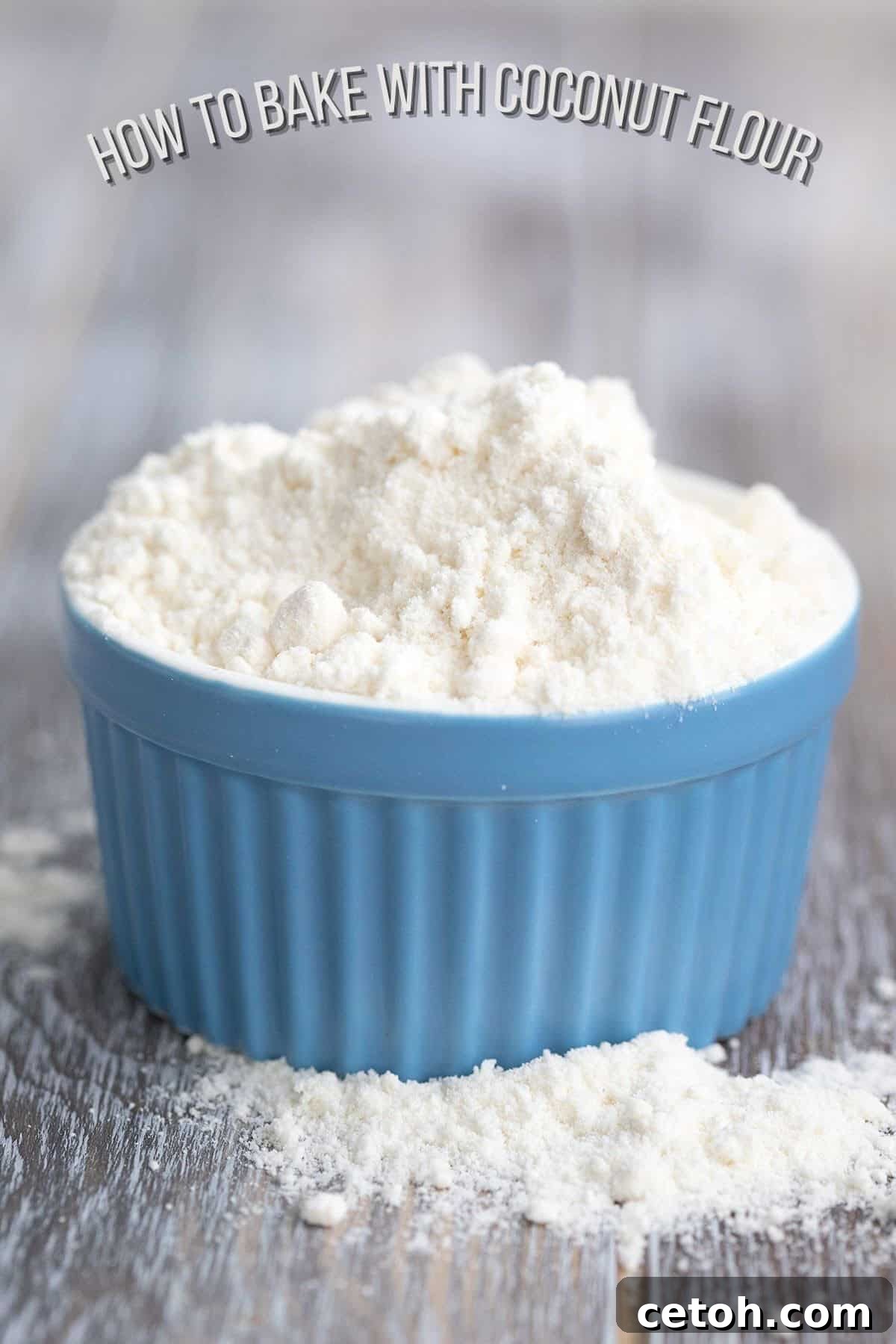
The result is a delicate, fine powder that visually resembles wheat flour, though it carries a faint, distinct aroma of coconut. What truly sets coconut flour apart, however, is its astonishing absorbency. Unlike any other flour on the market, whether gluten-free or conventional, coconut flour acts like an ultra-dense sponge. It can soak up an incredible amount of liquid—be it eggs, oil, or water—often appearing thick and porridge-like even after significant additions, until it reaches its saturation point.
This extreme absorbency is both its greatest strength and its biggest challenge. Add too little liquid, and your baked goods will be dry, crumbly, and dense. Conversely, add too much, and you’ll end up with a soggy, gummy interior that struggles to cook through. Achieving the perfect balance is key, and it truly is a delicate art. Don’t panic, though! While baking with coconut flour requires a learning curve, it’s not as unforgiving as it might sound. I highly recommend starting with tried-and-true recipes specifically developed for coconut flour to help you get a feel for its unique properties before venturing into your own creations.
Remarkable Benefits of Coconut Flour
Beyond its unique baking properties, coconut flour is a nutritional powerhouse, making it an excellent choice for a healthy lifestyle, especially within a keto or low-carb framework. Compared to traditional wheat flour and even many popular nut flours, it offers a distinct array of advantages:
- Exceptional Fiber Content: Coconut flour is incredibly high in dietary fiber, which is crucial for digestive health, promoting regularity, and contributing to a feeling of fullness. This can aid in weight management and help stabilize blood sugar levels, preventing the spikes often associated with refined carbohydrates.
- Significantly Low in Carbohydrates: This is perhaps its most celebrated benefit for keto and low-carb diets. With very few net carbs, it allows you to enjoy baked goods without derailing your carb intake.
- Lower in Calories: While it varies by brand and serving size, coconut flour generally offers a lower caloric density compared to some other flours, contributing to a lighter nutritional profile.
- Completely Gluten-Free and Grain-Free: This makes it an ideal ingredient for individuals with celiac disease, gluten sensitivities, or those adhering to grain-free eating plans. Its lack of gluten means it won’t provide the elastic structure that wheat flour does, which explains its need for extra binders like eggs.
- Relatively Low in Fat: Compared to popular keto flours like almond flour, coconut flour contains less fat. This can be beneficial for those monitoring their fat intake or when combining it with other higher-fat ingredients in a recipe.
- Low in Omega-6 Fatty Acids: Maintaining a healthy balance of omega-3 to omega-6 fatty acids is important for reducing inflammation. Coconut flour’s lower omega-6 content is a favorable characteristic.
- Rich in Lauric Acid: This medium-chain fatty acid, also found in coconut oil, is known for its potential antimicrobial, antiviral, and antifungal properties, offering a unique health benefit.
- Good Source of Potassium: An essential electrolyte, potassium plays a vital role in maintaining fluid balance, nerve signals, and muscle contractions, and it can be particularly important for those following a ketogenic diet to prevent electrolyte imbalances.
Furthermore, coconut flour is remarkably economical. Given its exceptional absorbency, you use significantly less of it in recipes compared to any other flour. A standard 16-ounce bag, typically costing around $4-$6, can easily yield enough flour for 5 to 6 different baking projects, making it a very cost-effective choice for low-carb baking.
Replacing Wheat Flour with Coconut Flour: A Fundamental Shift
Attempting a direct 1:1 substitution of coconut flour for wheat flour is a common pitfall that almost guarantees recipe failure. The fundamental differences in their composition – particularly coconut flour’s lack of gluten and extreme absorbency – mean that replacing wheat flour requires a complete re-engineering of the recipe. There isn’t a single, perfect formula because the exact ratios will vary depending on the desired texture of your final baked good. A light, airy cake will demand different adjustments than a dense, chewy cookie.
However, the universal principles when converting a wheat flour recipe to coconut flour are clear: you must drastically decrease the amount of flour, significantly increase the liquid content (especially eggs), and often adjust the leavening agents. For example, consider a conventional pumpkin bread recipe that typically calls for 2 cups of wheat flour, 2 eggs, ½ cup butter or oil, and 1½ teaspoons of baking powder.
In stark contrast, my successful keto pumpkin bread recipe uses only ¾ cup of coconut flour. To balance this reduced flour and achieve the right structure and moisture, it requires 4 whole eggs plus 2 egg whites, ⅓ cup of butter or oil, and 2 full teaspoons of baking powder. You’ll notice the dramatic increase in eggs, which are crucial for binding and providing structure in the absence of gluten. The slight increase in baking powder accounts for the heavier nature of coconut flour batter, ensuring a proper rise. Additionally, I often incorporate a small amount of protein powder into my coconut flour recipes, as it further assists in giving structure and helping the baked goods hold their shape and achieve a better rise.
Replacing Almond or Other Nut Flours with Coconut Flour
While still requiring thoughtful adjustment, replacing almond flour or other nut flours with coconut flour is generally a less daunting task than converting from wheat flour. This is primarily because both almond and coconut flours are already gluten-free and frequently used in keto recipes, offering a closer starting point in terms of overall dietary composition. However, their textural and absorbent properties remain quite different.
When adapting one of my own almond flour recipes to use coconut flour, I typically follow a set of general guidelines:
- Flour Ratio: A good rule of thumb is to use approximately ⅓ cup of coconut flour for every cup of almond flour called for in the original recipe. This significant reduction accounts for coconut flour’s intense absorbency.
- Egg Increase: You will almost always need to triple the amount of eggs. Almond flour, with its higher fat content, contributes moisture and structure differently than coconut flour. Eggs are essential binders and moisture providers for coconut flour.
- Leavening Agents: The amount of baking powder or baking soda usually remains the same, as their function isn’t primarily related to the flour type itself but rather to creating lift.
- Protein Powder: If the original recipe included protein powder for structure, that amount can typically remain consistent.
- Oils and Liquids: The quantities of added oils and other liquids (like water or milk alternatives) often remain about the same, though you will need to adjust these by eye as you mix.
From this starting point, continuous adjustment is crucial. If your batter appears too thick or dry, gradually add additional liquid, one tablespoon at a time, mixing well after each addition to allow the coconut flour time to absorb. Conversely, if the batter seems too thin, incorporate more coconut flour, a tablespoon at a time, until the desired consistency is achieved. This iterative process is where experience and developing a good “gut instinct” for proper batter consistency truly come into play. Over time, you’ll learn to recognize what a well-balanced coconut flour batter should look and feel like. Until then, leaning on established, tested coconut flour recipes is the most reliable path to success.
The Indispensable Role of Eggs in Coconut Flour Baking
Let’s address one of the most frequently asked questions and common points of skepticism: “Does coconut flour really need all those eggs?” The answer is an emphatic and unequivocal: Yes, absolutely it does! Do not be tempted to skimp on the eggs, or you risk sacrificing the entire recipe.
When I first began experimenting with coconut flour, I was genuinely surprised by recipes calling for anywhere from 6 to 12 eggs. However, through countless baking trials, I’ve learned that these eggs are not merely an optional addition; they are absolutely vital. Eggs serve multiple critical functions in coconut flour baking:
- Primary Binding Agent: In the absence of gluten, eggs step in as the main binder, holding the ingredients together and preventing your baked goods from becoming a dry, crumbly mess.
- Structural Support: They provide essential structure, allowing cakes and muffins to rise properly and maintain their shape during and after baking.
- Moisture Source: Given coconut flour’s extraordinary absorbency, eggs contribute a significant amount of the necessary liquid to hydrate the flour adequately.
- Leavening Aid: When whisked, eggs incorporate air, which further aids in leavening, contributing to a lighter texture.
Every single time I’ve tried to reduce the egg count in a coconut flour recipe, the results have been disappointing—ranging from dense, rubbery textures to baked goods that simply fall apart. Coconut flour is remarkably efficient at soaking up all that moisture and protein, leaving behind none of the “eggy” taste or rubbery texture you might anticipate. In fact, properly made coconut flour baked goods often boast a texture and flavor remarkably similar to their conventional counterparts.
Sadly, I have not yet found success with commercial egg replacers when working with coconut flour. They simply don’t provide the robust structure and binding power that real eggs offer, leading to a much higher chance of recipe failure.
Understanding the Taste Profile of Coconut Flour
It’s true that coconut flour naturally possesses a distinct, somewhat sweet coconut flavor. This can be a delightful attribute, enhancing the tropical notes in certain recipes. However, if you’re not a fan of coconut, don’t let this deter you from using this incredibly versatile ingredient – all is certainly not lost!
There are numerous effective strategies to mask or complement the coconut flavor, making it virtually undetectable in many applications:
- Powerful Flavor Pairings: For sweet treats like cakes and muffins, ingredients with strong, dominant flavors such as chocolate, cocoa powder, or coffee (espresso powder) work exceptionally well. They tend to overshadow the subtle coconut notes entirely.
- Extracts and Zests: Other flavor extracts like vanilla, almond, or peppermint, as well as fresh citrus zest (lemon, lime, orange), can effectively compete with and neutralize the coconut taste, introducing a new, brighter profile.
- Savory Applications: In savory recipes, a little garlic powder, onion powder, or a blend of aromatic herbs and spices can completely transform the flavor profile.
- Cheese is Your Friend: When making savory “fathead” doughs, the strong, pungent flavor of cheese (like mozzarella or cheddar) completely overpowers any hint of coconut. Many readers frequently report that they cannot taste the coconut at all in my incredibly popular Chewy Keto Bagels, which rely on coconut flour!
On the flip side, if you adore the taste of coconut, you can easily amplify it. Incorporating coconut oil as your fat source or adding a dash of coconut extract will bring that delightful tropical essence to the forefront, creating a more pronounced coconut experience in your baked goods.
Navigating Different Brands of Coconut Flour
One of the less-discussed but crucial aspects of baking with coconut flour is the significant variation that can exist between different brands. This isn’t unique to coconut flour, but it’s particularly pronounced here because the consistency and absorbency of the flour directly impact the success of your recipe. These differences arise from variations in the drying process, the fineness of the grind, and the specific type of coconut used, all of which influence how much liquid the flour will absorb.
In my extensive experience, I’ve found two brands that consistently deliver reliable results: Bob’s Red Mill and King Arthur Baking. Both are highly respected companies known for their quality baking ingredients in the US, and I frequently turn to them for many staples. However, even these two excellent brands exhibit subtle differences:
- King Arthur Coconut Flour: Tends to be lighter in color and can sometimes have a tendency to clump. Crucially, I’ve observed that it generally requires slightly less liquid compared to Bob’s Red Mill, meaning it’s often a bit less absorbent.
- Bob’s Red Mill Coconut Flour: Often has a slightly darker, creamier color and a very fine, consistent texture that rarely clumps. It typically demonstrates higher absorbency, requiring a bit more liquid to achieve the ideal batter consistency.
Accommodating these differences isn’t difficult once you’re aware of them. For instance, with King Arthur flour, I often take the extra step of sifting it to eliminate any clumps, a step I usually don’t need with Bob’s. More importantly, regardless of the brand, I always hold back a small amount of liquid initially and then add it gradually, observing the batter’s consistency as I mix. I always encourage bakers to read recipes carefully and pay close attention to visual and tactile cues – descriptions like “the batter should be thick like brownie batter” or “pourable but not watery” are invaluable. By understanding how your specific brand behaves and trusting these visual guides, you can confidently adjust your recipe to achieve perfect results every time.
Optimizing Coconut Flour: Best Uses in Baking
While coconut flour is a truly remarkable ingredient for low-carb and gluten-free baking, it’s important to understand that it’s not a universal solution for every recipe. Its unique properties make it shine in certain applications while proving less suitable for others. Recognizing its strengths and weaknesses will dramatically improve your baking success and satisfaction.
In my experience, coconut flour truly excels in recipes where a tender, moist, and slightly dense or fluffy texture is desired:
- Cakes and Muffins: This is where coconut flour truly shines. Its ability to absorb moisture results in incredibly tender, light, and airy cakes and muffins. It contributes to a fine crumb and a pleasant chewiness without being heavy, making it perfect for keto cakes.
- Brownies and Dense Bars: For recipes intended to be rich, fudgy, and dense, like my coconut flour brownies, it works beautifully. It provides a satisfying chewiness and structure.
- Pancakes and Waffles: These are excellent starting points for beginners. Recipes like my coconut flour pancakes are forgiving, allowing you to easily adjust the batter consistency as you learn how the flour hydrates.
Conversely, there are certain types of baked goods where coconut flour simply doesn’t perform well due to its inherent properties and the necessity for a high egg ratio:
- Crispy Textures: If you’re aiming for a truly crisp cookie, cracker, or keto shortbread, coconut flour typically falls short. Because it requires a significant amount of eggs to bind and provide structure, the resulting baked goods tend to be softer, more cake-like, and moist, rather than having that desirable snap.
- Yeast Breads (Pure Coconut Flour): While it can be used in blends for certain breads, pure coconut flour lacks the gluten necessary to create the elastic structure and airy crumb characteristic of traditional yeast breads.
By understanding these distinctions, you can select recipes where coconut flour is naturally suited to succeed, leading to consistently delicious results.
The Power of Coconut Flour Blends
You don’t always have to commit to an all-or-nothing approach with coconut flour. In fact, one of the most effective ways to leverage its benefits while mitigating its limitations is by blending it with other keto-friendly flours, particularly almond flour. This strategic combination allows you to harness the best qualities of each flour, often resulting in superior texture, flavor, and nutritional balance.
The synergy created by blending coconut and almond flour is quite remarkable. The dryness and high absorbency of coconut flour brilliantly offset the higher moisture and fat content of almond flour. This balance can lead to several advantages:
- Improved Consistency and Crumb: Blends often produce a finer, more tender crumb in cakes and muffins, and a better structure in breads. The combined properties can prevent the excessive denseness sometimes associated with pure almond flour or the slight dryness with pure coconut flour.
- Nutritional Optimization: By blending, you can effectively lower the overall carbohydrate count and calorie density of a recipe, while also achieving a desirable fat balance.
Many of my most popular recipes expertly utilize this blending technique. For instance, in my rich Keto Texas Sheet Cake, I use a combination of 2 cups of almond flour and ⅓ cup of coconut flour. This precise ratio contributes to a cake with an exceptionally fine crumb and wonderful moisture without being overly heavy.
Similarly, I often combine these two flours in keto scones to achieve that perfect dense, slightly crumbly texture that’s characteristic of a traditional scone. Even hearty keto breads, such as my renowned keto focaccia bread, benefit immensely from a thoughtful flour blend, which helps to create a more robust structure and satisfying chew. Experimenting with blends opens up a world of possibilities for customizing textures and achieving your ideal baked goods.
Where to Purchase Coconut Flour
The skyrocketing popularity of keto and grain-free diets over recent years has made coconut flour significantly more accessible than ever before. You no longer need to hunt in specialty health food stores; it has become a mainstream ingredient available at most major grocery stores, both large and small.
When you’re shopping, you’ll typically find coconut flour in one of a few common locations:
- Gluten-Free Aisle: This is a very common placement, as coconut flour is a core ingredient for gluten-free baking.
- Natural Foods or Organic Section: Many stores categorize it here due to its natural and unprocessed origins.
- Baking Aisle: Sometimes, it might be located alongside other specialty flours and baking ingredients.
If you prefer the convenience of online shopping, coconut flour is readily available from numerous e-commerce platforms. Major retailers like Amazon, Thrive Market, and directly from reputable brands such as Bob’s Red Mill or King Arthur Baking, offer various sizes and bulk purchasing options, often at competitive prices. Always check reviews and product descriptions to ensure you’re getting a quality product.
Proper Storage for Coconut Flour
Due to coconut flour’s highly absorbent nature, proper storage is crucial to maintain its quality and prevent it from absorbing unwanted moisture or odors. An open bag left unsealed can quickly draw in humidity from the air, impacting its performance in baking.
- Airtight is Key: Always ensure any open bags of coconut flour are wrapped up tightly or transferred to an airtight container. This is especially important if you live in a humid climate.
- Room Temperature is Ideal: I generally recommend storing coconut flour at room temperature in a cool, dark pantry. Because it has a relatively low fat content compared to some nut flours, it’s less prone to going rancid quickly. Furthermore, working with cold flour can be more challenging, as it can stiffen and absorb liquids differently, making it harder to gauge batter consistency.
- Freezing for Bulk Storage: Freezing is generally only necessary if you’ve purchased a very large quantity of coconut flour and don’t anticipate using it all within six months. If you do freeze it, ensure it’s in a heavy-duty, airtight bag or container to prevent freezer burn and condensation issues upon thawing. Always allow it to come to room temperature before measuring and using.
Many modern brands, such as Bob’s Red Mill, now come in convenient bags with built-in velcro-like seals, making it incredibly easy to keep your coconut flour fresh and tightly sealed right in its original packaging.
Common Mistakes and Troubleshooting in Coconut Flour Baking
Even with the right recipe, understanding common pitfalls can save you a lot of frustration. Here are some frequent mistakes and how to avoid them:
- Packing the Flour: Unlike wheat flour, coconut flour should always be spooned lightly into a measuring cup and then leveled off. If you pack it down, you’ll end up with far too much flour, leading to a dry and dense result.
- Not Enough Liquid or Eggs: This is the most common mistake. Coconut flour needs ample moisture to hydrate. Skimping on eggs or other liquids will result in a crumbly, dry, and often flavorless baked good that falls apart.
- Too Much Liquid: While it needs a lot of liquid, there’s a saturation point. Adding too much can lead to a soggy, gummy, or raw-in-the-middle texture, as the flour becomes oversaturated and cannot bind effectively.
- Impatience – Not Allowing Batter to Rest: Coconut flour doesn’t absorb liquid instantly. Many recipes benefit from letting the batter sit for 5-10 minutes after mixing. This allows the flour to fully hydrate, giving you a more accurate read on the true consistency and enabling any final liquid adjustments.
- Expecting Wheat Flour Textures: Coconut flour will never replicate the elastic, airy chew of gluten-rich wheat flour. Set realistic expectations for the texture. Embrace its tender, slightly dense, or fluffy uniqueness rather than trying to force it into a traditional mold.
- Ignoring Visual and Tactile Cues: Recipes provide guidelines, but batter consistency can vary due to brand differences or minor measurement errors. Trust your senses. If the batter feels too stiff, add a touch more liquid; if too runny, a touch more flour.
By being mindful of these common issues, you can troubleshoot effectively and significantly improve your success rate with coconut flour baking.
Conclusion: Embrace the World of Coconut Flour Baking
I sincerely hope this comprehensive guide has helped clarify many of your fundamental questions about baking with coconut flour. While it may initially seem a bit intimidating due to its distinct properties, with a bit of practice and an understanding of its unique characteristics, you’ll discover that it’s far from as tricky or unforgiving as it might sound. The rewards—delicious, low-carb, gluten-free, and grain-free baked goods—are truly worth the learning curve.
Coconut flour is an invaluable ingredient that deserves a permanent spot in your keto and gluten-free baking repertoire. Its nutritional benefits and versatility, once mastered, open up a world of delightful possibilities. Don’t hesitate to experiment and enjoy the process. If you have any further questions that weren’t addressed here, please don’t hesitate to reach out!