
Mastering Almond Flour Baking: Your Ultimate Guide to Gluten-Free & Keto Delights
Embark on a culinary journey where baking becomes a joy, not a guessing game! This comprehensive guide demystifies almond flour, the versatile, low-carb, and gluten-free alternative that has revolutionized healthy baking. Whether you’re new to keto, managing gluten sensitivities, or simply exploring healthier ingredients, you’ll learn to craft delectable treats that rival your favorite bakery—all from the comfort of your kitchen.
For years, almond flour has been a cornerstone in my kitchen, transitioning from an intimidating ingredient to a second nature. But I vividly remember the initial struggles. Like many beginners, I once attempted to swap traditional wheat flour cup-for-cup with almond flour, leading to disappointing results—cakes that dramatically collapsed and cookies that spread into shapeless puddles. It felt like learning to bake all over again, a frustrating phase filled with countless “failures.”
Yet, every misstep was a lesson learned. Each experiment revealed crucial insights into how almond flour behaves, fundamentally transforming my baking approach. Today, it’s a non-negotiable keto pantry staple, perpetually stocked in my cupboard. Its incredible versatility allows me to create everything from light and fluffy keto muffins to a crisp coating for savory dishes like keto chicken piccata. This guide is born from those years of experimentation, distilled into actionable tips and tricks. My goal is to equip you with the knowledge to bypass common frustrations and confidently embrace almond flour baking. Because once you grasp its nuances, you’ll discover the immense joy and delicious possibilities it brings, just as I have.
Understanding Almond Flour: What It Is and Why It’s Special
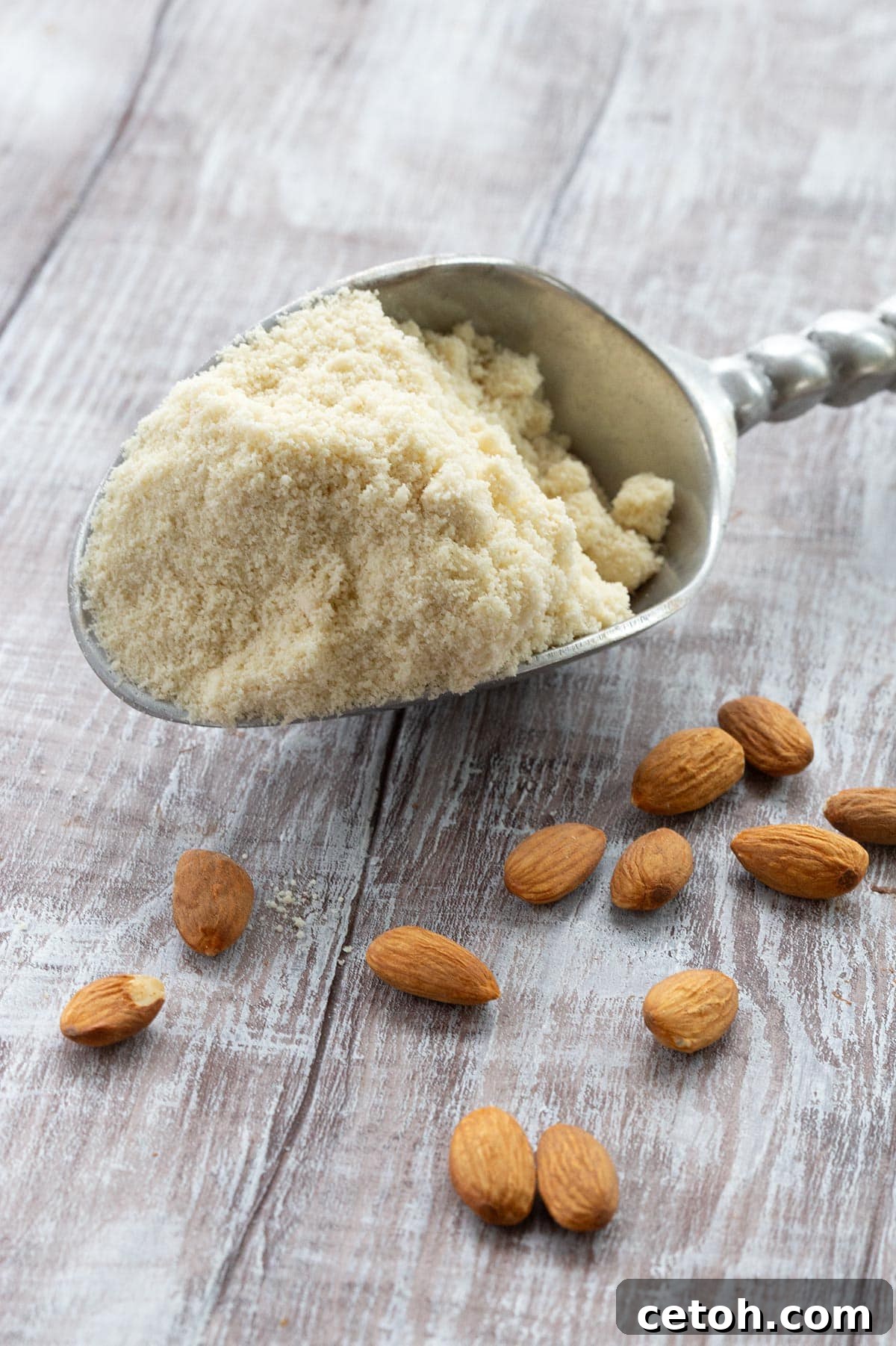
Almond flour is a powerhouse ingredient crafted from blanched almonds that are finely ground into a light, powdery texture. This blanching process removes the almond skins, resulting in a pale flour with a delicate, neutral flavor that won’t overpower your baked goods. It has rapidly become one of the most popular choices for low-carb, keto, and gluten-free baking due to its unique composition and benefits.
Beyond its culinary versatility, almond flour boasts an impressive nutritional profile. It’s naturally rich in dietary fiber, protein, and healthy monounsaturated fats, making it an excellent choice for creating satisfying keto desserts and nourishing treats that support overall well-being. Furthermore, it’s packed with essential micronutrients, including Vitamin E (a powerful antioxidant), magnesium, manganese, and copper, contributing to its status as a healthy alternative.
One of its most significant advantages for low-carb diets is its carbohydrate content. A typical 1/4 cup serving of almond flour contains only 5 grams of total carbohydrates, with 3 grams of that being fiber, resulting in a mere 2 grams of net carbs. In stark contrast, the same serving size of traditional wheat flour can contain around 23 grams of carbohydrates, highlighting almond flour’s superiority for those monitoring their carb intake.
When selecting almond flour, the term “finely ground” is key. Many brands claim to be finely ground, but the actual coarseness can vary significantly. For the best results in delicate baked goods like cakes and muffins, opt for truly finely ground varieties. My personal favorites for consistent quality and texture include Bob’s Red Mill, King Arthur Flour, and Wellbee’s. While Blue Diamond offers a more cost-effective option, be aware that it tends to be slightly coarser than others, which might impart a subtly different texture to your final product.
Almond Flour vs. Almond Meal: Knowing the Difference for Better Baking
It’s common for beginners to confuse almond flour with almond meal, but understanding the distinction is crucial for achieving desired results in your baking. While both are derived from ground almonds, their preparation and characteristics differ significantly, impacting the texture and appearance of your finished dish.
- Almond Flour: This is made from blanched almonds, meaning the skins have been removed before grinding. The result is a very finely ground, pale, and uniform powder. Its delicate texture and neutral color make it the superior choice for light, airy baked goods such as cakes, cookies, muffins, and pastries where a smooth crumb is desired. Although generally more expensive, the finer texture it imparts to your creations is often worth the investment for premium results.
- Almond Meal: In contrast, almond meal is produced from unblanched almonds, retaining their skins. This gives it a coarser texture and a darker, flecked appearance. Due to its rustic nature, almond meal is best suited for applications where a bit of texture is welcome, such as crusts, breadings, or more robust, rustic baked goods. It is typically less expensive than almond flour. However, be aware that using almond meal in delicate recipes can lead to a coarse, slightly gritty mouthfeel, and the lack of cohesion compared to finely ground flour may cause baked items to crumble more easily.
For those just starting their journey into keto or gluten-free baking, I cannot emphasize enough: always begin with finely ground almond flour. It provides the most consistent and forgiving results, helping you build confidence. Start with straightforward recipes like my popular Keto Almond Flour Cake or classic Keto Chocolate Chip Cookies to experience its benefits firsthand.
The Science of Baking: How Almond Flour Behaves
Baking with almond flour requires a fundamental shift in understanding compared to traditional wheat flour. Its unique composition dictates different interactions with other ingredients and influences the final structure, texture, and rise of your baked goods. Mastering these characteristics is key to successful almond flour baking.
- Gluten-Free Nature: The most significant difference is almond flour’s complete lack of gluten. Gluten, a protein found in wheat, forms an elastic network that provides structure, elasticity, and chewiness to traditional baked goods. Without this network, almond flour creations can be fragile and crumbly. To compensate, recipes often incorporate additional binders and structural agents such as extra eggs (which provide protein and moisture), protein powder, or a small amount of xanthan gum, which mimics gluten’s binding properties.
- Higher Fat and Moisture Content: Almond flour contains a considerably higher fat and moisture content than wheat flour. This means that many almond flour recipes require less added oil, butter, or liquids compared to their conventional counterparts. Over-lubricating a dough or batter can lead to excessively moist or greasy results that fail to bake through properly. The natural fats in almonds also contribute to a tender crumb and rich flavor.
- Increased Density: Despite its fine texture, almond flour is heavier and more dense than wheat flour. If direct substitutions are made without adjustment, the resulting baked goods can be disappointingly dense and heavy. To achieve a lighter, airier texture and a proper rise, almond flour recipes typically call for a greater amount of leavening agents like baking powder or baking soda. These agents create gas bubbles that expand during baking, lifting the dense batter.
- Texture Nuances: While “finely ground,” almond flour will never achieve the ultra-fine, powdery consistency of highly processed wheat flour. This inherent characteristic means that without proper technique and complementary ingredients, baked goods can sometimes have a slightly discernible “gritty” texture. However, with careful formulation, including adequate moisture, binders, and proper baking temperatures, you can still produce cakes and cookies with an incredibly tender, delicate crumb that is far from gritty.
To witness these principles in action, try my recipe for Keto Chocolate Chip Muffins. It’s a perfect example of how combining almond flour with other ingredients creates a delightful rise and a wonderfully fine texture, showcasing the flour’s full potential.
Essential Tips for Successfully Substituting with Almond Flour
Successfully transitioning to almond flour baking isn’t about finding a magic 1:1 conversion ratio; it’s about understanding its unique properties and making thoughtful adjustments. There’s no single formula, as the ideal substitution depends heavily on the desired outcome—a dense, chewy cookie requires a different approach than a light, fluffy cake. Here are my top tips for navigating the world of almond flour substitutions:
- Abandon 1:1 Swaps: This is perhaps the most crucial rule. For most recipes, especially those aiming for volume and structure like cakes, muffins, and quick breads, you will typically need more almond flour than wheat flour. As a general guideline when converting traditional recipes, I often use 1.5 to 2 times the amount of almond flour compared to the wheat flour called for. For instance, if a recipe asks for 1 cup of wheat flour, I might start with 1.5 cups of almond flour, adjusting as needed based on batter consistency. My Keto Birthday Cake recipe is a prime example of such an adaptation.
- Adjust Oven Temperature: Almond flour baked goods tend to brown more quickly than those made with wheat flour due to their fat content. To prevent over-browning on the exterior while ensuring the interior bakes through, I almost always reduce the oven temperature by 25°F (about 15°C) from what a conventional recipe suggests. This gentle baking allows for more even cooking.
- Utilize Binders Wisely: Given almond flour’s lack of gluten, structural support is paramount. Eggs are a common and effective binder; I often increase the number of eggs when converting recipes. However, proceed with caution: too many eggs can lead to a rubbery or overly dense texture. For additional stability, especially in delicate cakes or breads, consider adding a small amount of xanthan gum—typically 1/4 to 1 teaspoon per cup of almond flour, depending on the recipe. Xanthan gum provides elasticity and helps prevent crumbling.
- Leverage Protein Powder: This is one of my secret weapons for achieving superior texture and rise in almond flour baking. Since gluten is a protein, incorporating another dry protein powder—such as unflavored whey protein isolate or egg white protein powder—can significantly enhance the structure of your baked goods. Protein powder helps items rise properly, hold their shape, and develop a more desirable crumb. Experiment with it in recipes like my Keto Zucchini Bread for excellent results.
- Embrace Thicker Batters: A key difference you’ll observe is that almond flour batters will consistently be thicker than those made with wheat flour. Resist the natural urge to thin out the batter with additional liquids. Doing so will almost always result in a soggy, dense mess that struggles to bake through, or worse, collapses. A thick, almost paste-like consistency is often exactly what you’re looking for to ensure proper structure and moisture balance in the finished product.
Almond Flour vs. Coconut Flour: A Crucial Distinction
Let me state this unequivocally: you absolutely cannot substitute coconut flour for almond flour in a 1:1 ratio. Attempting this swap is a common pitfall for new keto bakers and will invariably lead to disastrous results—think hard, inedible hockey pucks rather than delightful treats. Coconut flour is an entirely different beast, possessing properties vastly distinct from any tree nut-based flour.
Coconut flour is incredibly fine, dense, and boasts an astonishing capacity to absorb liquids, far surpassing almond flour. This extreme absorbency means it requires significantly more liquid and often more eggs to bind the final product and prevent it from becoming dry and crumbly. When substituting, you’ll need a drastically smaller quantity of coconut flour—sometimes as little as one-third or even one-quarter the amount of almond flour called for in a recipe. Due to these unique characteristics, successfully baking with coconut flour demands precise measurements and a deep understanding of its behavior.
For beginner keto bakers, I strongly recommend sticking to recipes specifically developed and thoroughly tested with coconut flour if that’s the ingredient you wish to use. Trying to convert an almond flour recipe to coconut flour (or vice versa) without experience will likely end in frustration. To help you explore this unique ingredient, I’ve compiled a wonderful list of Keto Coconut Flour Recipes that are proven to deliver delicious results. For more in-depth information, be sure to check out my dedicated article on Baking with Coconut Flour.
Achieving Accuracy: How to Measure Almond Flour
Accurate measurement is paramount in baking, especially when working with low-carb flours like almond flour, where small variations can significantly impact the final texture and consistency. You have two primary methods for measuring almond flour, with one offering superior precision.
- Scoop and Level: This is the most common method for measuring by volume. To do this correctly, first, lightly fluff your almond flour with a spoon to aerate it, as it can settle and compact in its packaging. Then, gently scoop your measuring cup into the bag or canister, allowing the flour to fill the cup naturally without pressing or packing it down. Finally, use the back of a knife or another straight edge to level off the top, removing any excess flour. Crucially, never pack almond flour into the cup unless a recipe explicitly states “packed” (which is rare for almond flour). Packing can lead to using significantly more flour than intended, resulting in a dry or dense baked good.
- Weigh Your Almond Flour: Without a doubt, the most accurate and consistent method for measuring any baking ingredient is by weight, using a kitchen scale. This eliminates inconsistencies caused by varying packing densities, humidity, or how a cup is “scooped.” For almond flour, a standard cup generally weighs approximately 110 grams (or about 3.8 to 4 ounces). While volume measurements are provided in many recipes, investing in a digital kitchen scale and following weight measurements will drastically improve the reliability and repeatability of your baking results, ensuring perfect consistency every time.
Storage and Shelf Life: Keeping Your Almond Flour Fresh
Due to its relatively high fat content, almond flour is more susceptible to going rancid than conventional wheat flour. When almonds are ground, their natural oils are exposed to air, which can lead to oxidation and a stale, bitter flavor over time. Proper storage is essential to preserve its freshness, flavor, and extend its shelf life.
The best storage method depends on how quickly you anticipate using your almond flour:
- Pantry Storage: For unopened bags that you expect to use within a few weeks, a cool, dark, and dry pantry is suitable. Ensure the original packaging is intact. Once opened, transfer the almond flour to an airtight container (such as a glass jar with a tight-fitting lid or a specialized baking canister) to protect it from moisture, air, and pantry pests. Store it away from direct sunlight or heat sources. In the pantry, opened almond flour typically remains fresh for 1-2 months.
- Refrigerator Storage: If you use almond flour less frequently or live in a warm, humid climate, the refrigerator is an excellent option. Storing it in an airtight container in the fridge can extend its freshness for up to 6 months. The cooler temperatures significantly slow down the oxidation process.
- Freezer Storage: For long-term storage, especially for larger quantities, the freezer is your best bet. Kept in a sealed, freezer-safe bag or container, almond flour can last for up to a year or even longer without going rancid. Freezing ensures its oils remain stable. When ready to use, simply scoop out the desired amount; it thaws very quickly.
Before using almond flour that has been stored for a while, always give it a quick sniff. A sweet, nutty aroma indicates freshness, while a sour, paint-like, or overly bitter smell is a sign of rancidity, and it should be discarded. Investing in good airtight storage containers will safeguard your almond flour and your baking investments.
Best Practices for Flawless Almond Flour Baking
Beyond understanding almond flour’s characteristics, a few foundational baking practices will elevate your low-carb creations from good to exceptional. These tips are crucial for achieving the perfect texture, structure, and flavor in your gluten-free and keto baked goods.
- Allow for Complete Cooling: This cannot be overemphasized. Low-carb and gluten-free baked goods, particularly those made with almond flour, are often quite fragile immediately after coming out of the oven. Their structure needs time to set as they cool. Resist the temptation to dig in right away! Crackers, cookies, and tart crusts will achieve their desired crispness, while breads, cakes, and muffins will firm up and hold together better if allowed to cool completely—ideally for at least one to two hours, or even longer for larger items like cakes. This patience is rewarded with superior texture and stability.
- Ensure Room Temperature Ingredients: Unless a recipe specifically dictates otherwise (e.g., for pie crusts), it’s best to use eggs, butter, cream, or almond milk at room temperature. Cold ingredients can cause batters to seize, clump, or fail to emulsify properly, resulting in an inconsistent texture. Room temperature ingredients blend more smoothly and create a homogenous batter, which is vital for a fine crumb and even rise.
- Grease Your Pan Generously: Low-carb baked goods, especially those without gluten, tend to stick to pans more readily than their conventional counterparts. To prevent frustrating sticking and crumbling when trying to remove your delicious creations, ensure your baking pans are thoroughly greased. Use butter, coconut oil, or a good quality non-stick spray, making sure to coat all corners and crevices. For extra insurance with delicate cakes, you might even line the bottom with parchment paper.
- Monitor Browning Carefully: As mentioned, almond flour’s fat content can cause baked goods to brown more quickly. Always keep a close eye on your oven. If you notice the top or edges browning too rapidly while the center is still uncooked, loosely tent the pan with aluminum foil. This shields the surface from direct heat, allowing the interior to finish baking without burning the exterior. Consider lowering your oven temperature by 25°F (15°C) from traditional recipes as a preventive measure.
- Avoid Over-Baking: Oven temperatures can vary significantly from one appliance to another, so always treat baking times in recipes as a general guideline. Over-baking almond flour treats can lead to dry, crumbly, or rubbery results. Set your timer for 5-10 minutes less than the recommended baking time, then begin checking for doneness. Look for visual cues like golden edges, a firm-to-the-touch center, or a toothpick inserted into the middle coming out clean. Remember, what takes 20 minutes in one oven might take 15 or 25 in another.
Freezing Keto Baked Goods: A Guide to Make-Ahead Treats
One of the fantastic benefits of almond flour-based keto baking is that most of your delicious creations are highly freezer-friendly. This makes meal prep and having healthy treats on hand incredibly convenient. I’ve successfully frozen a wide array of items, including whole cakes, individual muffins, various cookies, scones, and even delicate keto pie crusts.
Here are some tips for successful freezing:
- Freeze Before Glazing or Frosting: For best results, I typically freeze baked goods like cakes or muffins before applying any glazes, frostings, or delicate toppings. These can become messy or lose their texture when thawed. You can always prepare and apply them fresh once the baked item is thawed.
- Individual Wrapping: For items like cookies, muffins, or scones, individual wrapping in plastic wrap or parchment paper before placing them in an airtight freezer bag or container helps prevent freezer burn and makes it easy to grab just one or two portions.
- Airtight Containers: Always use freezer-safe, airtight containers or heavy-duty freezer bags to protect your baked goods from absorbing freezer odors and to prevent moisture loss.
- Raw Dough Storage: Don’t forget about raw dough! Many almond flour cookie doughs can be stored in the freezer. I often keep a log of dough for Keto Butter Pecan Cookies in my freezer, allowing me to slice and bake a fresh batch whenever a craving strikes. Similarly, when making a large batch of cookies like Chewy Keto Ginger Cookies, I frequently roll some of the uncooked dough into balls and freeze them. This way, fresh-baked cookies are just minutes away, no advanced planning required!
- Thawing: Most frozen baked goods can be thawed at room temperature for a few hours, or overnight in the refrigerator for larger items. Cookies and muffins can often be gently reheated in a microwave for a few seconds or in a low oven for a “freshly baked” feel.
Frequently Asked Questions About Almond Flour
While you can easily make coarse almond meal at home by grinding whole or blanched almonds in a food processor, achieving finely ground almond flour is much more challenging. Standard home appliances typically lack the power to grind almonds to the necessary fineness without over-processing them into almond butter. The goal is a powdery texture, not a creamy paste. For consistent, reliable results in delicate baked goods, commercially produced finely ground almond flour is always recommended.
Absolutely! Almond flour is an excellent choice for keto and low-carb diets. A 1/4 cup serving contains only 5 grams of total carbohydrates. With 3 grams of dietary fiber, this brings the net carbohydrate count down to a mere 2 grams per serving. Its low-carb, high-fiber, and healthy fat profile makes it ideal for maintaining ketosis while still enjoying delicious baked goods.
A gritty texture in almond flour recipes often indicates that the flour you’re using isn’t as finely ground as it could be. Some brands, such as Blue Diamond or Kirkland (Costco brand), tend to be slightly coarser compared to premium options like Bob’s Red Mill or Wellbee’s. While these more cost-effective brands are perfectly fine for many recipes, they can impart a noticeable grit in very delicate items. It’s often a trade-off between cost and ultimate texture. For the smoothest results, seek out brands specifically marketed as “super fine” or “extra fine” almond flour.
If your almond flour cakes, muffins, or cookies are crumbly and lack cohesion, it typically points to an insufficient amount of binding agents in the recipe. Because almond flour is gluten-free, it doesn’t naturally hold together like wheat flour. Eggs are primary binders, providing protein and moisture that helps structure form. Other effective binders include unflavored protein powder (like whey or egg white protein) and a small amount of xanthan gum. When re-attempting a recipe, consider adding one extra egg per cup of almond flour, or incorporate 1/4 to 1/2 teaspoon of xanthan gum, or even a tablespoon or two of protein powder, to enhance structural integrity.
For those with almond allergies or other tree nut sensitivities, sunflower seed flour is an excellent nut-free substitute. It can often be used cup for cup in many almond flour recipes and is available online or can be made at home from raw sunflower seeds. However, there’s a unique consideration: the chlorophyll in sunflower seeds can react with leavening agents like baking powder or baking soda, causing baked goods to sometimes turn a greenish hue as they cool. To counteract this, add a tablespoon of an acidic ingredient such as lemon juice or vinegar to your batter. For comprehensive guidance on using this alternative, make sure to read all my tips on how to make and bake with sunflower seed flour.
Absolutely! While commonly associated with sweet baking, almond flour is wonderfully versatile in savory applications. Its fine texture and neutral flavor make it perfect for breading meats and vegetables, thickening sauces, or as a binder in meatballs and patties. It creates a crisp, golden crust on fried chicken or fish, and can be used to make savory crackers, pizza crusts, or even as a gluten-free thickener for gravies and stews. Don’t limit its potential to just desserts!
Delicious Almond Flour Recipes to Inspire Your Baking Journey
Now that you’re equipped with the knowledge and confidence to tackle almond flour, it’s time to put your skills to the test! This versatile low-carb and gluten-free flour can create an incredible array of mouth-watering treats. Here are some of my most popular and foolproof recipes, perfect for getting you started:
- Keto Almond Ricotta Cake: A moist, tender cake with a delicate almond flavor and a hint of creamy ricotta.
- Keto Blueberry Muffins: Fluffy, naturally sweetened muffins bursting with juicy blueberries, perfect for breakfast or a snack.
- Brown Butter Keto Blondies: Rich, chewy blondies with the irresistible nutty depth of brown butter, a perfect keto dessert.
- Keto Shortbread Cookies: Classic buttery shortbread, crisp and melt-in-your-mouth, ideal for pairing with tea or coffee.
- Keto Texas Sheet Cake: A decadent, moist chocolate cake topped with a generous, warm chocolate frosting – a crowd-pleaser for any occasion.
I encourage you to have fun experimenting and discovering your own favorite almond flour creations! Your feedback and questions are always welcome. Please leave a comment below with your thoughts or any additional questions you might have, and I’ll do my best to help you on your baking adventure.